
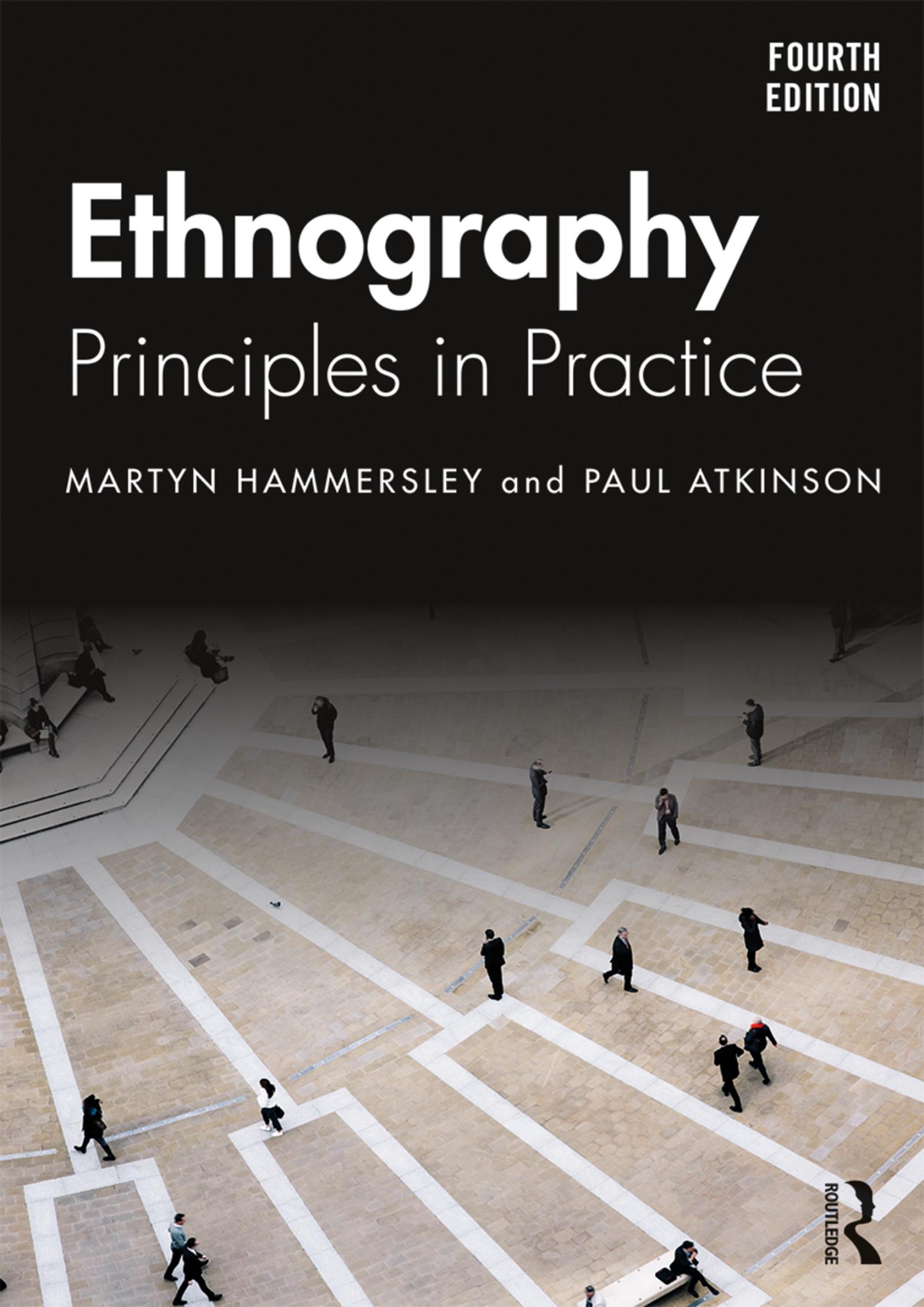
Now in its fourth edition, this leading introduction to ethnography has been thoroughly updated and substantially rewritten. The volume offers a systematic introduction to ethnographic principles and practice, and includes a new chapter on ‘Ethnography in the digital world’.
The authors argue that ethnography is best understood as a reflexive process. This requires recognition that social research is part of the world that it studies, and demands that researchers reflect on how they shape both data and analysis. Starting in Chapter 1 with an outline of the principle of reflexivity, against the background of competing research philosophies, the authors go on to discuss the main features of ethnographic work, including:
- the selection and sampling of cases
- the problem of access
- field relations and observation
- interviewing
- the use of documents
- recording and organizing data
-
the process of data analysis and writing research reports.
There is also consideration of the ethical issues involved in ethnographic research. Throughout, the discussion draws on a wide range of illustrative material from classic and more recent studies, within a global context. The new edition of this popular textbook will be an indispensable resource for undergraduate and postgraduate students, and for all researchers using ethnographic methods in the social sciences and the humanities.
Payez facilement par carte, Klarna, Apple Pay ou Google Pay. Pas satisfait ? Vous avez toujours une garantie de remboursement de 14 jours. En savoir plus dans nos conditions. Si vous avez des questions, envoyez-nous un e-mail à hello@memmo.org.
Memmo facilite tes études, où que tu sois dans le monde. On rassemble tes manuels de cours et des outils d'étude intelligents au même endroit : résumés, quiz, podcasts et flashcards. Et il y a Ted, ton compagnon d'étude qui répond à toutes tes questions. Plus de 50 000 étudiants étudient déjà ici – conçu pour t'aider à apprendre plus vite et à moins stresser.