
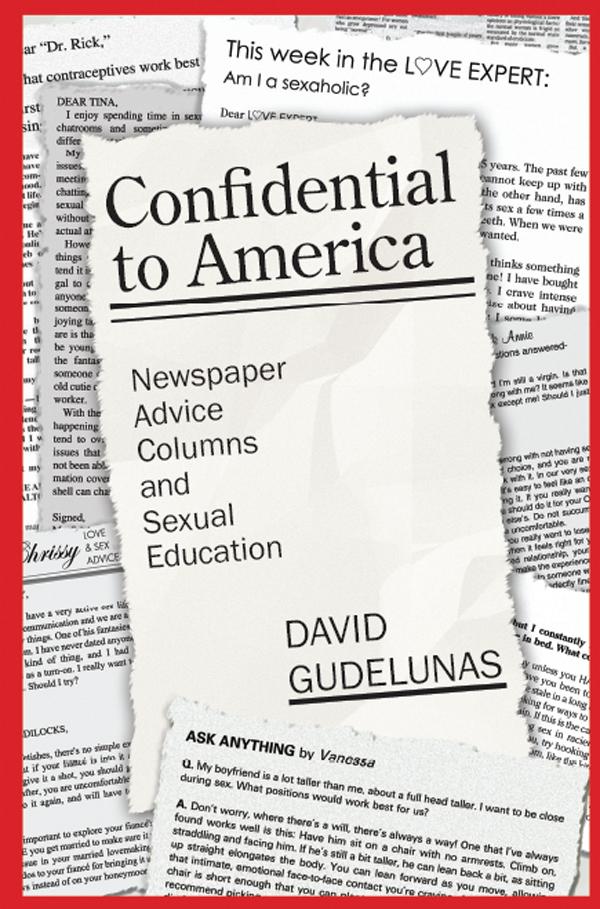
In modern-day America, newspaper advice columns have become public forums for the discussion of human sexuality. Although questions posed to newspaper advice columnists ranges from matters of etiquette to intimacy, as they have for decades, increasingly most of the limited space in these newspaper features address issues that fall under a broader heading of sexuality. Questions about marital fidelity, dating and relationships, sexual practices, gender roles, and sexual taboos have all become "hot button" topics within the morally conservative mainstream press. In Confidential to America, David Gudelunas shows how, since the 1950s, advice columns have been one of the few consistent, mainstream, and widely available public forums for the discussion of topics severely restricted in other places.Newspaper advice columns serve as sites of discussion about sexuality within a larger culture that is severely divided on questions of how, when, and to what extent one may formally speak about sexuality. Even now, at the turn of the twenty-first century, high schools remain hesitant to devote more than a semester or two to formal discussions of sexuality. When they do, under current governmental policy and pressure, these discussions are often restricted to abstinence-only programs or what might be described as "non-discussions" of sexuality. Community-based sexual education programs are similarly restricted in their reach, funding, and, more often than not, effectiveness. In America in the twenty-first century, talking about sex in educational contexts is perceived to be almost as risky as having sex.Gudelunas demonstrates that while formal discussions of sexuality are strictly regulated and often thwarted, the informal curriculum of sexuality, particularly in the American mass media, has become ever more vocal on the topic of sex. From depictions conveyed through fictional and reality-based popular culture, to discussions taking place in the cafeteria (if not the classroom) and in Internet chat rooms, sexuality dominates our collective conscience.
Payez facilement par carte, Klarna, Apple Pay ou Google Pay. Pas satisfait ? Vous avez toujours une garantie de remboursement de 14 jours. En savoir plus dans nos conditions. Si vous avez des questions, envoyez-nous un e-mail à hello@memmo.org.
Memmo facilite tes études, où que tu sois dans le monde. On rassemble tes manuels de cours et des outils d'étude intelligents au même endroit : résumés, quiz, podcasts et flashcards. Et il y a Ted, ton compagnon d'étude qui répond à toutes tes questions. Plus de 50 000 étudiants étudient déjà ici – conçu pour t'aider à apprendre plus vite et à moins stresser.