
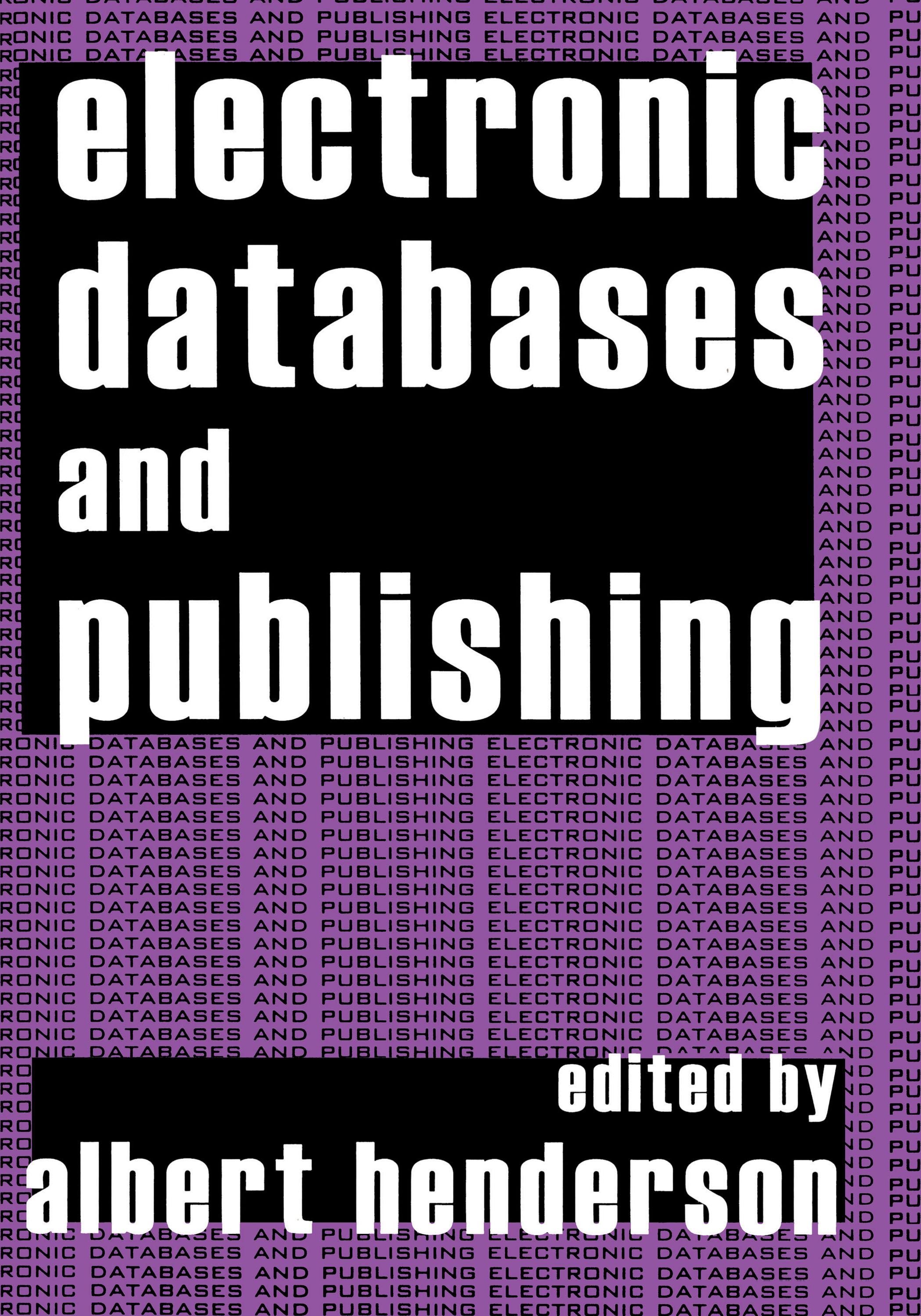
The true pioneers in electronic publishing put their bibliographic databases on tape and online in the 1960s. Nearly all of them had long experience with compiling information for distribution in printed form and a strong market connection. As a result of Soviet advances in science and space technology, American government support for information science and academic libraries flowed freely for a little over a decade, making possible tremendous advances in technology, in retrieval techniques and in sophisticated coverage. Advances in information technology and market conditions have encouraged many more participants to underwrite the development of databases that now extend into the arts, social sciences, business, and popular interests. These essays show how production statistics accompanied by statements of editorial coverage provide a fairly accurate reflection of output of many of the major disciplinary bibliographic databases. The urgent priority of information resources in the 1960s has encouraged comprehensive servicing of the formal research literature as published in journals and monographs. Authors have counted subject words, languages, origins, types of publication, and so on over several decades. This volume also includes articles on some databases that are not strictly bibliographic, such as the CMG database of college courses, which illuminates some of the changes in college textbook publishing. Information seekers will find the many tables of practical use, as guidance to what and how much may be found within each database. Analysts of publishing, of science policy, and of higher education will find information relevant to expenditures, human resources, and other indicators of education, research, and technology activity.
Pages: 278
Catégorie: Film- & Medievetenskap
e-ISBN: 9781351288781
Poids d'expédition: 1.2 kg
Expédié sous: 1-2 jours
Payez facilement par carte, Klarna, Apple Pay ou Google Pay. Pas satisfait ? Vous avez toujours une garantie de remboursement de 14 jours. En savoir plus dans nos conditions. Si vous avez des questions, envoyez-nous un e-mail à hello@memmo.org.
Memmo facilite tes études, où que tu sois dans le monde. On rassemble tes manuels de cours et des outils d'étude intelligents au même endroit : résumés, quiz, podcasts et flashcards. Et il y a Ted, ton compagnon d'étude qui répond à toutes tes questions. Plus de 50 000 étudiants étudient déjà ici – conçu pour t'aider à apprendre plus vite et à moins stresser.
Tu pourrais aussi aimer
Acheter le livre0