
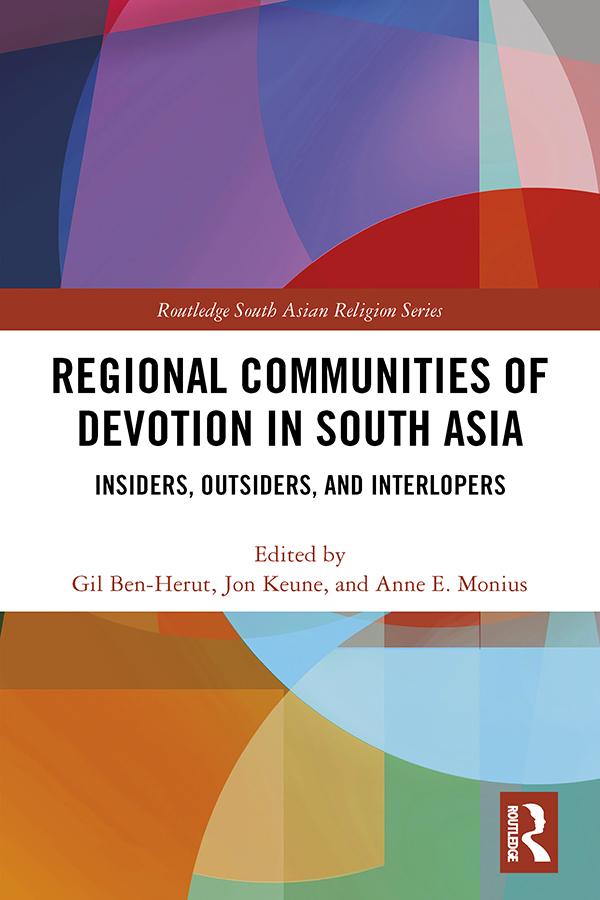
This book explores the key motif of the religious other in devotional (bhakti) literatures and practices from across the Indian subcontinent unmasks processes of representation that involve adoption, appropriation, and rejection of different social and religious agents.
The book reconsiders and challenges inherited notions of the bhakta’s or devotee’s other. Considering the ways in which bhakti might be conceived as having an inter-regional impact—as a force, discourse, network, mythology, ethic—the book critically engages with extant scholarly narratives about what bhakti is and traces when and how those narratives have been used. The sheer diversity of South Asia’s devotional traditions renders them an especially rich resource for examining social and religious fault lines, thereby furthering scholarly understanding of how communalism and sectarianism originate and develop on local or regional levels, with wider geographic implications.
Bringing together studies from a subcontinent-wide variety of linguistic, geographical, and historical frames for the first time, this book will be an important contribution to the literature on bhakti and will be of interest to scholars of South Asian Religions and Asian Religions.
Payez facilement par carte, Klarna, Apple Pay ou Google Pay. Pas satisfait ? Vous avez toujours une garantie de remboursement de 14 jours. En savoir plus dans nos conditions. Si vous avez des questions, envoyez-nous un e-mail à hello@memmo.org.
Memmo facilite tes études, où que tu sois dans le monde. On rassemble tes manuels de cours et des outils d'étude intelligents au même endroit : résumés, quiz, podcasts et flashcards. Et il y a Ted, ton compagnon d'étude qui répond à toutes tes questions. Plus de 50 000 étudiants étudient déjà ici – conçu pour t'aider à apprendre plus vite et à moins stresser.