
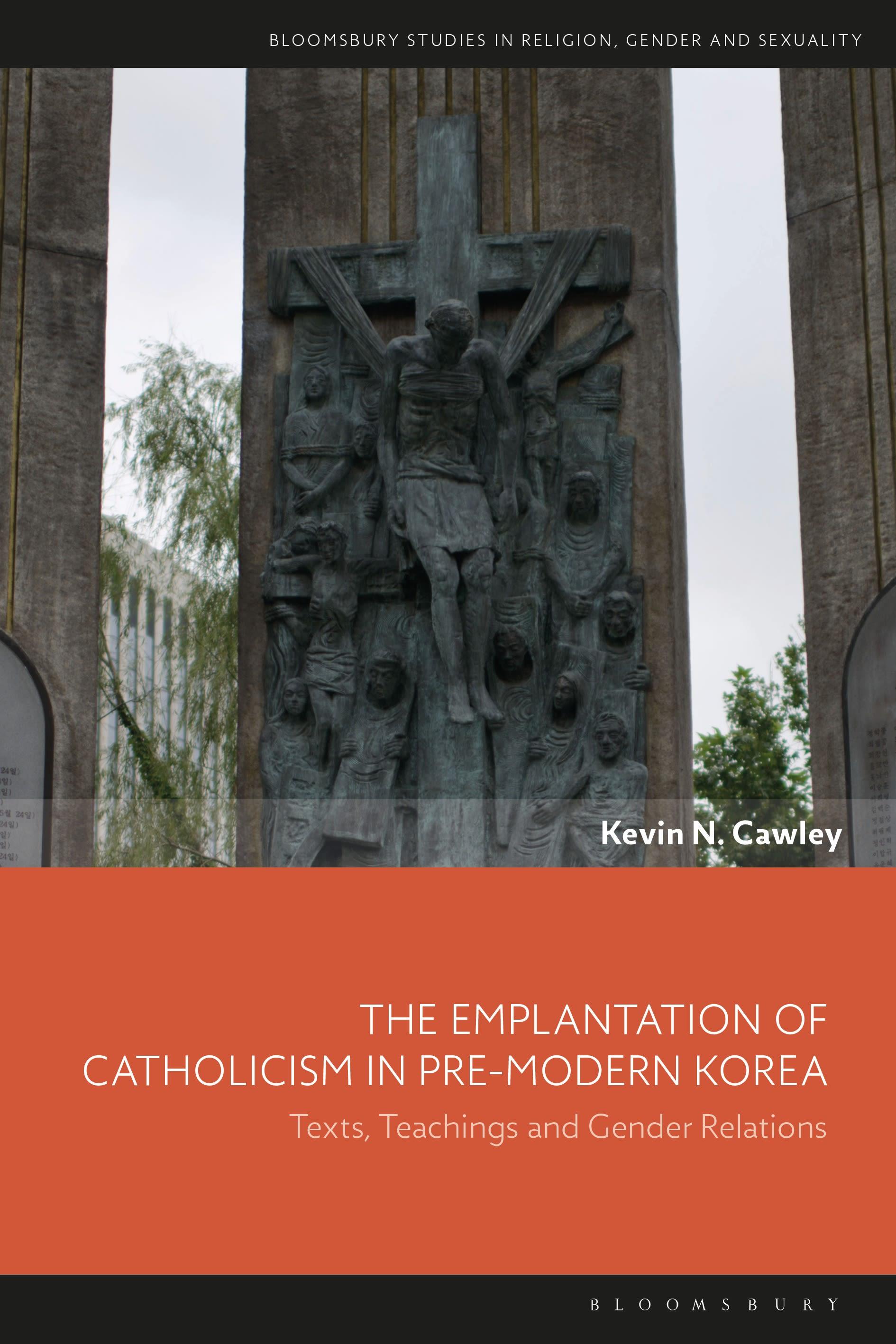
Tracing the development of Catholic ideas in Japan and China during the late sixteenth and early seventeenth century, this book provides an overview of the evolution of the missionary strategy in East Asia while focusing on the early emplantation of Catholicism in Korea.
Kevin Cawley recreates the tumultuous period for gender relations and explores interreligious interactions between Confucians and Catholics. Highlighting the textual production this period inspired, this book examines writings such as the catechism of the Italian Jesuit, Matteo Ricci (1552-1610), which went on to convert a group of elite Confucian scholars to the new religion. It also underscores the importance of the vernacular catechism written by Chong Yakchong (1760–1801), a convert from a prominent Confucian family, who was eventually executed. Chong's text made Catholicism easily understandable for women, as well as men from lower social classes, who eventually converted in significant numbers effecting real social change. Outlining the shift from rejection to acceptance of new texts composed by early Korean converts, this book explores emergent Catholicism in Japan, China and Korea, as well as the various challenges encountered and how the mission strategy changed as a result.
Exploring gender relations, both in relation to Confucianism and Catholics during this period, this book provides insight into this previously under researched aspect of East Asian Catholicism. In this study, we learn how religious persecution and political tactics manipulated, terrified and exterminated converts to Catholicism. From European Jesuits to Korean Confucians, this book outlines a fascinating journey of intercultural engagement between Western and Eastern worldviews.
Kevin Cawley recreates the tumultuous period for gender relations and explores interreligious interactions between Confucians and Catholics. Highlighting the textual production this period inspired, this book examines writings such as the catechism of the Italian Jesuit, Matteo Ricci (1552-1610), which went on to convert a group of elite Confucian scholars to the new religion. It also underscores the importance of the vernacular catechism written by Chong Yakchong (1760–1801), a convert from a prominent Confucian family, who was eventually executed. Chong's text made Catholicism easily understandable for women, as well as men from lower social classes, who eventually converted in significant numbers effecting real social change. Outlining the shift from rejection to acceptance of new texts composed by early Korean converts, this book explores emergent Catholicism in Japan, China and Korea, as well as the various challenges encountered and how the mission strategy changed as a result.
Exploring gender relations, both in relation to Confucianism and Catholics during this period, this book provides insight into this previously under researched aspect of East Asian Catholicism. In this study, we learn how religious persecution and political tactics manipulated, terrified and exterminated converts to Catholicism. From European Jesuits to Korean Confucians, this book outlines a fascinating journey of intercultural engagement between Western and Eastern worldviews.
Payez facilement par carte, Klarna, Apple Pay ou Google Pay. Pas satisfait ? Vous avez toujours une garantie de remboursement de 14 jours. En savoir plus dans nos conditions. Si vous avez des questions, envoyez-nous un e-mail à hello@memmo.org.
Memmo facilite tes études, où que tu sois dans le monde. On rassemble tes manuels de cours et des outils d'étude intelligents au même endroit : résumés, quiz, podcasts et flashcards. Et il y a Ted, ton compagnon d'étude qui répond à toutes tes questions. Plus de 50 000 étudiants étudient déjà ici – conçu pour t'aider à apprendre plus vite et à moins stresser.