
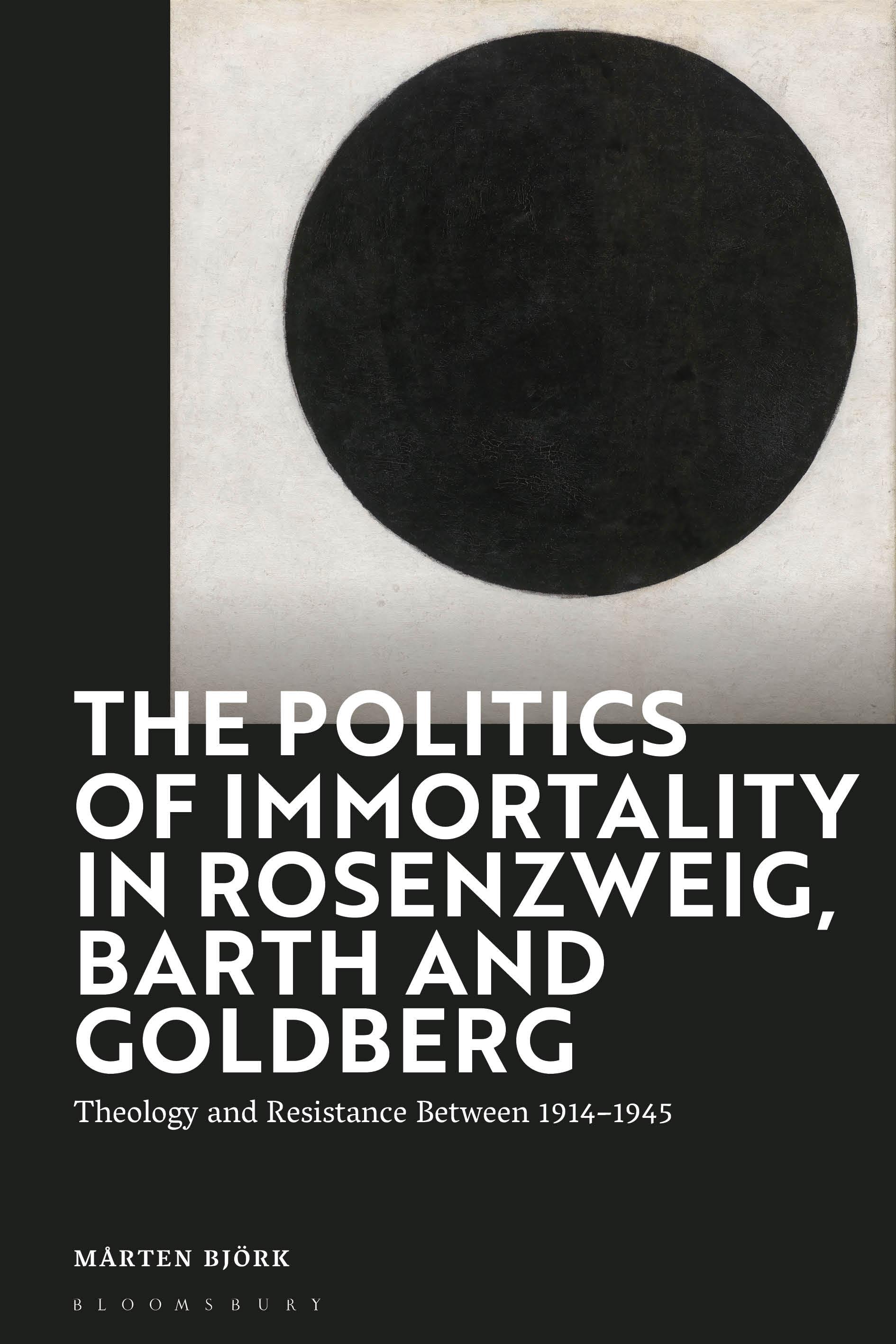
Highlighting the central importance of theological configurations of immortality and eternal life from 1914-1945, Mårten Björk explores the key writings of Franz Rosenzweig, Karl Barth and Oskar Goldberg to situate their ideas in relation to the political turmoil of the period, including the rise of social Darwinism, nationalism and fascism.
The conversations happening among Christian and Jewish theologians and philosophers on the nature of immortality and eternal life during the period constitute what Björk calls a 'politics of immortality'. The speculative question of eternal life became a way to address the meaning of 'a good life' in a period when millions of lives were lost to war, camps and prisons. This book shows how theology was related to central political concepts and ideas of the era, revealing how the question of immortality pursued by Rosenzweig, Barth and Goldberg became a way to resist the reduction of life to race, blood and soil.
By situating the exact political consequences of theological and metaphysical theories of immortality and eternal life, Björk's discussion of Rosenzweig, Barth and Goldberg confronts the perennial question on the relation between life and death and exposes the important connections between political theology and philosophical posthumanism.
The conversations happening among Christian and Jewish theologians and philosophers on the nature of immortality and eternal life during the period constitute what Björk calls a 'politics of immortality'. The speculative question of eternal life became a way to address the meaning of 'a good life' in a period when millions of lives were lost to war, camps and prisons. This book shows how theology was related to central political concepts and ideas of the era, revealing how the question of immortality pursued by Rosenzweig, Barth and Goldberg became a way to resist the reduction of life to race, blood and soil.
By situating the exact political consequences of theological and metaphysical theories of immortality and eternal life, Björk's discussion of Rosenzweig, Barth and Goldberg confronts the perennial question on the relation between life and death and exposes the important connections between political theology and philosophical posthumanism.
Pages: 280
Catégorie: Religion & Teologi
e-ISBN: 9781350228245
Poids d'expédition: 1.2 kg
Expédié sous: 1-2 jours
Payez facilement par carte, Klarna, Apple Pay ou Google Pay. Pas satisfait ? Vous avez toujours une garantie de remboursement de 14 jours. En savoir plus dans nos conditions. Si vous avez des questions, envoyez-nous un e-mail à hello@memmo.org.
Memmo facilite tes études, où que tu sois dans le monde. On rassemble tes manuels de cours et des outils d'étude intelligents au même endroit : résumés, quiz, podcasts et flashcards. Et il y a Ted, ton compagnon d'étude qui répond à toutes tes questions. Plus de 50 000 étudiants étudient déjà ici – conçu pour t'aider à apprendre plus vite et à moins stresser.