
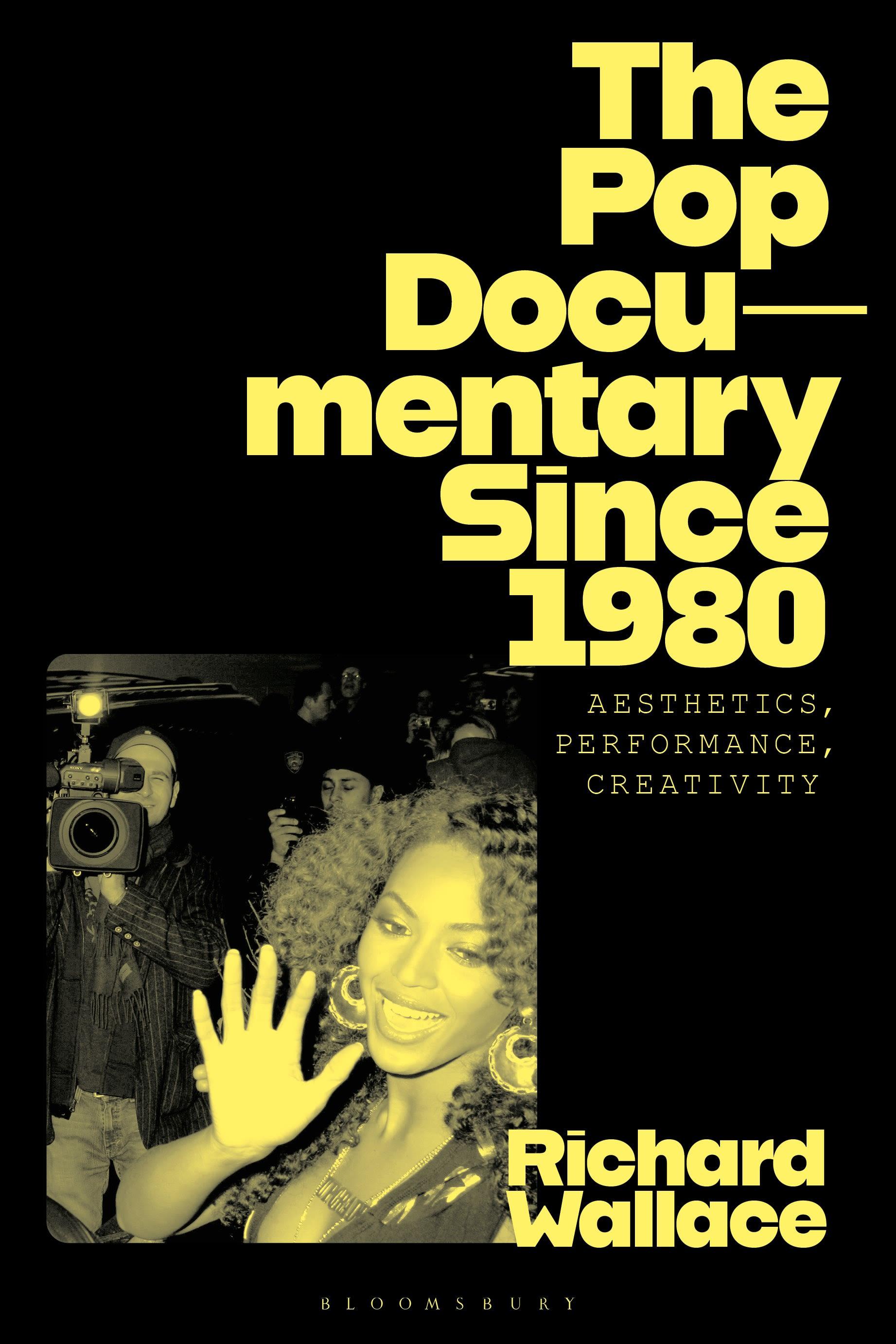
In The Pop Documentary Since 1980, Richard Wallace examines the representation of pop music, musicians and music-making in documentary film and television. He draws together conceptual frameworks from within and outside of film and television studies - including performance studies, musicology, celebrity studies and fan studies - to provide a critical interrogation of the central issues in this genre.
A common criticism of the music documentary is that it lacks artistic integrity because of its close affiliation with its subject. Wallace argues that music documentaries can be artful and conceptually complex and be part of a broader process of image curation under the control of the artist and their management. This contradiction is key to the form's vitality and Wallace explores two competing lines of enquiry. First, the contribution that such documentaries make to the public perception of their subjects. Second, he argues that its 'official' status does not preclude music documentaries from being artistic or engaging with the theoretical questions that underpin documentary media more broadly.
Other issues addressed include:
- how documentaries about song writing attempt to represent intangible concepts like 'creativity' and 'inspiration';
- how the experiential and affective aspects of music are communicated through the visual image;
- ethical considerations.
Each of these conceptual questions is examined through detailed analysis of a variety of music documentaries ranging from Stop Making Sense to Tokyo Idols via Beyoncé and The Beatles.
A common criticism of the music documentary is that it lacks artistic integrity because of its close affiliation with its subject. Wallace argues that music documentaries can be artful and conceptually complex and be part of a broader process of image curation under the control of the artist and their management. This contradiction is key to the form's vitality and Wallace explores two competing lines of enquiry. First, the contribution that such documentaries make to the public perception of their subjects. Second, he argues that its 'official' status does not preclude music documentaries from being artistic or engaging with the theoretical questions that underpin documentary media more broadly.
Other issues addressed include:
- how documentaries about song writing attempt to represent intangible concepts like 'creativity' and 'inspiration';
- how the experiential and affective aspects of music are communicated through the visual image;
- ethical considerations.
Each of these conceptual questions is examined through detailed analysis of a variety of music documentaries ranging from Stop Making Sense to Tokyo Idols via Beyoncé and The Beatles.
Pages: 264
Catégorie: Film- & Medievetenskap
e-ISBN: 9781350214255
Poids d'expédition: 1.2 kg
Expédié sous: 1-2 jours
Payez facilement par carte, Klarna, Apple Pay ou Google Pay. Pas satisfait ? Vous avez toujours une garantie de remboursement de 14 jours. En savoir plus dans nos conditions. Si vous avez des questions, envoyez-nous un e-mail à hello@memmo.org.
Memmo facilite tes études, où que tu sois dans le monde. On rassemble tes manuels de cours et des outils d'étude intelligents au même endroit : résumés, quiz, podcasts et flashcards. Et il y a Ted, ton compagnon d'étude qui répond à toutes tes questions. Plus de 50 000 étudiants étudient déjà ici – conçu pour t'aider à apprendre plus vite et à moins stresser.