
Winner of the British Association of Film, Television and Screen Studies (BAFTSS) 2023 Award for Best First Monograph.
Winner of the Association of Moving Image Researchers (AIM) 2022 Award for Best Monograph.
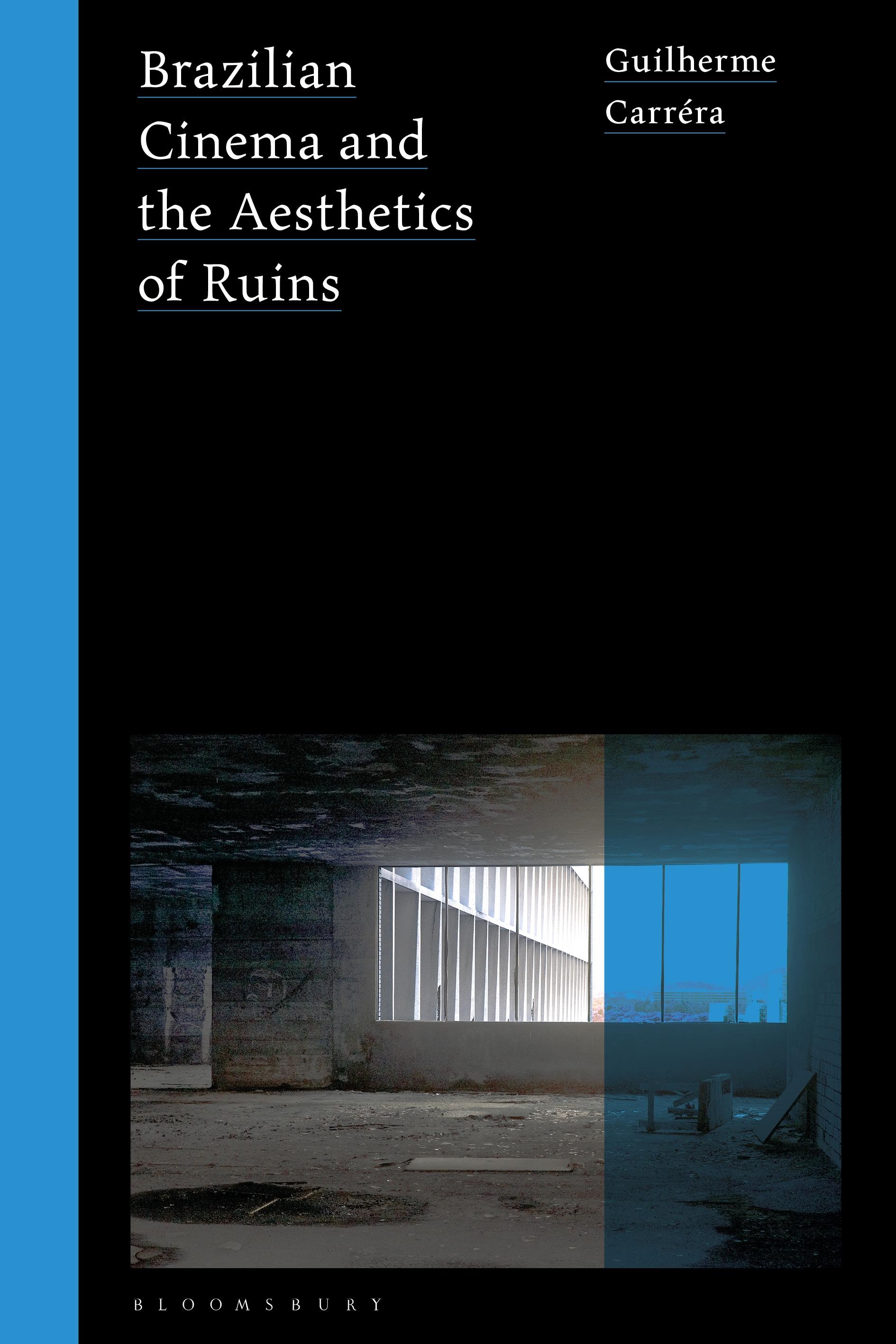
Guilherme Carréra's compelling book examines imagery of ruins in contemporary Brazilian cinema and considers these representations in the context of Brazilian society. Carréra analyses three groups of unconventional documentaries focused on distinct geographies: Brasília - The Age of Stone (2013) and White Out, Black In (2014); Rio de Janeiro - ExPerimetral (2016), The Harbour (2013), Tropical Curse (2016) and HU Enigma (2011); and indigenous territories - Corumbiara: They Shoot Indians, Don't They? (2009), Tava, The House of Stone (2012), Two Villages, One Path (2008) and Guarani Exile (2011). In portraying ruinscapes in different ways, these powerful films articulate critiques of the notions of progress and (under) development in the Brazilian nation.
Carréra invites the reader to walk amid the debris and reflect upon the strategies of spatial representation employed by the filmmakers. He addresses this body of films in relation to the legacies of Cinema Novo, Tropicália and Cinema Marginal, asking how these presentday films dialogue with or depart from previous traditions. Through this dialogue, he argues, the selected films challenge not only documentary-making conventions but also the country's official narrative.
Winner of the Association of Moving Image Researchers (AIM) 2022 Award for Best Monograph.
Guilherme Carréra's compelling book examines imagery of ruins in contemporary Brazilian cinema and considers these representations in the context of Brazilian society. Carréra analyses three groups of unconventional documentaries focused on distinct geographies: Brasília - The Age of Stone (2013) and White Out, Black In (2014); Rio de Janeiro - ExPerimetral (2016), The Harbour (2013), Tropical Curse (2016) and HU Enigma (2011); and indigenous territories - Corumbiara: They Shoot Indians, Don't They? (2009), Tava, The House of Stone (2012), Two Villages, One Path (2008) and Guarani Exile (2011). In portraying ruinscapes in different ways, these powerful films articulate critiques of the notions of progress and (under) development in the Brazilian nation.
Carréra invites the reader to walk amid the debris and reflect upon the strategies of spatial representation employed by the filmmakers. He addresses this body of films in relation to the legacies of Cinema Novo, Tropicália and Cinema Marginal, asking how these presentday films dialogue with or depart from previous traditions. Through this dialogue, he argues, the selected films challenge not only documentary-making conventions but also the country's official narrative.
Pages: 352
Catégorie: Film- & Medievetenskap
e-ISBN: 9781350203037
Poids d'expédition: 1.2 kg
Expédié sous: 1-2 jours
Payez facilement par carte, Klarna, Apple Pay ou Google Pay. Pas satisfait ? Vous avez toujours une garantie de remboursement de 14 jours. En savoir plus dans nos conditions. Si vous avez des questions, envoyez-nous un e-mail à hello@memmo.org.
Memmo facilite tes études, où que tu sois dans le monde. On rassemble tes manuels de cours et des outils d'étude intelligents au même endroit : résumés, quiz, podcasts et flashcards. Et il y a Ted, ton compagnon d'étude qui répond à toutes tes questions. Plus de 50 000 étudiants étudient déjà ici – conçu pour t'aider à apprendre plus vite et à moins stresser.