
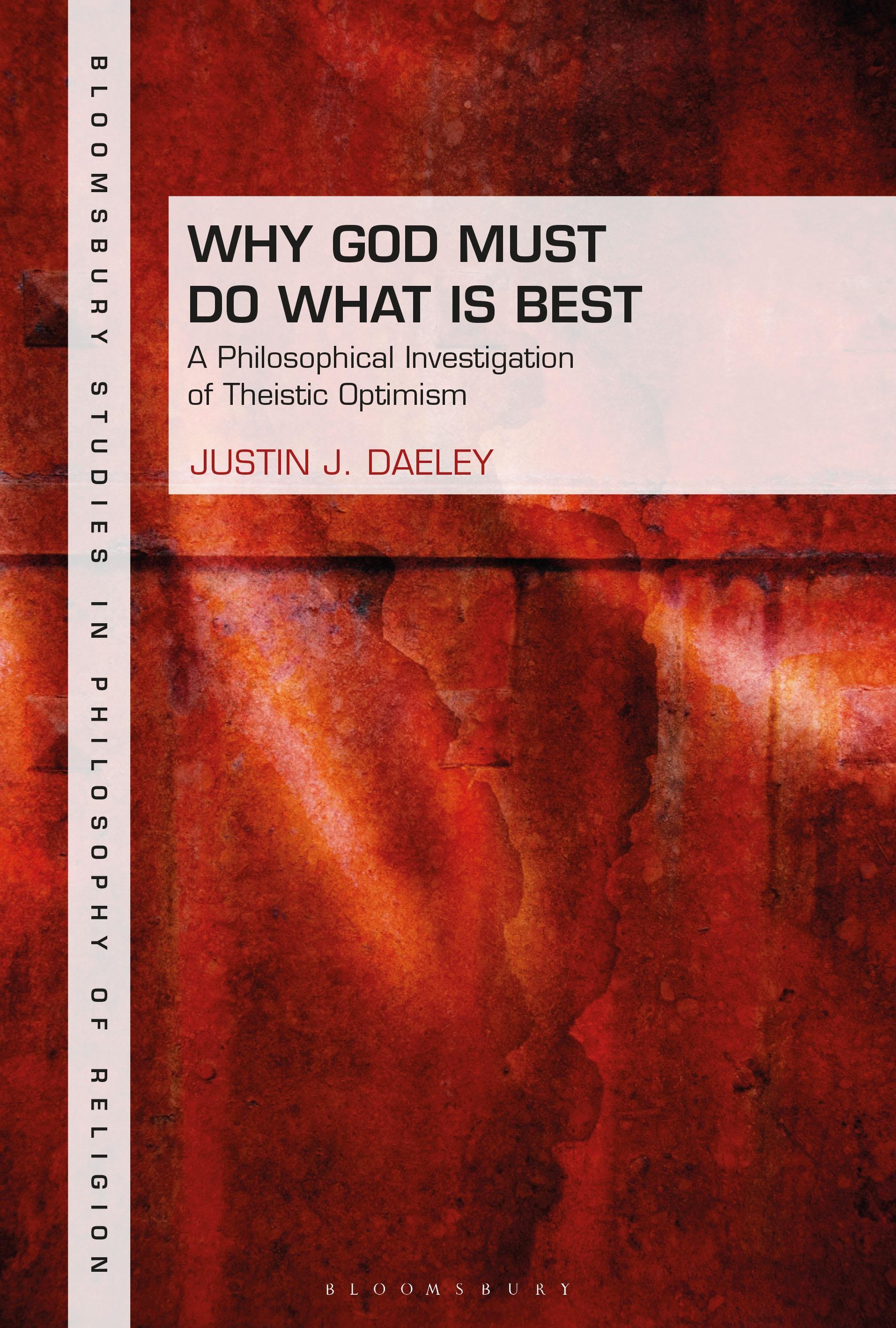
The idea that God, understood as the most perfect being, must create the best possible world is often underacknowledged by contemporary theologians and philosophers of religion. This book clearly demonstrates the rationale for what Justin J. Daeley calls Theistic Optimism and interacts with the existing literature in order to highlight its limitations. While locating Theistic Optimism in the thought of Gottfried Leibniz, Daeley argues that Theistic Optimism is consistent with divine freedom, aseity, gratitude, and our typical modal intuitions. By offering plausible solutions to each of the criticisms levelled against Theistic Optimism, he also provides a vigorous and original defence against the charge that it deviates from the Christian tradition.
Engaging with both the Christian tradition and contemporary theologians and philosophers, Why God Must Do What is Best positions the idea of Theistic Optimism firmly within the language of contemporary philosophy of religion.
Engaging with both the Christian tradition and contemporary theologians and philosophers, Why God Must Do What is Best positions the idea of Theistic Optimism firmly within the language of contemporary philosophy of religion.
Payez facilement par carte, Klarna, Apple Pay ou Google Pay. Pas satisfait ? Vous avez toujours une garantie de remboursement de 14 jours. En savoir plus dans nos conditions. Si vous avez des questions, envoyez-nous un e-mail à hello@memmo.org.
Memmo facilite tes études, où que tu sois dans le monde. On rassemble tes manuels de cours et des outils d'étude intelligents au même endroit : résumés, quiz, podcasts et flashcards. Et il y a Ted, ton compagnon d'étude qui répond à toutes tes questions. Plus de 50 000 étudiants étudient déjà ici – conçu pour t'aider à apprendre plus vite et à moins stresser.