
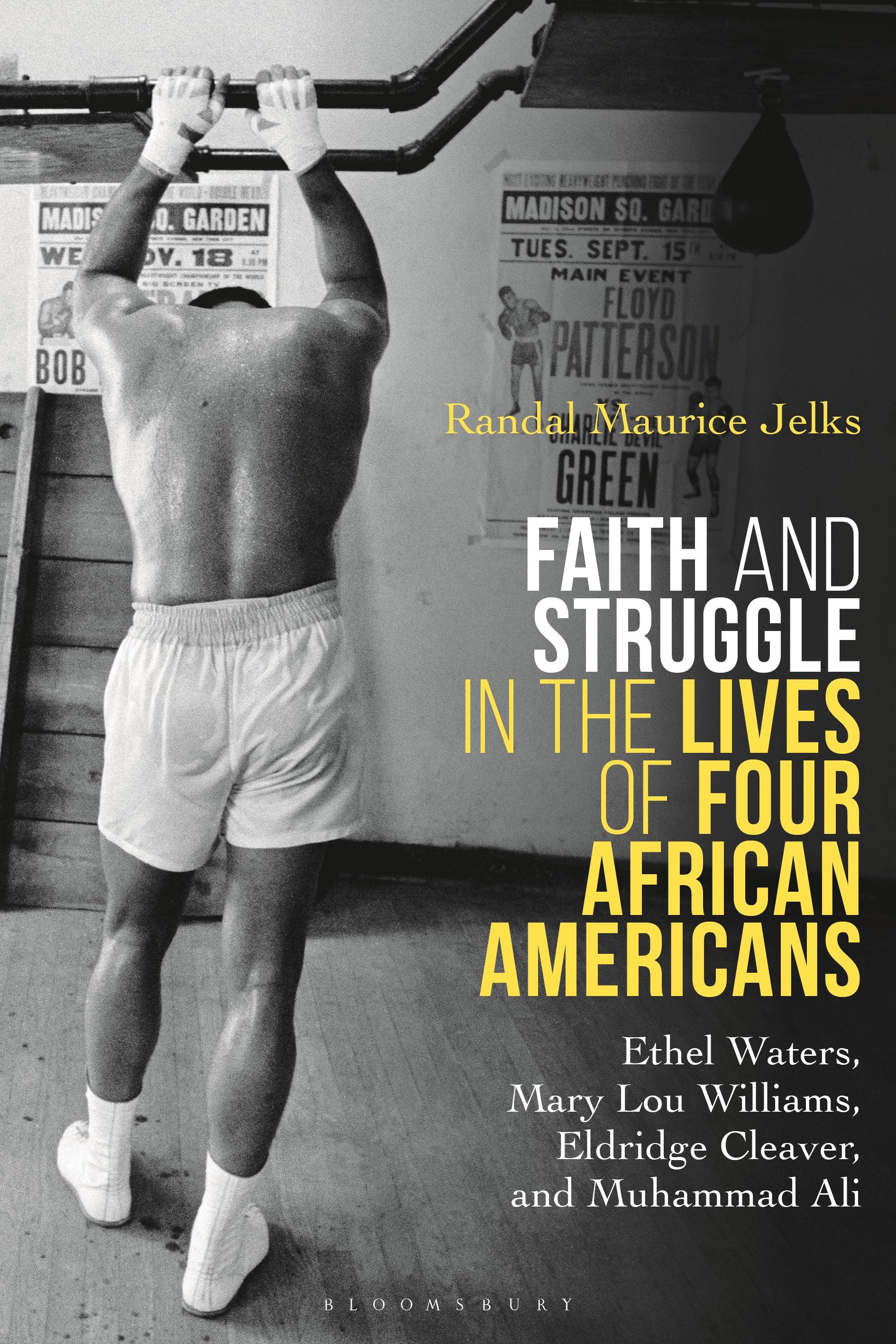
In 1964, Muhammad Ali said of his decision to join the Nation of Islam: “I know where I'm going and I know the truth and I don't have to be what you want me to be. I'm free to be what I want to be.”
This sentiment, the brash assertion of individual freedom, informs and empowers each of the four personalities profiled in this book. Randal Maurice Jelks shows that to understand the Black American experience beyond the larger narratives of enslavement, emancipation, and Black Lives Matter, we need to hear the individual stories. Drawing on his own experiences growing up as a religious African American, he shows that the inner history of Black Americans in the 20th century is a story worthy of telling.
This book explores the faith stories of four African Americans: Ethel Waters, Mary Lou Williams, Eldridge Cleaver, and Muhammad Ali. It examines their autobiographical writings, interviews, speeches, letters, and memorable performances to understand how each of these figures used religious faith publicly to reconcile deep personal struggles, voice their concerns for human dignity, and reinvent their public image. For them, liberation was not simply defined by material or legal wellbeing, but by a spiritual search for community and personal wholeness.
This sentiment, the brash assertion of individual freedom, informs and empowers each of the four personalities profiled in this book. Randal Maurice Jelks shows that to understand the Black American experience beyond the larger narratives of enslavement, emancipation, and Black Lives Matter, we need to hear the individual stories. Drawing on his own experiences growing up as a religious African American, he shows that the inner history of Black Americans in the 20th century is a story worthy of telling.
This book explores the faith stories of four African Americans: Ethel Waters, Mary Lou Williams, Eldridge Cleaver, and Muhammad Ali. It examines their autobiographical writings, interviews, speeches, letters, and memorable performances to understand how each of these figures used religious faith publicly to reconcile deep personal struggles, voice their concerns for human dignity, and reinvent their public image. For them, liberation was not simply defined by material or legal wellbeing, but by a spiritual search for community and personal wholeness.
Payez facilement par carte, Klarna, Apple Pay ou Google Pay. Pas satisfait ? Vous avez toujours une garantie de remboursement de 14 jours. En savoir plus dans nos conditions. Si vous avez des questions, envoyez-nous un e-mail à hello@memmo.org.
Memmo facilite tes études, où que tu sois dans le monde. On rassemble tes manuels de cours et des outils d'étude intelligents au même endroit : résumés, quiz, podcasts et flashcards. Et il y a Ted, ton compagnon d'étude qui répond à toutes tes questions. Plus de 50 000 étudiants étudient déjà ici – conçu pour t'aider à apprendre plus vite et à moins stresser.