
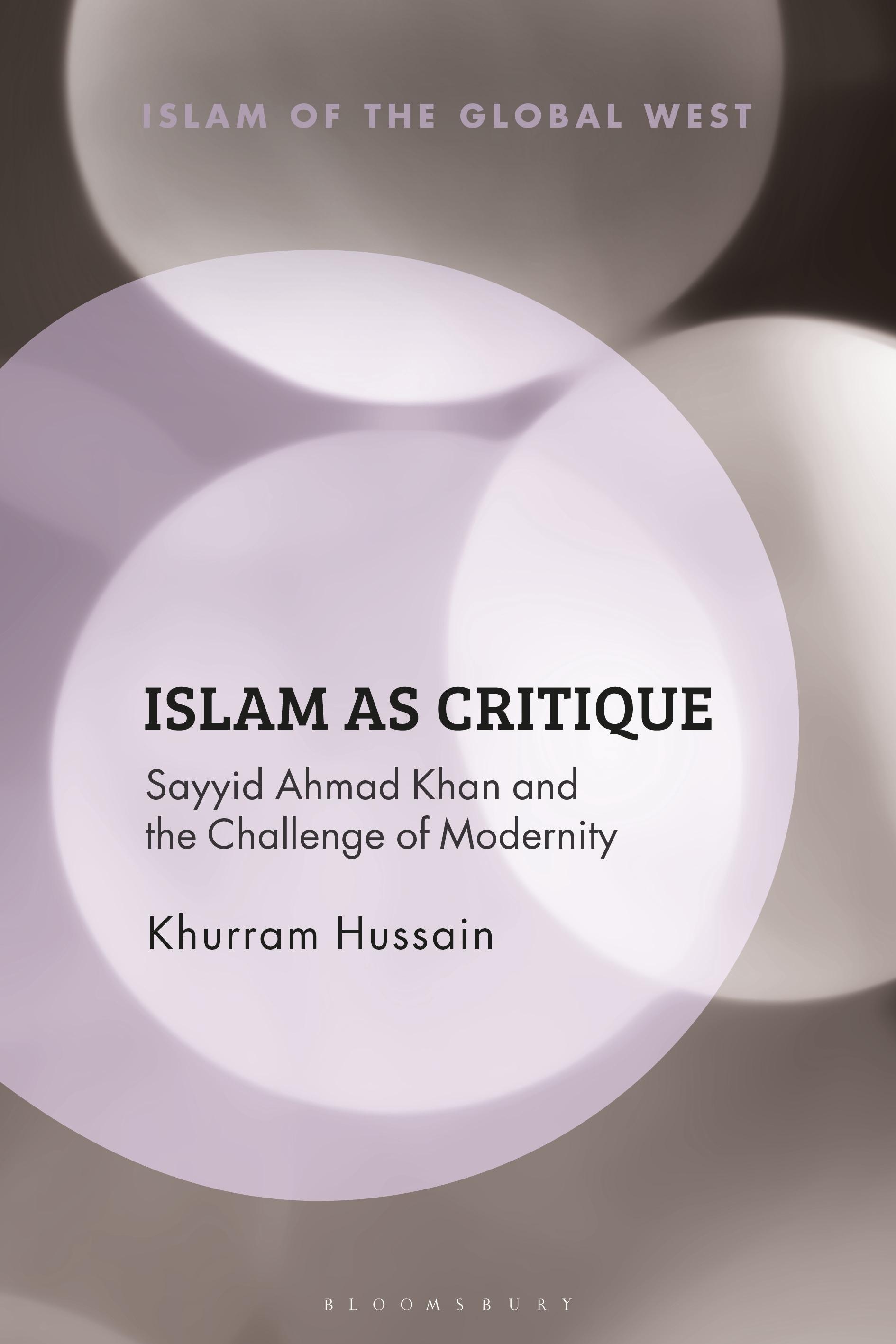
What would it mean to imagine Islam as an immanent critique of the West?
Sayyid Ahmad Khan lived in a time of great tribulation for Muslim India under British rule. By examining Khan's work as a critical expression of modernity rooted in the Muslim experience of it, Islam as Critique argues that Khan is essential to understanding the problematics of modern Islam and its relationship to the West.
The book re-imagines Islam as an interpretive strategy for investigating the modern condition, and as an engaged alternative to mainstream Western thought. Using the life and work of nineteenth-century Indian Muslim polymath Khan (1817-1898), it identifies Muslims as a viable resource for both critical intervention in important ethical debates of our times and as legitimate participants in humanistic discourses that underpin a just global order.
Islam as Critique locates Khan within a broader strain in modern Islamic thought that is neither a rejection of the West, nor a wholesale acceptance of it. The author calls this “Critical Islam”. By bringing Khan's critical engagement with modernity into conversation with similar critical analyses of the modern by Reinhold Niebuhr, Hannah Arendt, and Alasdair MacIntyre, the author shows how Islam can be read as critique.
Sayyid Ahmad Khan lived in a time of great tribulation for Muslim India under British rule. By examining Khan's work as a critical expression of modernity rooted in the Muslim experience of it, Islam as Critique argues that Khan is essential to understanding the problematics of modern Islam and its relationship to the West.
The book re-imagines Islam as an interpretive strategy for investigating the modern condition, and as an engaged alternative to mainstream Western thought. Using the life and work of nineteenth-century Indian Muslim polymath Khan (1817-1898), it identifies Muslims as a viable resource for both critical intervention in important ethical debates of our times and as legitimate participants in humanistic discourses that underpin a just global order.
Islam as Critique locates Khan within a broader strain in modern Islamic thought that is neither a rejection of the West, nor a wholesale acceptance of it. The author calls this “Critical Islam”. By bringing Khan's critical engagement with modernity into conversation with similar critical analyses of the modern by Reinhold Niebuhr, Hannah Arendt, and Alasdair MacIntyre, the author shows how Islam can be read as critique.
Payez facilement par carte, Klarna, Apple Pay ou Google Pay. Pas satisfait ? Vous avez toujours une garantie de remboursement de 14 jours. En savoir plus dans nos conditions. Si vous avez des questions, envoyez-nous un e-mail à hello@memmo.org.
Memmo facilite tes études, où que tu sois dans le monde. On rassemble tes manuels de cours et des outils d'étude intelligents au même endroit : résumés, quiz, podcasts et flashcards. Et il y a Ted, ton compagnon d'étude qui répond à toutes tes questions. Plus de 50 000 étudiants étudient déjà ici – conçu pour t'aider à apprendre plus vite et à moins stresser.