
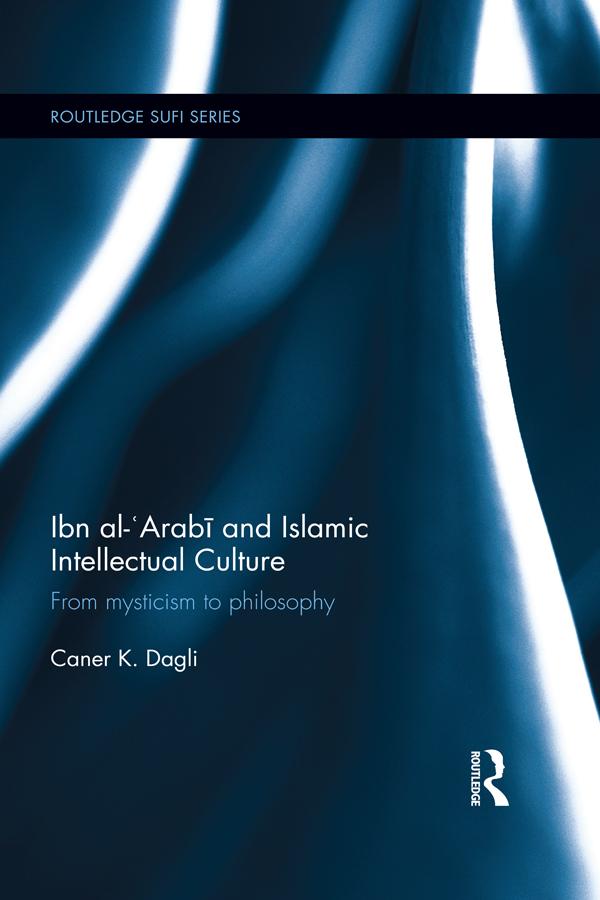
Ibn al-'Arabī (d. 1240) was one of the towering figures of Islamic intellectual history, and among Sufis still bears the title of al-shaykh al-akbar, or "the greatest master."
Ibn al-'Arabī and Islamic Intellectual Culture traces the history of the concept of "oneness of being" (wahdat al-wujūd) in the school of Ibn al- 'Arabī, in order to explore the relationship between mysticism and philosophy in Islamic intellectual life. It examines how the conceptual language used by early mystical writers became increasingly engaged over time with the broader Islamic intellectual culture, eventually becoming integrated with the latter’s common philosophical and theological vocabulary. It focuses on four successive generations of thinkers (Sadr al-Dīn al-Qūnawī, Mu'ayyad al-Dīn al-Jandī, 'Abd al-Razzāq al-Kāshānī, and Dāwūd al-Qaysarī), and examines how these "philosopher-mystics" refined and developed the ideas of Ibn al-'Arabī. Through a close analysis of texts, the book clearly traces the crystallization of an influential school of thought in Islamic history and its place in the broader intellectual culture.
Offering an exploration of the development of Sufi expression and thought, this book will be a valuable resource for students and scholars of Islamic thought, philosophy, and mysticism.
Payez facilement par carte, Klarna, Apple Pay ou Google Pay. Pas satisfait ? Vous avez toujours une garantie de remboursement de 14 jours. En savoir plus dans nos conditions. Si vous avez des questions, envoyez-nous un e-mail à hello@memmo.org.
Memmo facilite tes études, où que tu sois dans le monde. On rassemble tes manuels de cours et des outils d'étude intelligents au même endroit : résumés, quiz, podcasts et flashcards. Et il y a Ted, ton compagnon d'étude qui répond à toutes tes questions. Plus de 50 000 étudiants étudient déjà ici – conçu pour t'aider à apprendre plus vite et à moins stresser.