
Avant Memmo, mes notes étaient éparpillées dans des PDF. Maintenant, un espace de travail rassemble tout — je vois exactement ce qu'il me reste à étudier.
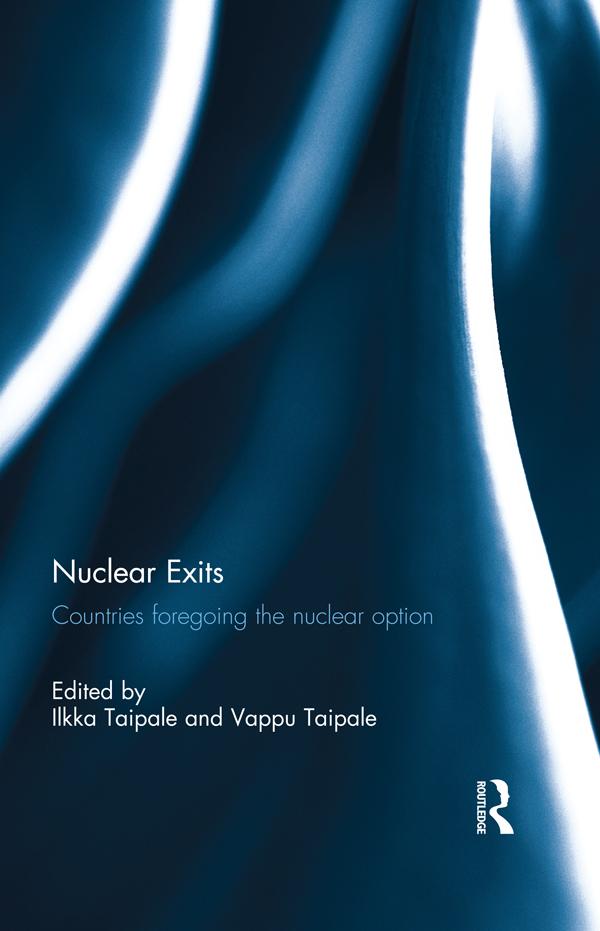
Many countries have the capacity to construct nuclear weapons - even relatively poor and small ones, as the North Korean example shows us. So far, only one country - South Africa – has voluntarily given up its nuclear weapons programme. Three others - Ukraine, Kazakhstan and Belarus - gave up the Soviet Union’s nuclear weapons after the end of the Cold War. A number of others (including Australia, Sweden and Switzerland) have at one time or another made plans to build nuclear weapons, but eventually opted not to do so.
These stories can shed significant light on the prospects for nuclear disarmament – one of the biggest global challenges of our time. Yet they have received little scrutiny in the academic literature to date. This volume addresses that gap, bringing together scholars, practitioners and politicians to reflect on the history of nuclear exits (and nuclear non-entries) and to draw out some key lessons for future nuclear disarmament and non-proliferation efforts.
Although progress on reducing nuclear arsenals has been frustratingly slow, there are strong indications that world opinion is increasingly supportive of nuclear exits. Organizations such as International Physicians for the Prevention of Nuclear War, the International Committee of the Red Cross and the World Medical Association have all taken a strong stand against nuclear weapons.
Ultimately ridding the world of nuclear weapons requires politicians to take determined action – to decide in favour of nuclear exits. The chapters in this volume show that such decisions are possible and that a worldwide nuclear exit is achievable – within our lifetimes.
This book was published as a special issue of Medicine, Conflict and Survival.
Avant Memmo, mes notes étaient éparpillées dans des PDF. Maintenant, un espace de travail rassemble tout — je vois exactement ce qu'il me reste à étudier.
Les résumés de Memmo sont en or avant les examens. Pas besoin de relire 800 pages deux semaines avant — juste l'essentiel.
Le chat IA m'a sauvé la veille d'un examen plus d'une fois. Je pose des questions jusqu'à ce que je comprenne — pas besoin d'attendre la réponse d'un groupe d'étude.
Les quiz ciblent exactement ce que je dois savoir. Memmo suit ce sur quoi je bloque — comme ça, je ne m'entraîne que sur ce qui compte.
Les flashcards avec répétition espacée, c'est magique. Memmo sait quand je suis sur le point d'oublier quelque chose et me le rappelle.
Les podcasts IA, c'est ma fonction préférée. J'écoute en allant à l'école et j'ai un récap sans être devant un ordinateur.

Handbok i kvalitativa metoder
281 kr

Hållbar utveckling: en introduktion för ingenjörer och andra problemlösare
334 kr

Brymans Samhällsvetenskapliga metoder
390 kr

Projektledning
491 kr

Den orättvisa hälsan: om socioekonomiska skillnader i hälsa och livslängd
326 kr

Organizational Leadership
429 kr

Vetenskapsteori för nybörjare
196 kr

På väg mot läraryrket
172 kr

Det sociala livet i skolan: Socialpsykologiska perspektiv
253 kr

Betygsättningens didaktik
151 kr

Personality
402 kr

Studying Leadership
404 kr

Managing Innovation
477 kr

Introduktion till samhällsvetenskaplig metod
347 kr

The Psychology of Sex and Gender
698 kr

Introduction to Leadership
605 kr

Evidens och kunskap för socialt arbete
207 kr