
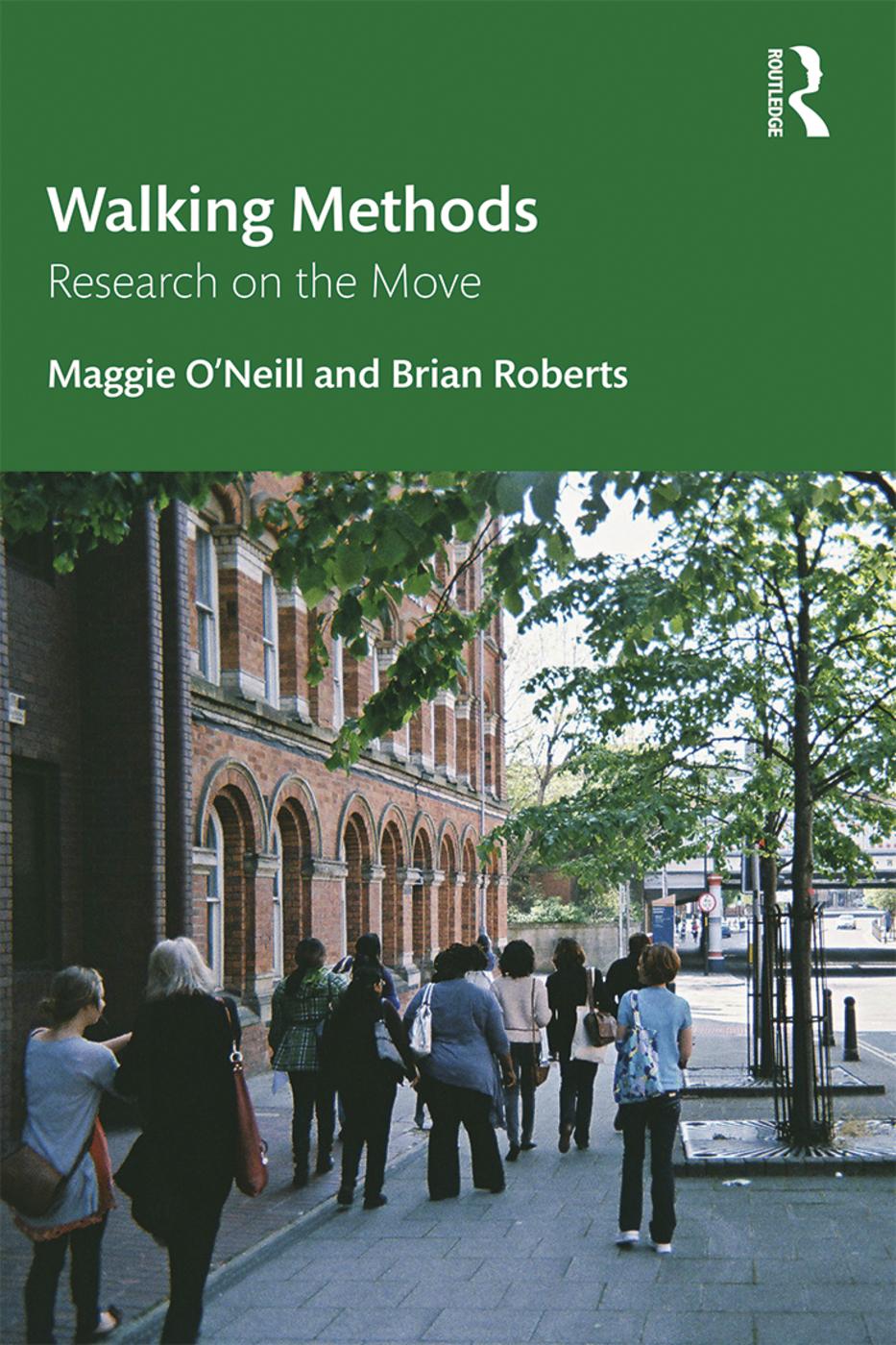
This book introduces and critically explores walking as an innovative method for doing social research, showing how its sensate and kinaesthetic attributes facilitate connections with lived experiences, journeys and memories, communities and identities. The book situates walking methods historically, sociologically, and in relation to biographical and arts-based research, as well as new work on mobilities, the digital, spatial, and the sensory.
The book is organised into three sections: theorising; experiencing; and imagining walking as a new method for doing biographical research. There is a key focus upon the Walking Interview as a Biographical Method (WIBM) on the move to usefully explore migration, memory, and urban landscapes, as part of participatory, visual, and ethnographic research with marginalised communities and artists and as re-formative and transgressive. The book concludes with autobiographical walks taken by the authors and a discussion about the future of the walking interview as biographical method.
Walking Methods combines theory with a series of original ethnographic and participatory research examples. Practical exercises and a guide to using walking as a method help to make this a rich resource for social science researchers, students, walking artists, and biographical researchers.
Payez facilement par carte, Klarna, Apple Pay ou Google Pay. Pas satisfait ? Vous avez toujours une garantie de remboursement de 14 jours. En savoir plus dans nos conditions. Si vous avez des questions, envoyez-nous un e-mail à hello@memmo.org.
Memmo facilite tes études, où que tu sois dans le monde. On rassemble tes manuels de cours et des outils d'étude intelligents au même endroit : résumés, quiz, podcasts et flashcards. Et il y a Ted, ton compagnon d'étude qui répond à toutes tes questions. Plus de 50 000 étudiants étudient déjà ici – conçu pour t'aider à apprendre plus vite et à moins stresser.