
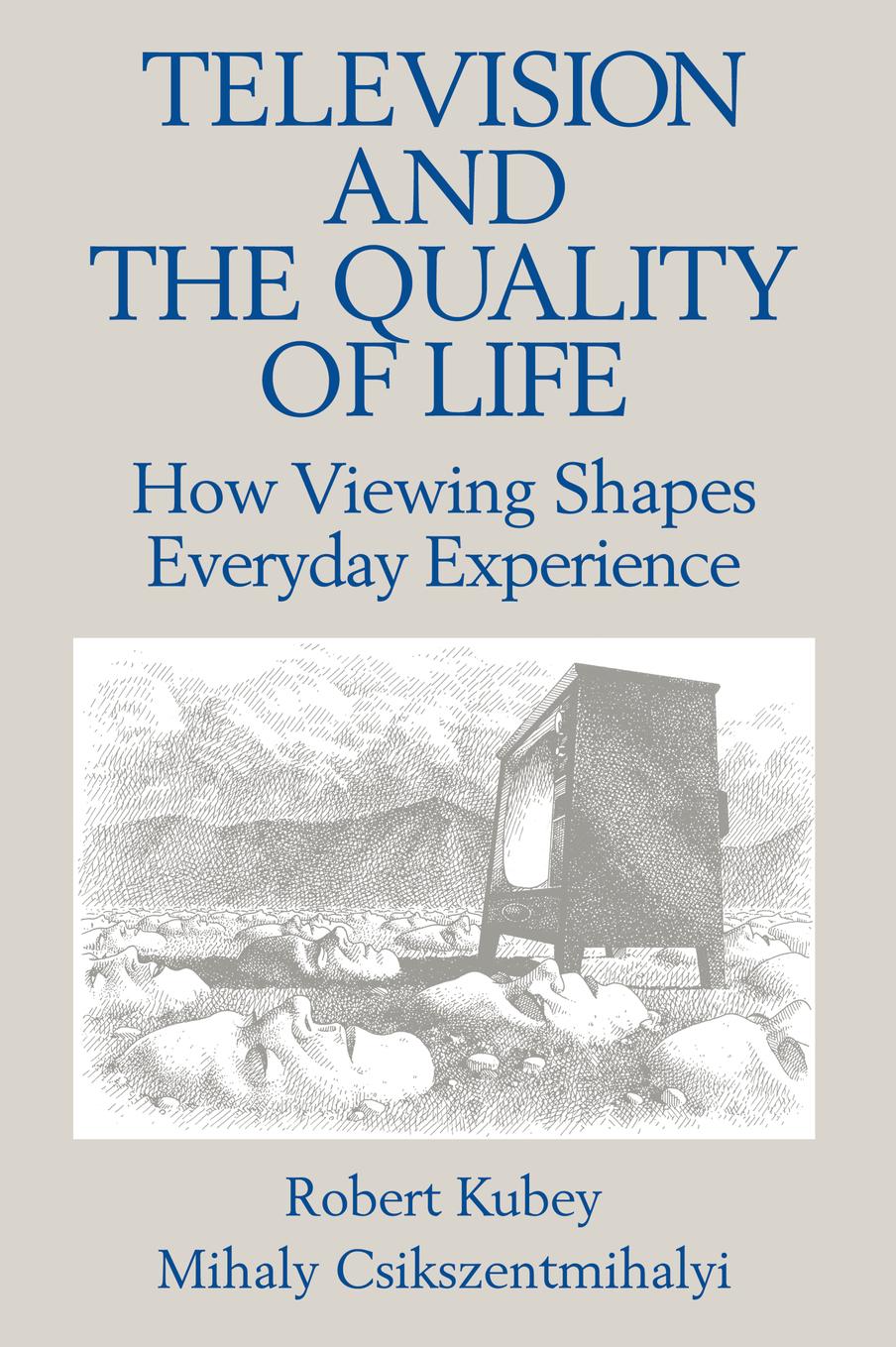
Employing a unique research methodology that enables people to report on their normal activities as they occur, the authors examine how people actually use and experience television -- and how television viewing both contributes to and detracts from the quality of everyday life. Studied within the natural context of everyday living, and drawing comparisons between television viewing and a variety of other daily activities and leisure pursuits, this unusual book explores whether television is a boon or a detriment to family life; how people feel and think before, during, and after television viewing; what causes television habits to develop; and what causes heavy viewing -- and what heavy viewing causes -- in the short and long term.
Television and the Quality of Life also compares the viewing experience cross-nationally using samples from the United States, Italy, Canada, and Germany -- and then interprets the findings within a broad theoretical and historical framework that considers how information use and daily activity contribute to individual, familial, societal, and cultural development.
Payez facilement par carte, Klarna, Apple Pay ou Google Pay. Pas satisfait ? Vous avez toujours une garantie de remboursement de 14 jours. En savoir plus dans nos conditions. Si vous avez des questions, envoyez-nous un e-mail à hello@memmo.org.
Memmo facilite tes études, où que tu sois dans le monde. On rassemble tes manuels de cours et des outils d'étude intelligents au même endroit : résumés, quiz, podcasts et flashcards. Et il y a Ted, ton compagnon d'étude qui répond à toutes tes questions. Plus de 50 000 étudiants étudient déjà ici – conçu pour t'aider à apprendre plus vite et à moins stresser.