
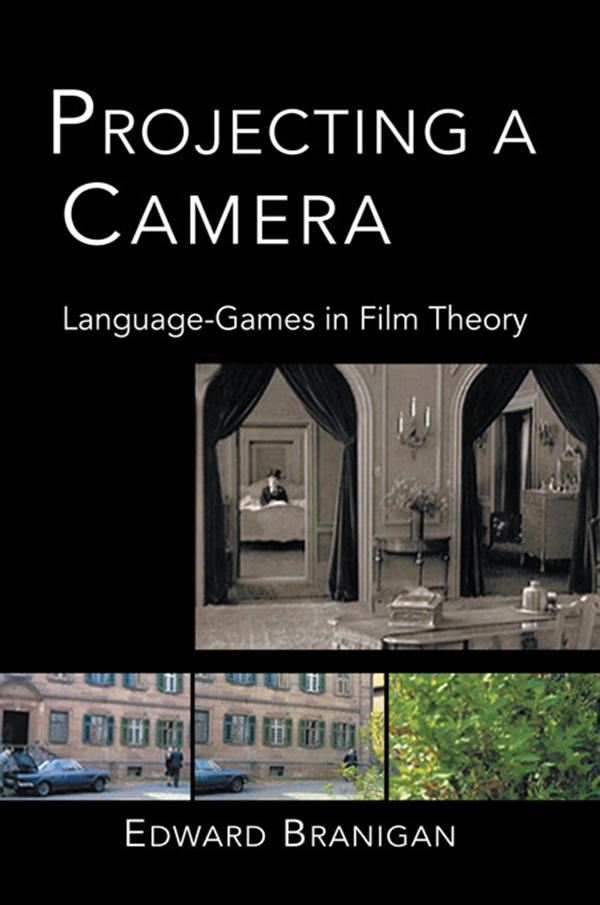
In Projecting a Camera, film theorist Edward Branigan offers a groundbreaking approach to understanding film theory. Why, for example, does a camera move? What does a camera "know"? (And when does it know it?) What is the camera's relation to the subject during long static shots? What happens when the screen is blank? Through a wide-ranging engagement with Wittgenstein and theorists of film, he offers one of the most fully developed understandings of the ways in which the camera operates in film.
With its thorough grounding in the philosophy of spectatorship and narrative, Projecting aCamera takes the study of film to a new level. With the care and precision that he brought to NarrativeComprehension and Film, Edward Branigan maps the ways in which we must understand the role of the camera, the meaning of the frame, the role of the spectator, and other key components of film-viewing. By analyzing how we think, discuss, and marvel about the films we see, Projecting a Camera, offers insights rich in implications for our understanding of film and film studies.
Payez facilement par carte, Klarna, Apple Pay ou Google Pay. Pas satisfait ? Vous avez toujours une garantie de remboursement de 14 jours. En savoir plus dans nos conditions. Si vous avez des questions, envoyez-nous un e-mail à hello@memmo.org.
Memmo facilite tes études, où que tu sois dans le monde. On rassemble tes manuels de cours et des outils d'étude intelligents au même endroit : résumés, quiz, podcasts et flashcards. Et il y a Ted, ton compagnon d'étude qui répond à toutes tes questions. Plus de 50 000 étudiants étudient déjà ici – conçu pour t'aider à apprendre plus vite et à moins stresser.