
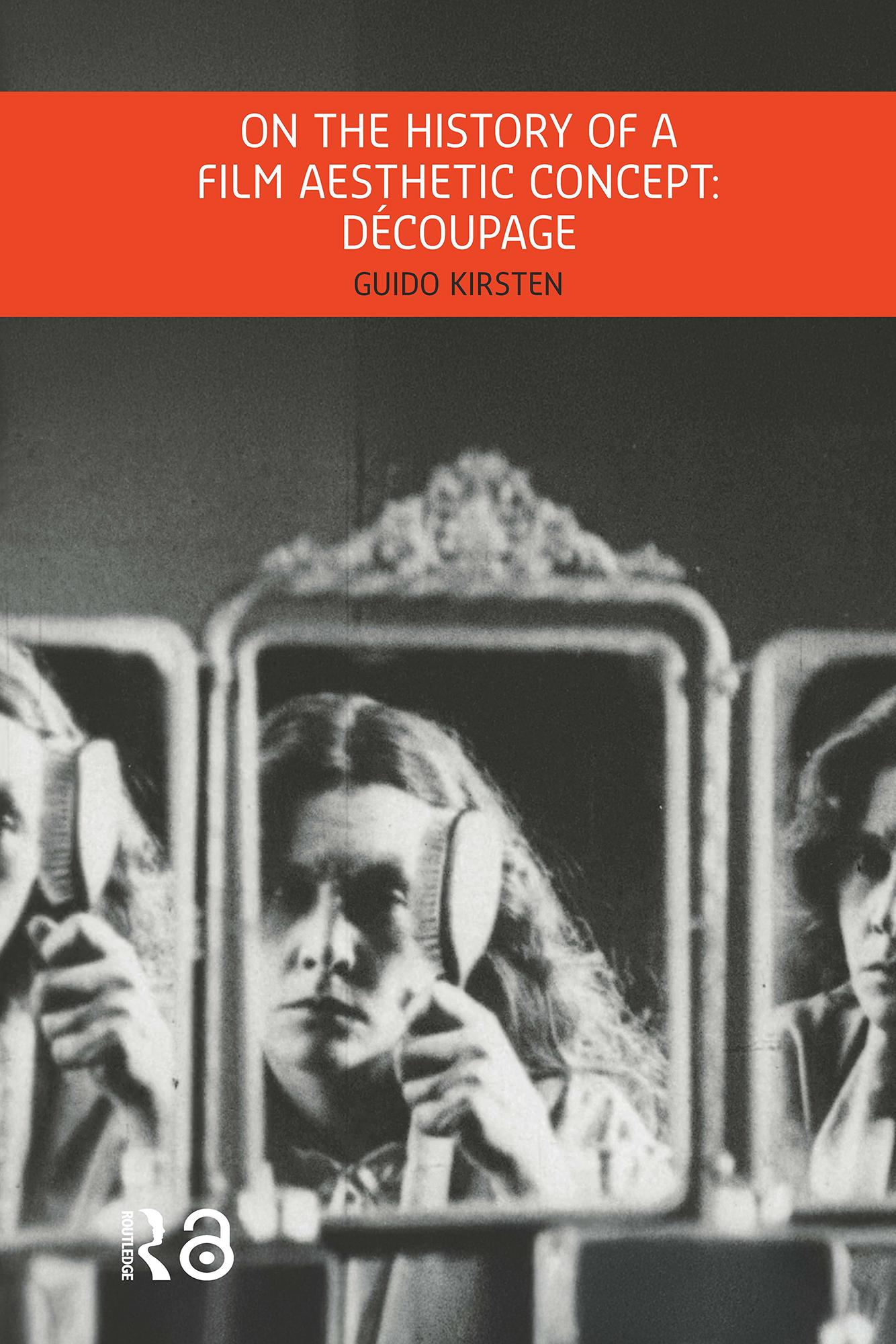
Unlike editing, découpage does not take place after the film has been shot, but before. The French term refers to the breakdown of a scene into a sequence of shots. In order to translate the written screenplay into film language, cinematographers and directors employ a genuinely cinematic way of thinking—a thinking in sequences of moving images and sounds, including the camera setups, movements, and shot sizes. Découpage is thus crucial in shaping a film's specific form. Using the tools of conceptual history, Guido Kirsten traces the term's evolution from its emergence in the 1910s through the eventful film history of the twentieth century until its recent rediscovery. By differentiating layers of meaning and discussing important shifts in the concept's evolution, this book improves the understanding of key film theoretical texts, whose meaning has been distorted by mistranslation, and shows how a deeper reflection of découpage promises to enrich the analysis of contemporary moving image media.
Payez facilement par carte, Klarna, Apple Pay ou Google Pay. Pas satisfait ? Vous avez toujours une garantie de remboursement de 14 jours. En savoir plus dans nos conditions. Si vous avez des questions, envoyez-nous un e-mail à hello@memmo.org.
Memmo facilite tes études, où que tu sois dans le monde. On rassemble tes manuels de cours et des outils d'étude intelligents au même endroit : résumés, quiz, podcasts et flashcards. Et il y a Ted, ton compagnon d'étude qui répond à toutes tes questions. Plus de 50 000 étudiants étudient déjà ici – conçu pour t'aider à apprendre plus vite et à moins stresser.
Tu pourrais aussi aimer
Acheter le livre0