
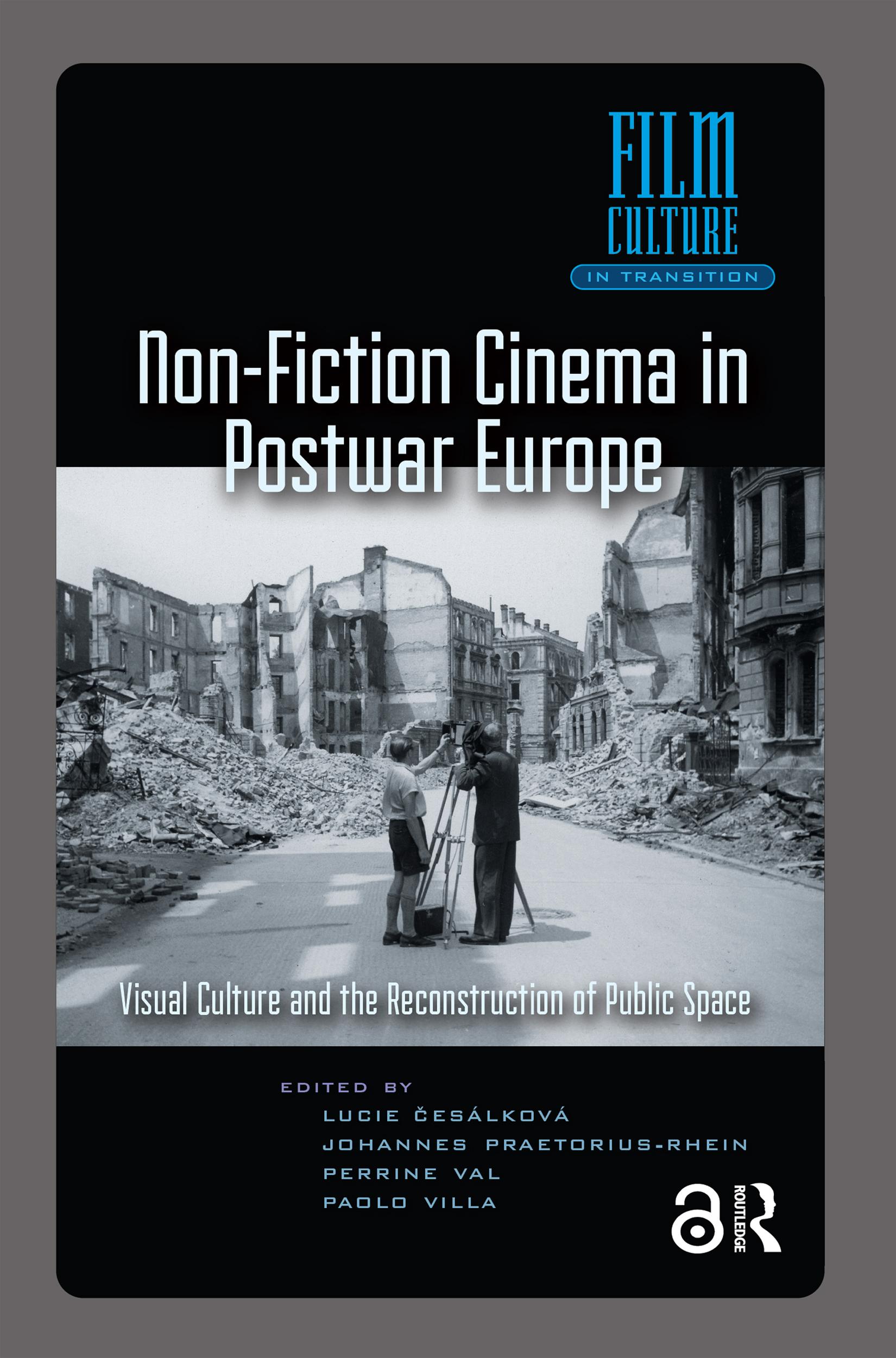
After WWII, cinema was everywhere: in movie theatres, public squares, factories, schools, trial courts, trains, museums, and political meetings. Seen today, documentaries and newsreels, as well as the amateur production, show the kaleidoscopic portrait of a changing Europe. How did these cinematic images contribute to shaping the new societies emerging from the ashes of war, both in the Western and in the Eastern bloc? Why were they so crucial in framing and regulating new places and practices, political systems, economic dynamics, educational frameworks, and memory communities? This edited volume explores the multiple ways nonfiction cinema reconfigured public spaces, collective participation, democratisation, and governmentality between 1944 and 1956. Looking back at it through a transnational perspective and the critical category of spatiality, nonfiction cinema appears in a new light: simultaneously as a specifically situated and as a highly mobile medium, it was a fundamental agent in reshaping Europe’s shared identity and culture in a defining decade.
Pages: 518
Catégorie: Film- & Medievetenskap
e-ISBN: 9781040784853
Poids d'expédition: 1.2 kg
Expédié sous: 1-2 jours
Payez facilement par carte, Klarna, Apple Pay ou Google Pay. Pas satisfait ? Vous avez toujours une garantie de remboursement de 14 jours. En savoir plus dans nos conditions. Si vous avez des questions, envoyez-nous un e-mail à hello@memmo.org.
Memmo facilite tes études, où que tu sois dans le monde. On rassemble tes manuels de cours et des outils d'étude intelligents au même endroit : résumés, quiz, podcasts et flashcards. Et il y a Ted, ton compagnon d'étude qui répond à toutes tes questions. Plus de 50 000 étudiants étudient déjà ici – conçu pour t'aider à apprendre plus vite et à moins stresser.
Tu pourrais aussi aimer
Acheter le livre0