
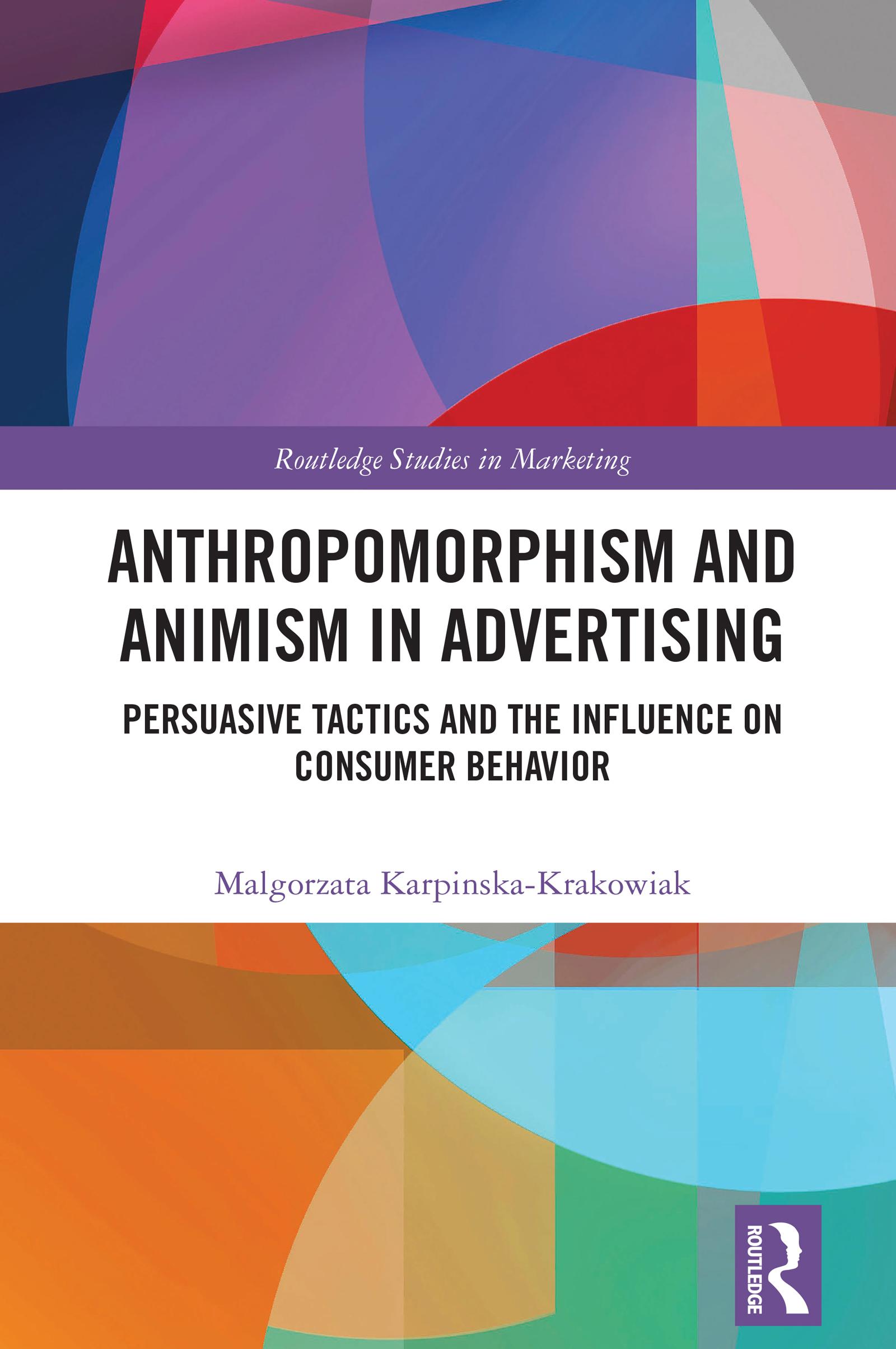
Traditionally, advertisers have assumed that anthropomorphism (seeing a product as human) and animism (seeing a product as alive) are identical processes, triggering the same consumer responses. This book shows that this assumption is incorrect, often leading to misinterpretations in scholarly studies. Through a series of experiments, it reveals that animism and anthropomorphism are two distinct processes with different causes, consequences and implications.
While anthropomorphism is well-studied, animism has been largely overlooked. This book is the first to systematically differentiate the two, providing clear definitions and empirical evidence. It identifies specific advertising tactics that trigger animism versus anthropomorphism and examines their persuasive impact. It explores when and why consumers are more likely to animate or anthropomorphize products. These insights help readers determine which process is more effective for different contexts, services and product categories. Additionally, the book includes a comprehensive review of existing empirical studies on anthropomorphism, offering a summary of key findings, manipulation techniques and moderating factors. This resource allows readers to recognize broader patterns in past research and apply them to their work.
This novel book offers valuable new insights for scholars across advertising, marketing and consumer psychology in particular.
Payez facilement par carte, Klarna, Apple Pay ou Google Pay. Pas satisfait ? Vous avez toujours une garantie de remboursement de 14 jours. En savoir plus dans nos conditions. Si vous avez des questions, envoyez-nous un e-mail à hello@memmo.org.
Memmo facilite tes études, où que tu sois dans le monde. On rassemble tes manuels de cours et des outils d'étude intelligents au même endroit : résumés, quiz, podcasts et flashcards. Et il y a Ted, ton compagnon d'étude qui répond à toutes tes questions. Plus de 50 000 étudiants étudient déjà ici – conçu pour t'aider à apprendre plus vite et à moins stresser.