
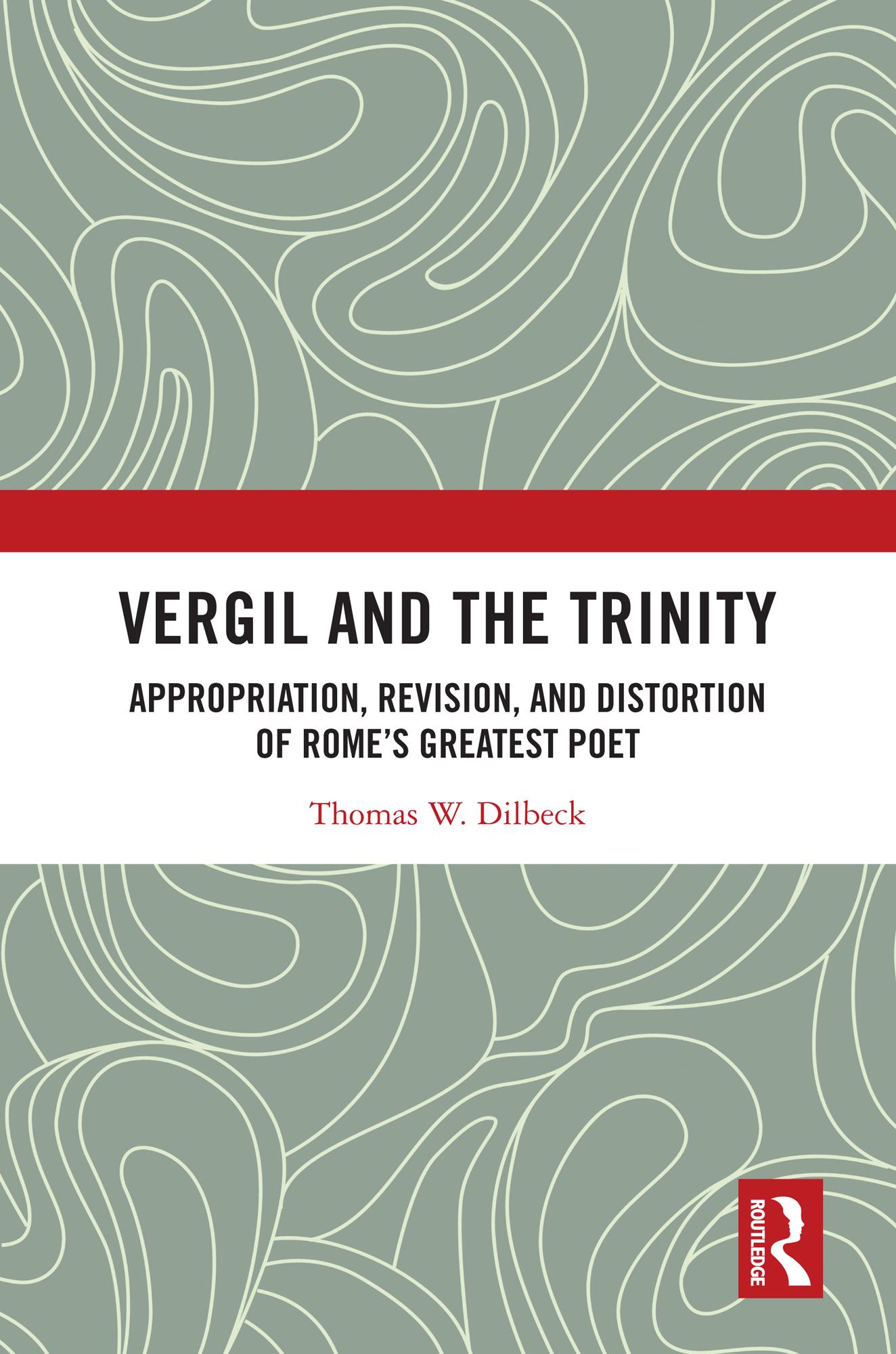
This volume reveals how some Christian authors used the poetry of Vergil to explain important aspects of the three persons of the trinity, shedding new light on the attitudes of early Christians towards non-Christian texts.
Readers gain insight into how Christians employed the work of Rome’s most famous poet in discussions about the trinity, which one might assume were only limited to the use of canonical scripture. The book explores why these authors relied upon Vergil in particular and which portions of his corpus interested them, before analysing several examples in order to accurately contextualise how Vergil’s work was cited and employed by the Latin Fathers in their own work. These Christian authors writing in Latin used Vergil for more substantive reasons than rhetorical ornamentation, and Dilbeck argues that they formed a textual community which included his works.
Written in accessible prose, Vergil and the Trinity is of interest to not only to those working in the field of patristics, but also to classical scholars, biblical scholars, readers interested in the history of biblical interpretation, and in the history of philosophy.
Payez facilement par carte, Klarna, Apple Pay ou Google Pay. Pas satisfait ? Vous avez toujours une garantie de remboursement de 14 jours. En savoir plus dans nos conditions. Si vous avez des questions, envoyez-nous un e-mail à hello@memmo.org.
Memmo facilite tes études, où que tu sois dans le monde. On rassemble tes manuels de cours et des outils d'étude intelligents au même endroit : résumés, quiz, podcasts et flashcards. Et il y a Ted, ton compagnon d'étude qui répond à toutes tes questions. Plus de 50 000 étudiants étudient déjà ici – conçu pour t'aider à apprendre plus vite et à moins stresser.