
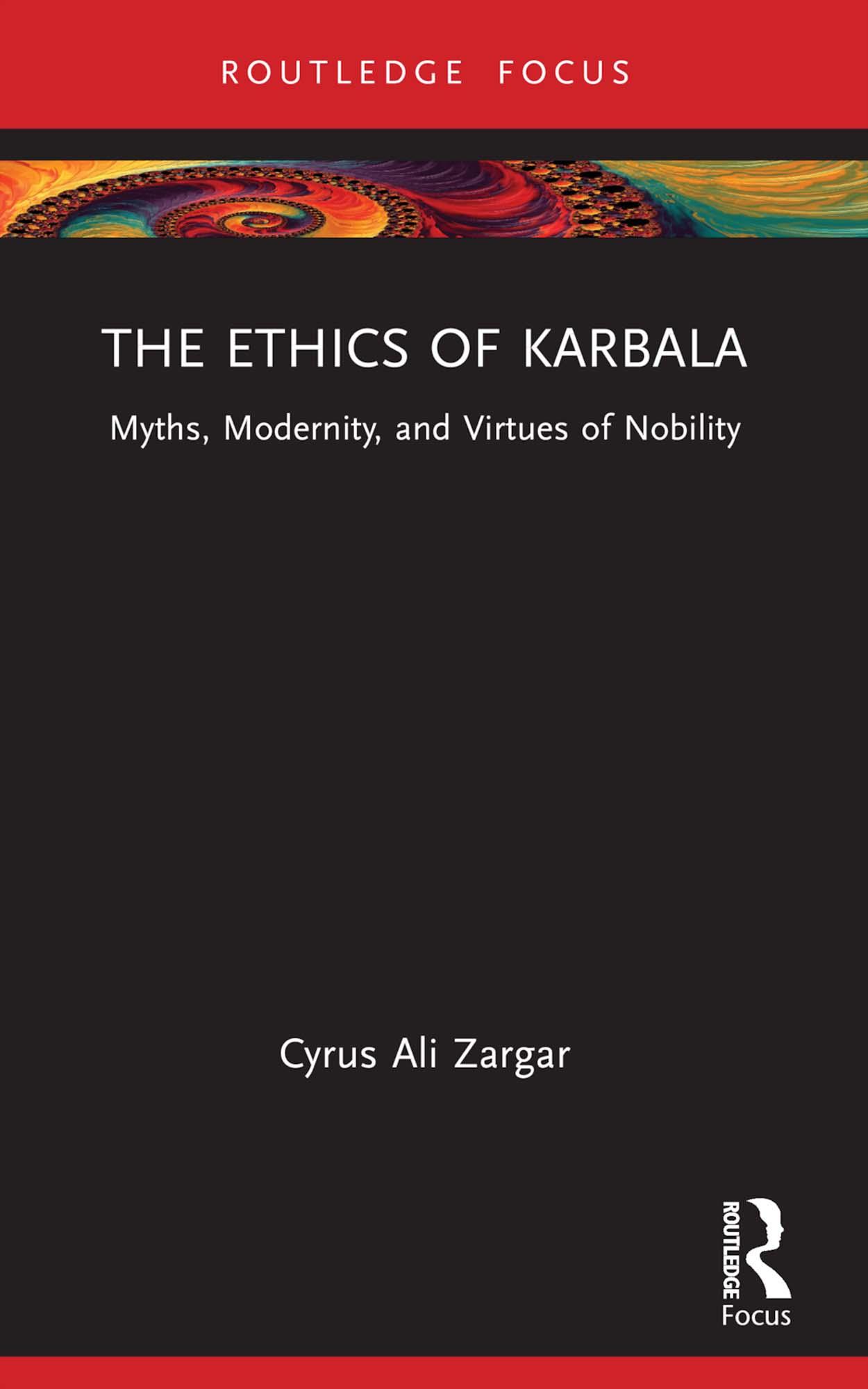
The Ethics of Karbala investigates the relationship between sacred narratives and the development of character. Focusing on the warrior ethos expressed in accounts of the Battle of Karbala, Zargar searches for the place of the martial virtues in modern life and warfare.
This book is the first of its kind in taking a virtue ethics approach to the study of Islamic history. It offers an ethical analysis of arguably the most pivotal moment in Islamic history. To do so, it makes use of interdisciplinary methods, especially global philosophy and religious studies, and draws on philosophical concepts spanning from Nietzsche to Iqbal. The book’s clear and engaging prose makes it accessible to readers seeking a profound understanding of intersections between practical philosophy and religious myths.
This book targets upper-level undergraduate readers seeking to discover Islamic ethics. It will serve nonspecialists, specialists in Shiʿi Islamic studies, and all those interested in Islamic ethics, virtue ethics, cross-cultural philosophy, Nietzsche studies, military science, and religious studies.
Payez facilement par carte, Klarna, Apple Pay ou Google Pay. Pas satisfait ? Vous avez toujours une garantie de remboursement de 14 jours. En savoir plus dans nos conditions. Si vous avez des questions, envoyez-nous un e-mail à hello@memmo.org.
Memmo facilite tes études, où que tu sois dans le monde. On rassemble tes manuels de cours et des outils d'étude intelligents au même endroit : résumés, quiz, podcasts et flashcards. Et il y a Ted, ton compagnon d'étude qui répond à toutes tes questions. Plus de 50 000 étudiants étudient déjà ici – conçu pour t'aider à apprendre plus vite et à moins stresser.