
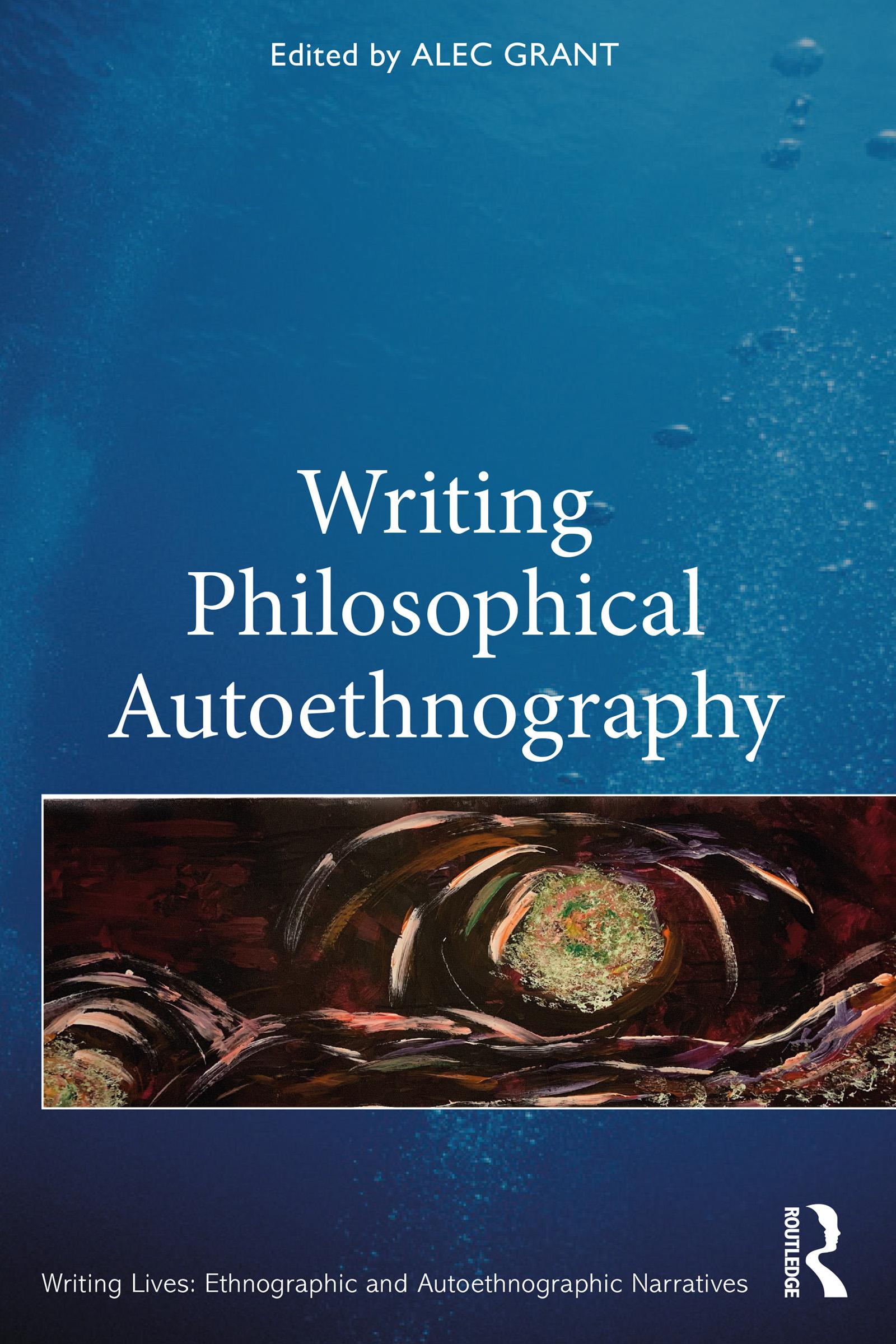
Writing Philosophical Autoethnography is the result of Alec Grant’s vision of bringing the disciplines of philosophy and autoethnography together. This is the first volume of narrative autoethnographic work in which invited contributing authors were charged with exploring their issues, concerns, and topics about human society, culture, and the material world through an explicitly philosophical lens.
Each chapter, while written autoethnographically, showcases sustained engagement with philosophical arguments, ideas, concepts, theories, and corresponding ethical positions. Unlike much other autoethnographic work, within which philosophical ideas often appear to be "grafted on" or supplementary, the philosophical basis of the work in this volume is fundamental to its shifting content, focus, and context. The narratives in this book, from scholars working in a range of disciplines in the humanities and human sciences, function as narrative, conceptual, and analytical exemplars to act as a guide for autoethnographers in their own writing, and suggest future directions for making autoethnography more philosophically rigorous.
This book is suitable for students and scholars of autoethnography and qualitative methods in a range of disciplines, including the humanities, social and human sciences, communication studies, and education.
Payez facilement par carte, Klarna, Apple Pay ou Google Pay. Pas satisfait ? Vous avez toujours une garantie de remboursement de 14 jours. En savoir plus dans nos conditions. Si vous avez des questions, envoyez-nous un e-mail à hello@memmo.org.
Memmo facilite tes études, où que tu sois dans le monde. On rassemble tes manuels de cours et des outils d'étude intelligents au même endroit : résumés, quiz, podcasts et flashcards. Et il y a Ted, ton compagnon d'étude qui répond à toutes tes questions. Plus de 50 000 étudiants étudient déjà ici – conçu pour t'aider à apprendre plus vite et à moins stresser.