
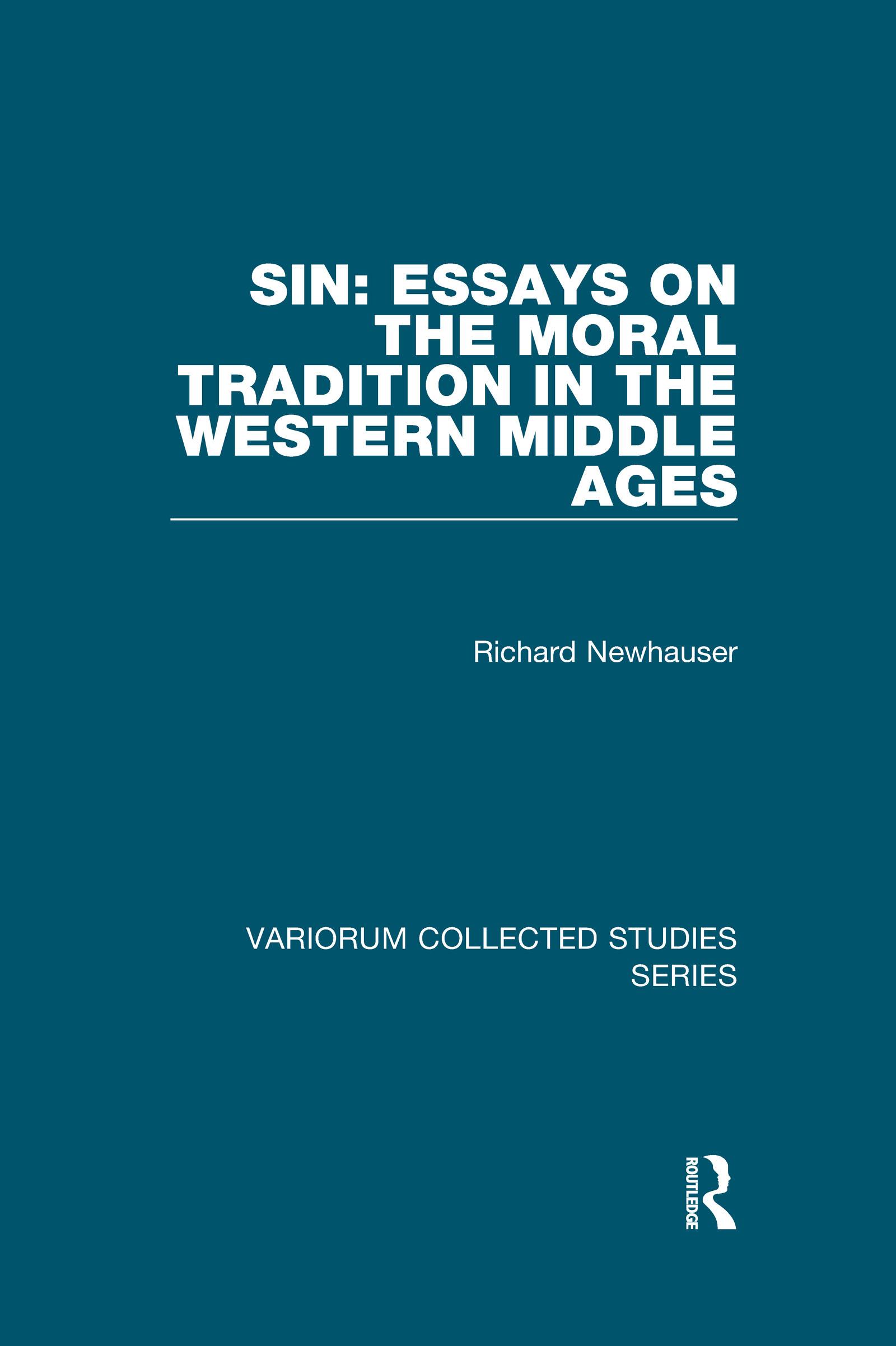
Richard Newhauser examines here aspects of the moral tradition of medieval thought, specifically the construction of the seven deadly sins, their offspring, and related schematizations of immorality in the Latin West. The emphasis in these studies is on the malleability of moral categories, their relationship to changes in medieval culture, and the creativity and sensitivity of the thinkers who made use of the concepts of sinfulness in the Middle Ages. The first section examines the contexts in which the seven deadly sins (or nine accessory sins) are found in medieval Latin, English, and German texts, and in particular the genre of the treatise on vices and virtues as the major vehicle in which concepts of immorality were examined and presented to a variety of audiences for meditative or pastoral purposes. The second section deals with one of the more interesting of the seven deadly sins, avarice, in its penitential, literary, apocalyptic, and institutional contexts, as its definition changed slowly with developing commercial experiences in medieval Europe. In the last section the breadth of the concept of a sinful curiosity is examined, and its historical development is delineated in the thought of Augustine of Hippo and the early Cistercians.
Pages: 304
Catégorie: Religion & Teologi
e-ISBN: 9781000939798
Poids d'expédition: 1.2 kg
Expédié sous: 1-2 jours
Payez facilement par carte, Klarna, Apple Pay ou Google Pay. Pas satisfait ? Vous avez toujours une garantie de remboursement de 14 jours. En savoir plus dans nos conditions. Si vous avez des questions, envoyez-nous un e-mail à hello@memmo.org.
Memmo facilite tes études, où que tu sois dans le monde. On rassemble tes manuels de cours et des outils d'étude intelligents au même endroit : résumés, quiz, podcasts et flashcards. Et il y a Ted, ton compagnon d'étude qui répond à toutes tes questions. Plus de 50 000 étudiants étudient déjà ici – conçu pour t'aider à apprendre plus vite et à moins stresser.
Tu pourrais aussi aimer
Acheter le livre0