
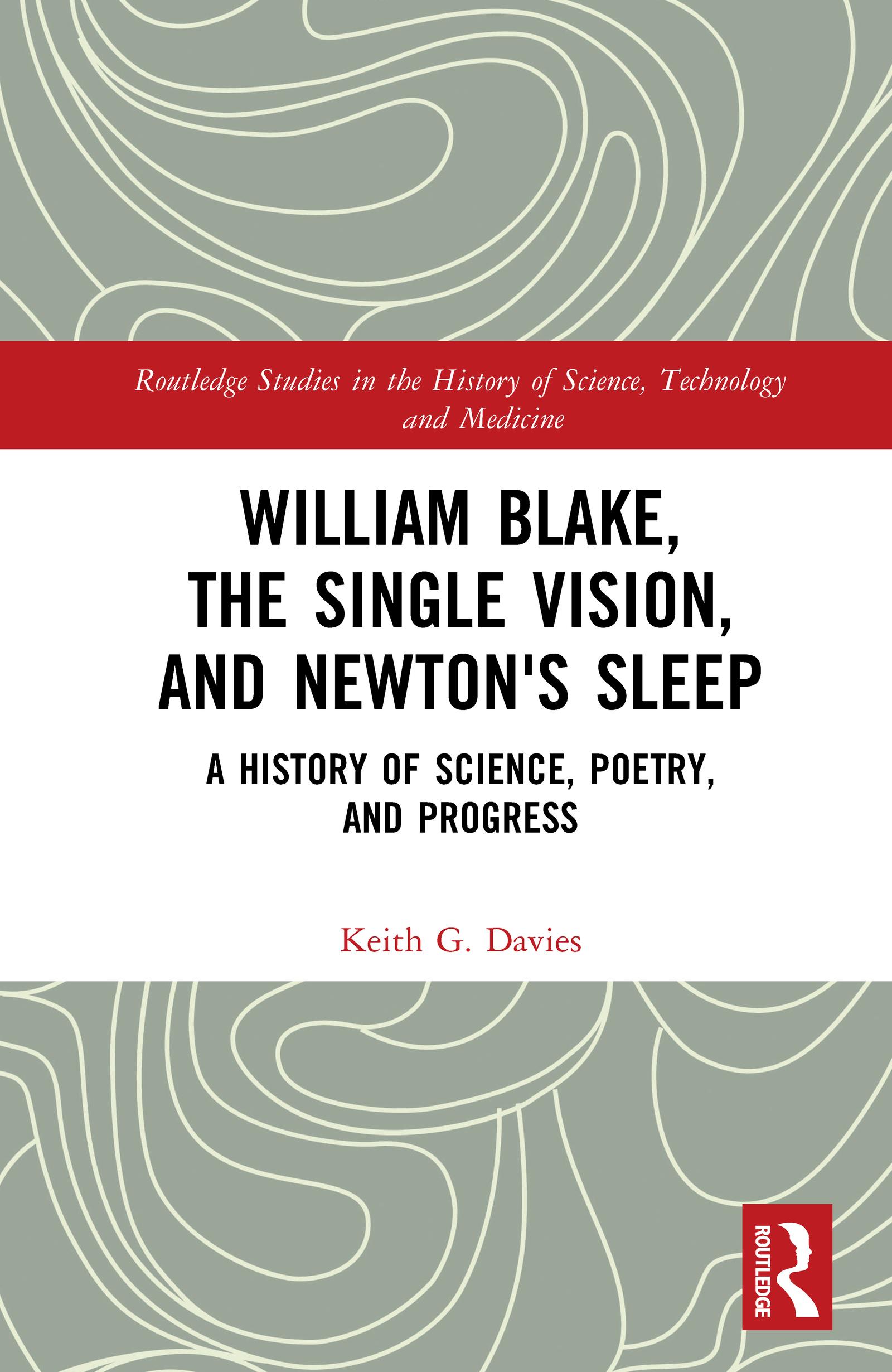
The history and philosophy of scientific ideas and the role poiēsis and imagination play in our understanding of science and progress are widely explored in this book. By examining the views of William Blake and other poets in the context of twentieth-century philosophers Hannah Arendt, Jacob Bronowski, Martin Heidegger, Bruno Latour and Karl Popper, amongst others, the book takes an eclectic approach drawing on examples from biology, history, literature, philosophy and economics, arguing for the reestablishment of imagination as a central attribute of science that may help to resolve some of our most pressing ecological problems as seen in the context of science and technology studies and what is loosely developing into the discipline of environmental humanities.
Today, influential scientists looking at consciousness dismiss imagination regarding it at best as a mere epiphenomenon, a ghost in the machine, or at worst non-existent and to be denied. In this book, Keith G. Davies, who sees C. P. Snow’s debate on the separation of the arts and sciences as alive and well, traces the schism back to Plato but more importantly to the seventeenth century and David Hume’s removal of imagination in the conjunction between our observation of causes and their effects. Through extensive research and use of poetry, this book offers an alternate understanding of science with imagination and its continued significance in today’s world.
This book is an excellent reference book for postgraduate students, professional researchers, William Blake scholars and the pejoratively labelled interested laymen with concerns in ecology and environmental humanities through offering a new perspective on the history of science and the role of imagination within this field.
Payez facilement par carte, Klarna, Apple Pay ou Google Pay. Pas satisfait ? Vous avez toujours une garantie de remboursement de 14 jours. En savoir plus dans nos conditions. Si vous avez des questions, envoyez-nous un e-mail à hello@memmo.org.
Memmo facilite tes études, où que tu sois dans le monde. On rassemble tes manuels de cours et des outils d'étude intelligents au même endroit : résumés, quiz, podcasts et flashcards. Et il y a Ted, ton compagnon d'étude qui répond à toutes tes questions. Plus de 50 000 étudiants étudient déjà ici – conçu pour t'aider à apprendre plus vite et à moins stresser.