
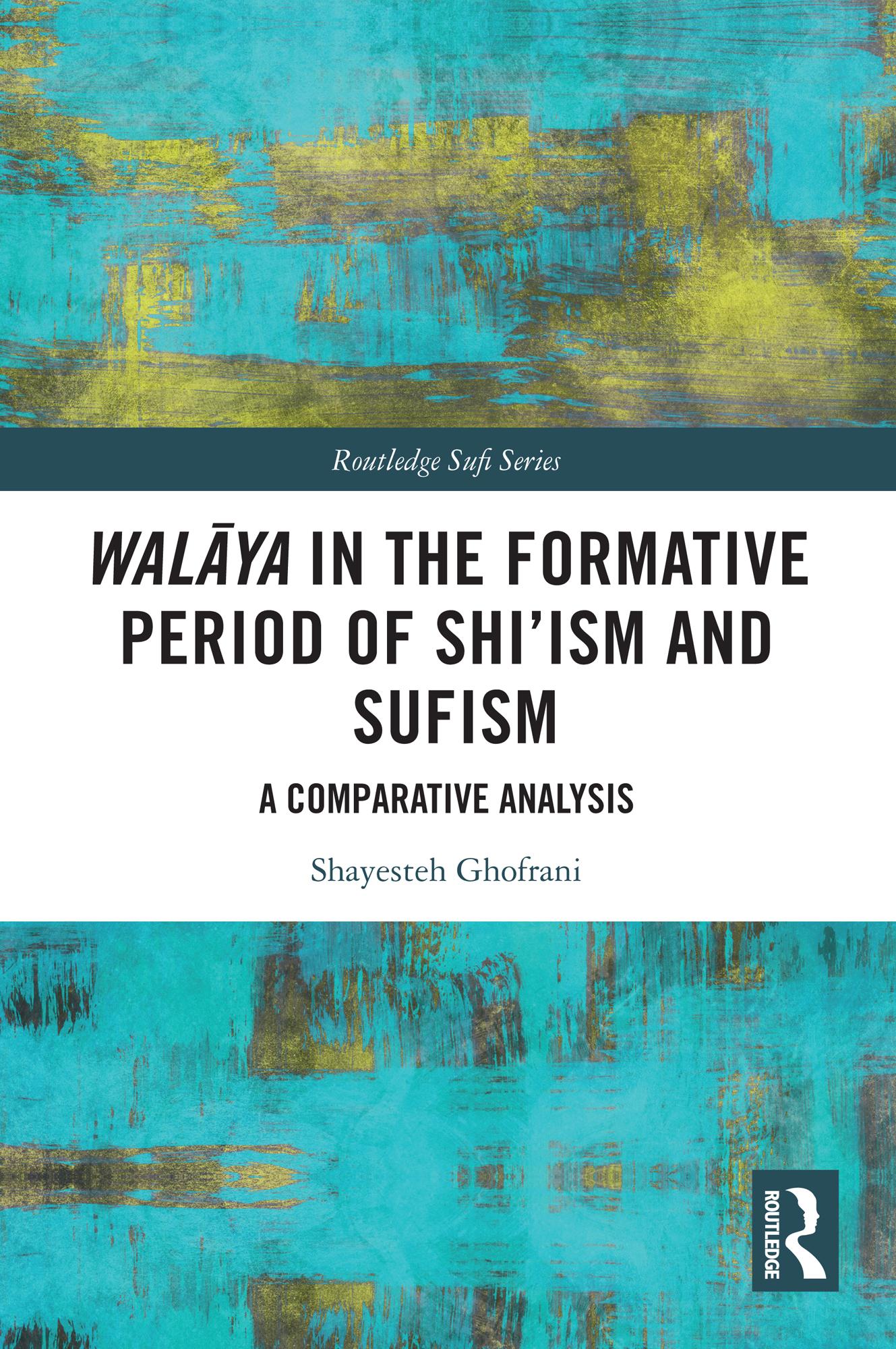
Focused on Shi’ism and Sufism in the formative period of Islam, this book examines the development of the concept of walāya, a complex term that has, over time, acquired a wide range of relationships with other theological ideas, chiefly in relation to the notion of authority.
The book offers a textual and comparative analysis of walāya based on primary sources in the ninth and tenth centuries, from both Shi’i and Sufi circles. The starting point is one of the oldest surviving Shi’i sources, Kitāb Sulaym. Alongside this, the author analyses al-Īḍāḥ of Faḍl Shādhān al-Nishābūrī, Kitāb al-Maḥāsin of al-Barqī and Kitāb al-Kāfī of al-Kulaynī. Three major texts in Sufism are considered: Kitāb al-Ṣidq by Abū Saʿīd al-Kharrāz, Tafsīr al-Qurʾan al-ʿAẓīm by Sahl al-Tustarī, and Al-Tirmidhī’s Kitāb Sīrat al-Awliyāʾ. Together, these sources highlight the doctrinal aspects of walāya, exploring the identity, function, appointment, and description of those considered 'walī'. The author ultimately argues that walāya is a cluster of rich, deep-rooted responses to the question of authority, developed within both Shi’ism and Sufism after the death of the Prophet.
The book is much-needed reading for students and scholars interested in Shi’i and Sufi studies and Islamic philosophy.
Payez facilement par carte, Klarna, Apple Pay ou Google Pay. Pas satisfait ? Vous avez toujours une garantie de remboursement de 14 jours. En savoir plus dans nos conditions. Si vous avez des questions, envoyez-nous un e-mail à hello@memmo.org.
Memmo facilite tes études, où que tu sois dans le monde. On rassemble tes manuels de cours et des outils d'étude intelligents au même endroit : résumés, quiz, podcasts et flashcards. Et il y a Ted, ton compagnon d'étude qui répond à toutes tes questions. Plus de 50 000 étudiants étudient déjà ici – conçu pour t'aider à apprendre plus vite et à moins stresser.