
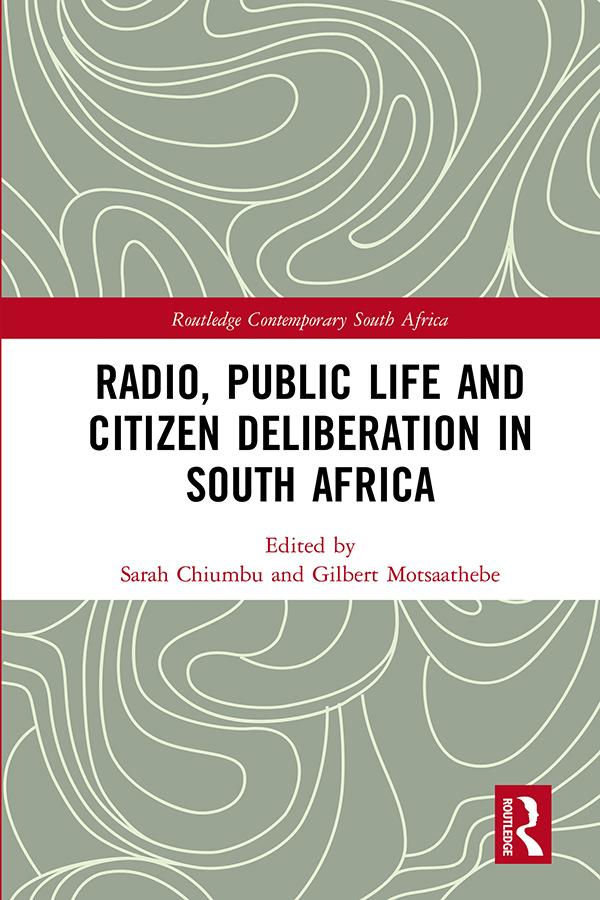
This book critically analyses the important role of radio in public life in post-apartheid South Africa.
As the most widespread and popular form of communication in the country, radio occupies an essential space in the deliberation and the construction of public opinion in South Africa. From just a few state-controlled stations during the apartheid era, there are now more than 100 radio stations, reaching vast swathes of the population and providing an important space for citizens to air their views and take part in significant socio-economic and political issues of the country. The various contributors to this book demonstrate that whilst print and television media often serve elite interests and audiences, the low cost and flexibility of radio has helped it to create a ‘common’ space for national dialogue and deliberation. The book also investigates the ways in which digital technologies have enhanced the consumption of radio and produced a sense of imagined community for citizens, including those in marginalised communities and rural areas.
This book will be of interest to researchers with an interest in media, politics and culture in South Africa specifically, as well as those with an interest in broadcast media more generally.
Payez facilement par carte, Klarna, Apple Pay ou Google Pay. Pas satisfait ? Vous avez toujours une garantie de remboursement de 14 jours. En savoir plus dans nos conditions. Si vous avez des questions, envoyez-nous un e-mail à hello@memmo.org.
Memmo facilite tes études, où que tu sois dans le monde. On rassemble tes manuels de cours et des outils d'étude intelligents au même endroit : résumés, quiz, podcasts et flashcards. Et il y a Ted, ton compagnon d'étude qui répond à toutes tes questions. Plus de 50 000 étudiants étudient déjà ici – conçu pour t'aider à apprendre plus vite et à moins stresser.