
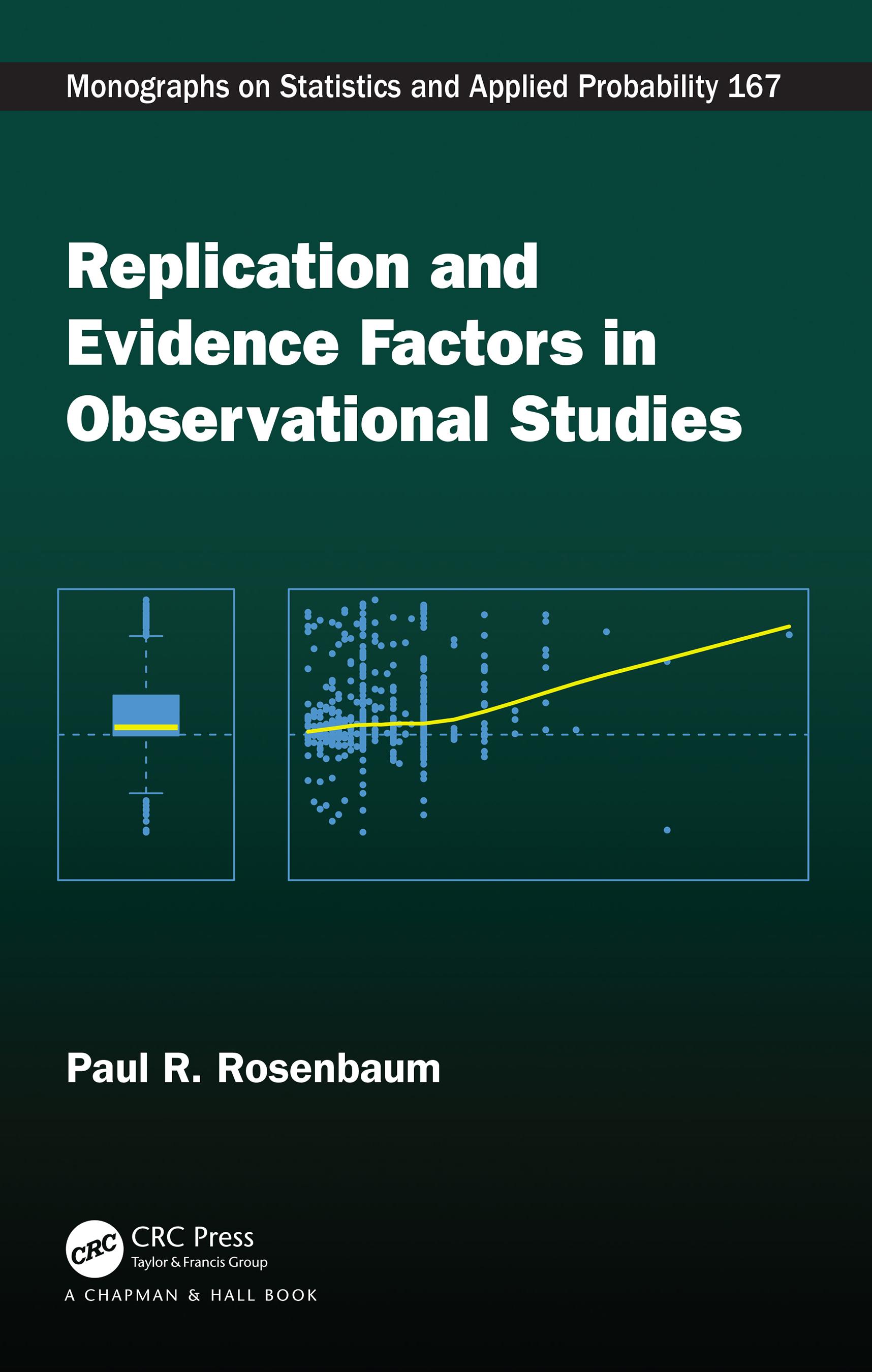
Outside of randomized experiments, association does not imply causation, and yet there is nothing defective about our knowledge that smoking causes lung cancer, a conclusion reached in the absence of randomized experimentation with humans. How is that possible? If observed associations do not identify causal effects in observational studies, how can a sequence of such associations become decisive?
Two or more associations may each be susceptible to unmeasured biases, yet not susceptible to the same biases. An observational study has two evidence factors if it provides two comparisons susceptible to different biases that may be combined as if from independent studies of different data by different investigators, despite using the same data twice. If the two factors concur, then they may exhibit greater insensitivity to unmeasured biases than either factor exhibits on its own.
Replication and Evidence Factors in Observational Studies includes four parts:
- A concise introduction to causal inference, making the book self-contained
- Practical examples of evidence factors from the health and social sciences with analyses in R
- The theory of evidence factors
- Study design with evidence factors
A companion R package evident is available from CRAN.
Payez facilement par carte, Klarna, Apple Pay ou Google Pay. Pas satisfait ? Vous avez toujours une garantie de remboursement de 14 jours. En savoir plus dans nos conditions. Si vous avez des questions, envoyez-nous un e-mail à hello@memmo.org.
Memmo facilite tes études, où que tu sois dans le monde. On rassemble tes manuels de cours et des outils d'étude intelligents au même endroit : résumés, quiz, podcasts et flashcards. Et il y a Ted, ton compagnon d'étude qui répond à toutes tes questions. Plus de 50 000 étudiants étudient déjà ici – conçu pour t'aider à apprendre plus vite et à moins stresser.