
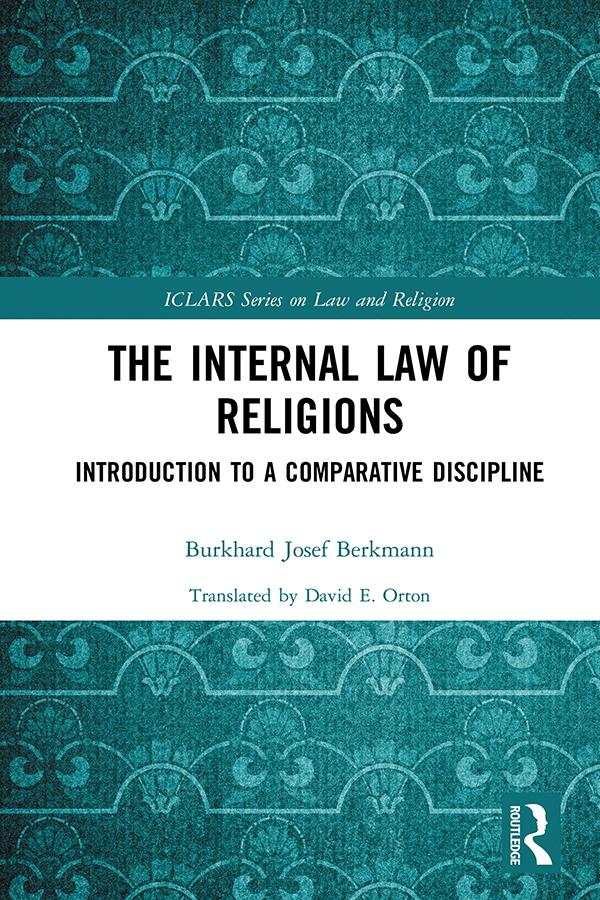
Comparative law of religions has developed in recent years as a new discipline at the intersection of legal and religious science, of theology and anthropology. This book presents a systematic theoretical basis for this new discipline.
While law is mostly associated with the state, many religions also have their own internal law. These internal legal norms are aimed at a particular form of behaviour on the part of believers. They therefore play a particular role in conflicts arising today between certain religious forms of behaviour. The comparison of the internal law of religions serves to establish and explain the commonalities and differences between various religious legal traditions. The religions examined here include: the law of Christian denominations, Jewish law, Islamic law, Hindu law, Buddhist law, and other religious legal systems. The work assesses six current approaches to the comparative law of religions, evaluating their strengths and weaknesses, leading to the development of a new approach. The book discusses the role of religious law in state law and looks to likely future developments.
The work will be essential for those interested in the administration of justice and politics, for those professions where intercultural competence is required, and for interreligious dialogue.
Payez facilement par carte, Klarna, Apple Pay ou Google Pay. Pas satisfait ? Vous avez toujours une garantie de remboursement de 14 jours. En savoir plus dans nos conditions. Si vous avez des questions, envoyez-nous un e-mail à hello@memmo.org.
Memmo facilite tes études, où que tu sois dans le monde. On rassemble tes manuels de cours et des outils d'étude intelligents au même endroit : résumés, quiz, podcasts et flashcards. Et il y a Ted, ton compagnon d'étude qui répond à toutes tes questions. Plus de 50 000 étudiants étudient déjà ici – conçu pour t'aider à apprendre plus vite et à moins stresser.