
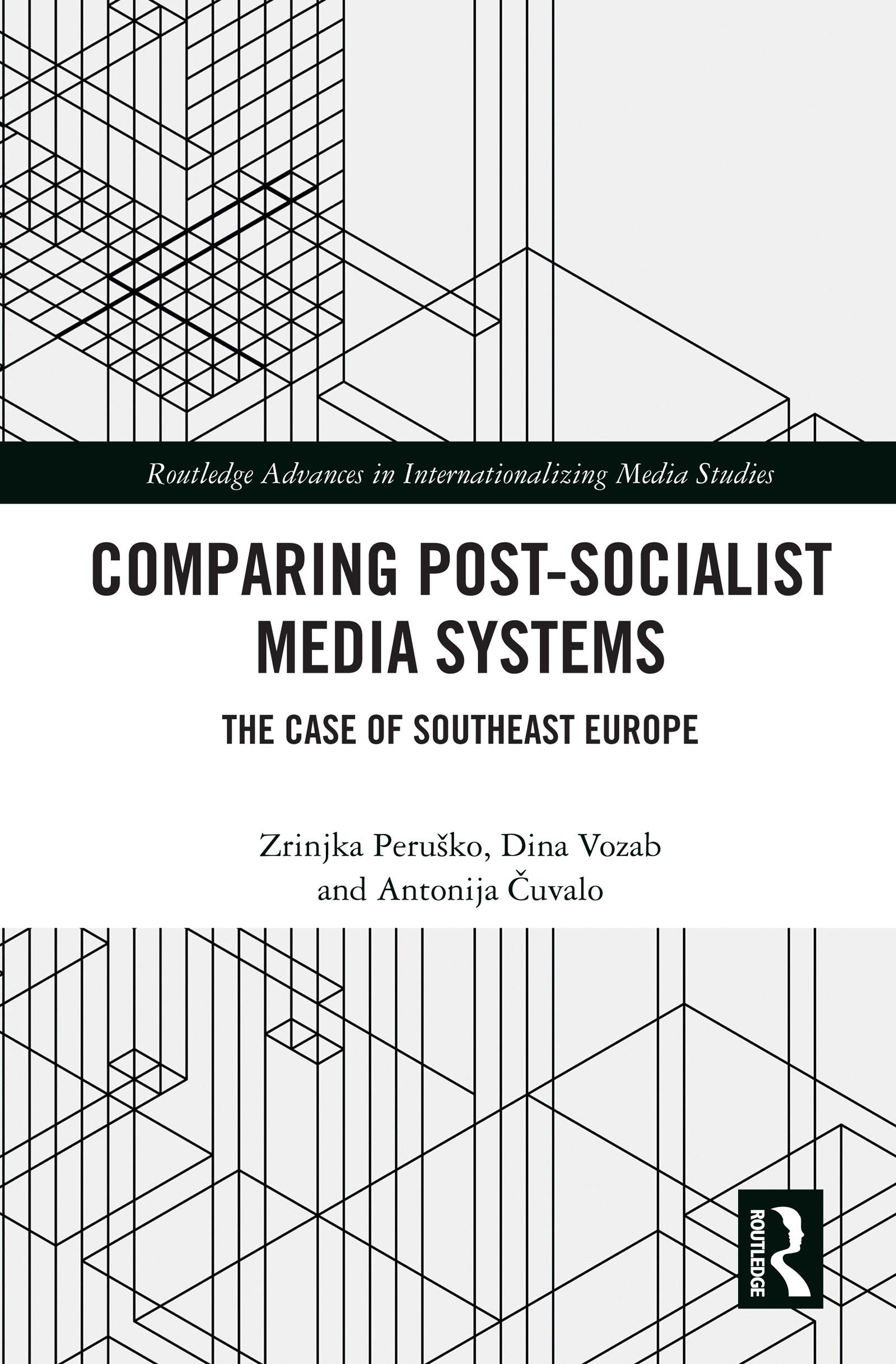
This book explains divergent media system trajectories in the countries in southeast Europe, and challenges the presumption that the common socialist experience critically influences a common outcome in media development after democratic transformations, by showing different remote and proximate configuration of conditions that influence their contemporary shape.
Applying an innovative longitudinal set-theoretical methodological approach, the book contributes to the theory of media systems with a novel theoretical framework for the comparative analysis of post-socialist media systems. This theory builds on the theory of historical institutionalism and the notion of critical junctures and path dependency in searching for an explanation for similarities or differences among media systems in the Eastern European region.
Extending the understanding of media systems beyond a political journalism focus, this book is a valuable contribution to the literature on comparative media systems in the areas of media systems studies, political science, Southeast and Central European studies, post-socialist studies and communication studies.
Payez facilement par carte, Klarna, Apple Pay ou Google Pay. Pas satisfait ? Vous avez toujours une garantie de remboursement de 14 jours. En savoir plus dans nos conditions. Si vous avez des questions, envoyez-nous un e-mail à hello@memmo.org.
Memmo facilite tes études, où que tu sois dans le monde. On rassemble tes manuels de cours et des outils d'étude intelligents au même endroit : résumés, quiz, podcasts et flashcards. Et il y a Ted, ton compagnon d'étude qui répond à toutes tes questions. Plus de 50 000 étudiants étudient déjà ici – conçu pour t'aider à apprendre plus vite et à moins stresser.