
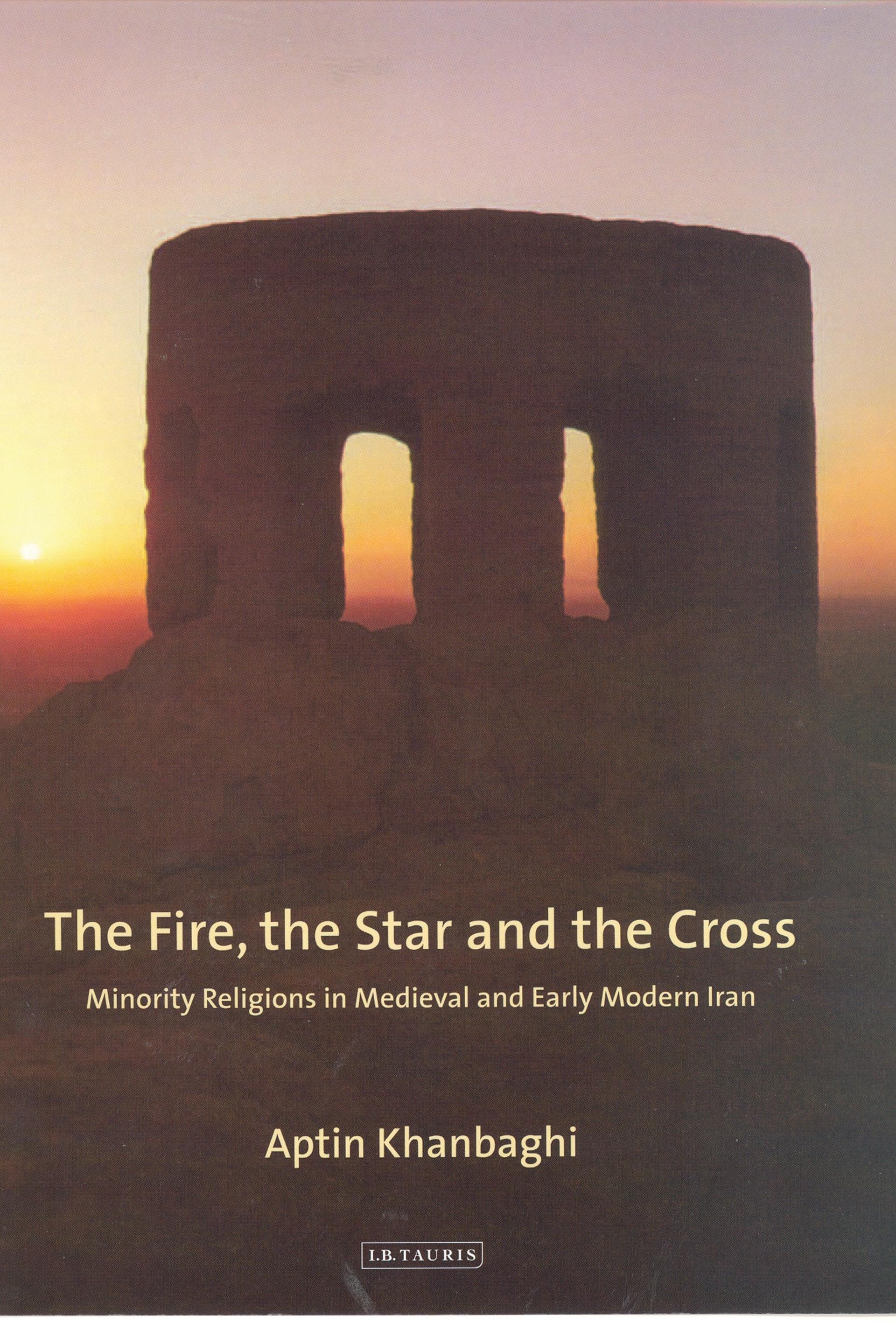
Contemporary political events have generated a strong interest in minorities in the Middle East. Although today the region is mostly identified with Islam, it has been home to many other great cultures, and the civilization of the Islamic world is itself indebted to the various peoples that the Arabs subdued in the 7th and 8th centuries. Far from fading away after the Arab conquest, the inhabitants of the Iranian plateau and of Mesopotamia were central players in the lives of their regions. However, the magnitude of their contribution to the emergence of the early Islamic world has hitherto been neglected. In this fascinating and groundbreaking study, Khanbaghi offers a comprehensive discussion of those groups that resisted assimilation to the new Islamic order yet continued to participate actively in the socio-political life of their homeland. He concentrates on Iran, which due to its complex religious history offers unique opportunities for the study of non-Muslim communities, specifically of Zoroastrians, Jews and Christians.
Aptin Khanbaghi has written an important and fascinating book which aims to present a thorough evaluation of the historical contributions made by religious minorities – Zoroastrians, Jews and Christians – to the societal and cultural physiognomy of the lands of Iran in pre-modern and early modern times. His general perspective and his broad treatment of the topic are quite new, while his use of sources and of the secondary literature is genuinely impressive. The Fire, the Star and the Cross makes a very significant and original contribution to our knowledge and understanding of Iranian history and civilization during an era when the foundations were laid for the emerging modern Iranian state.'
BERT G FRAGNER, Director of the Institute of Iranian Studies,
Austrian Academy of Sciences, Vienna
Aptin Khanbaghi has written an important and fascinating book which aims to present a thorough evaluation of the historical contributions made by religious minorities – Zoroastrians, Jews and Christians – to the societal and cultural physiognomy of the lands of Iran in pre-modern and early modern times. His general perspective and his broad treatment of the topic are quite new, while his use of sources and of the secondary literature is genuinely impressive. The Fire, the Star and the Cross makes a very significant and original contribution to our knowledge and understanding of Iranian history and civilization during an era when the foundations were laid for the emerging modern Iranian state.'
BERT G FRAGNER, Director of the Institute of Iranian Studies,
Austrian Academy of Sciences, Vienna
Payez facilement par carte, Klarna, Apple Pay ou Google Pay. Pas satisfait ? Vous avez toujours une garantie de remboursement de 14 jours. En savoir plus dans nos conditions. Si vous avez des questions, envoyez-nous un e-mail à hello@memmo.org.
Memmo facilite tes études, où que tu sois dans le monde. On rassemble tes manuels de cours et des outils d'étude intelligents au même endroit : résumés, quiz, podcasts et flashcards. Et il y a Ted, ton compagnon d'étude qui répond à toutes tes questions. Plus de 50 000 étudiants étudient déjà ici – conçu pour t'aider à apprendre plus vite et à moins stresser.