
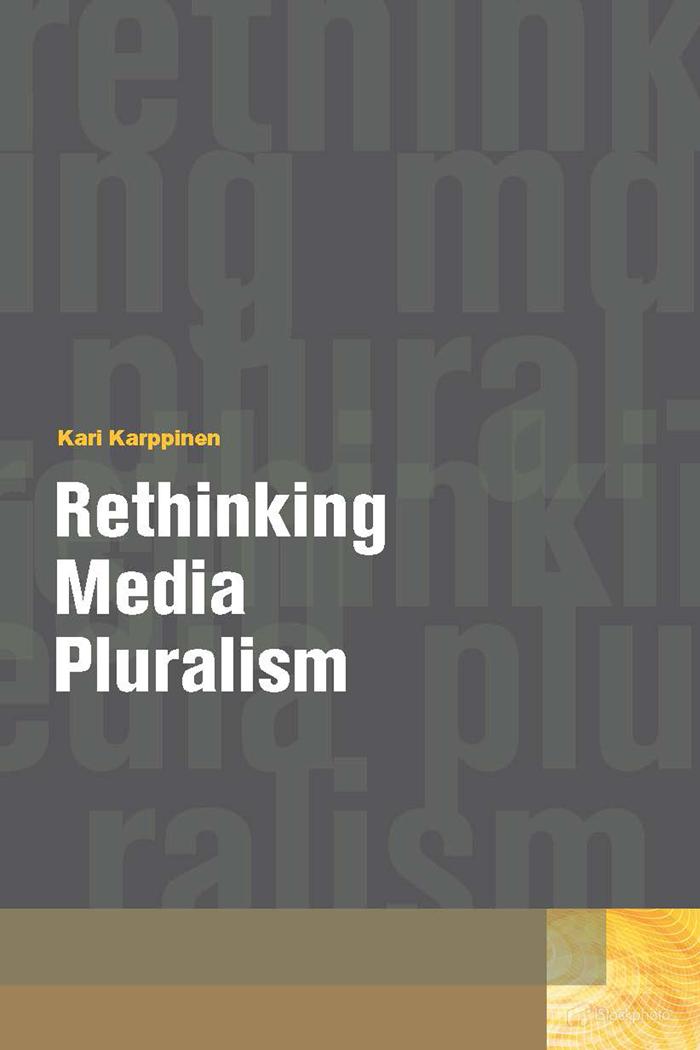
Access to a broad range of different political views and cultural expressions is often regarded as a self-evident value in both theoretical and political debates on media and democracy. Pluralism is commonly accepted as a guiding principle of media policy in addressing media concentration, the role of public service media, or more recently such questions as how to respond to search engines, social networking sites, and citizen media. However, opinions on the meaning and nature of media pluralism as a concept vary widely, and definitions of it can easily be adjusted to suit different political purposes.
Rethinking Media Pluralism contends that the notions of media pluralism and diversity have been reduced to empty catchphrases or conflated with consumer choice and market competition. In this narrow logic, key questions about social and political values, democracy, and citizenship are left unexamined. In this provocative new book, Kari Karppinen argues that media pluralism needs to be rescued from its depoliticized uses and re-imagined more broadly as a normative value that refers to the distribution of communicative power in the public sphere. Instead of something that could simply be measured through the number of media outlets available, media pluralism should be understood in terms of its ability to challenge inequalities and create a more democratic public sphere.
Payez facilement par carte, Klarna, Apple Pay ou Google Pay. Pas satisfait ? Vous avez toujours une garantie de remboursement de 14 jours. En savoir plus dans nos conditions. Si vous avez des questions, envoyez-nous un e-mail à hello@memmo.org.
Memmo facilite tes études, où que tu sois dans le monde. On rassemble tes manuels de cours et des outils d'étude intelligents au même endroit : résumés, quiz, podcasts et flashcards. Et il y a Ted, ton compagnon d'étude qui répond à toutes tes questions. Plus de 50 000 étudiants étudient déjà ici – conçu pour t'aider à apprendre plus vite et à moins stresser.