
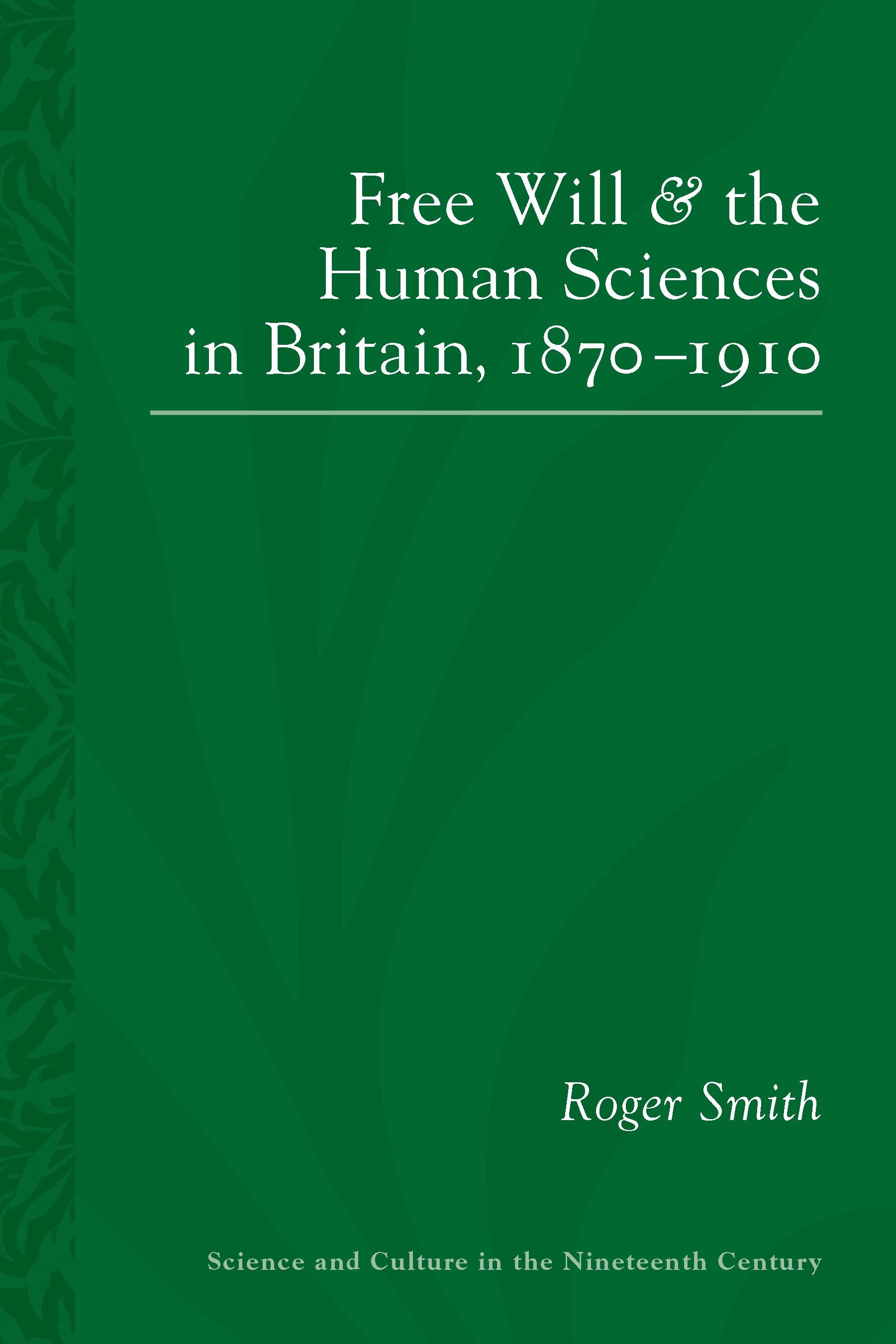
From the late nineteenth century onwards religion gave way to science as the dominant force in society. This led to a questioning of the principle of free will—if the workings of the human mind could be reduced to purely physiological explanations, then what place was there for human agency and self-improvement?
Smith takes an in-depth look at the problem of free will through the prism of different disciplines. Physiology, psychology, philosophy, evolutionary theory, ethics, history and sociology all played a part in the debates that took place. His subtly nuanced navigation through these arguments has much to contribute to our understanding of Victorian and Edwardian science and culture, as well as having relevance to current debates on the role of genes in determining behaviour.
Smith takes an in-depth look at the problem of free will through the prism of different disciplines. Physiology, psychology, philosophy, evolutionary theory, ethics, history and sociology all played a part in the debates that took place. His subtly nuanced navigation through these arguments has much to contribute to our understanding of Victorian and Edwardian science and culture, as well as having relevance to current debates on the role of genes in determining behaviour.
Catégorie: Vetenskapsteori och forskningsmetod
e-ISBN: 9780822981718
Payez facilement par carte, Klarna, Apple Pay ou Google Pay. Pas satisfait ? Vous avez toujours une garantie de remboursement de 14 jours. En savoir plus dans nos conditions. Si vous avez des questions, envoyez-nous un e-mail à hello@memmo.org.
Memmo facilite tes études, où que tu sois dans le monde. On rassemble tes manuels de cours et des outils d'étude intelligents au même endroit : résumés, quiz, podcasts et flashcards. Et il y a Ted, ton compagnon d'étude qui répond à toutes tes questions. Plus de 50 000 étudiants étudient déjà ici – conçu pour t'aider à apprendre plus vite et à moins stresser.
Tu pourrais aussi aimer
Acheter le livre0