
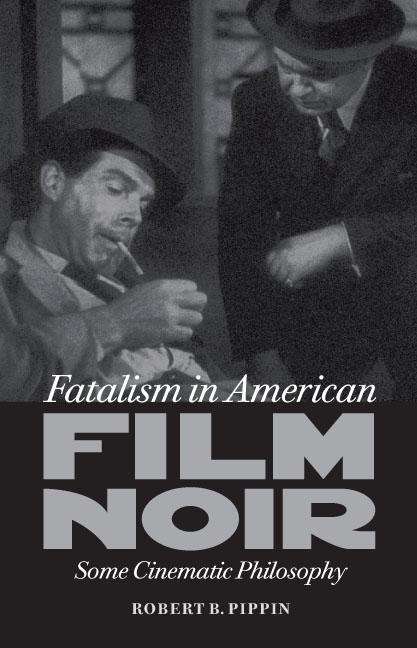
The crime melodramas of the 1940s known now as film noir shared many formal and thematic elements, from unusual camera angles and lighting to moral ambiguity and femmes fatales. In this book Robert Pippin argues that many of these films also raise distinctly philosophical questions. Where most Hollywood films of that era featured reflective individuals living with purpose, taking action and effecting desired consequences, the typical noir protagonist deliberates and plans, only to be confronted by the irrelevance of such deliberation and by results that contrast sharply, often tragically, with his or her intentions or true commitments. Pippin shows how this terrible disconnect sheds light on one of the central issues in modern philosophy--the nature of human agency. How do we distinguish what people do from what merely happens to them? Looking at several film noirs--including close readings of three classics of the genre, Fritz Lang’s Scarlet Street, Orson Welles’s The Lady from Shanghai, and Jacques Tourneur’s Out of the Past--Pippin reveals the ways in which these works explore the declining credibility of individuals as causal centers of agency, and how we live with the acknowledgment of such limitations.
Payez facilement par carte, Klarna, Apple Pay ou Google Pay. Pas satisfait ? Vous avez toujours une garantie de remboursement de 14 jours. En savoir plus dans nos conditions. Si vous avez des questions, envoyez-nous un e-mail à hello@memmo.org.
Memmo facilite tes études, où que tu sois dans le monde. On rassemble tes manuels de cours et des outils d'étude intelligents au même endroit : résumés, quiz, podcasts et flashcards. Et il y a Ted, ton compagnon d'étude qui répond à toutes tes questions. Plus de 50 000 étudiants étudient déjà ici – conçu pour t'aider à apprendre plus vite et à moins stresser.