
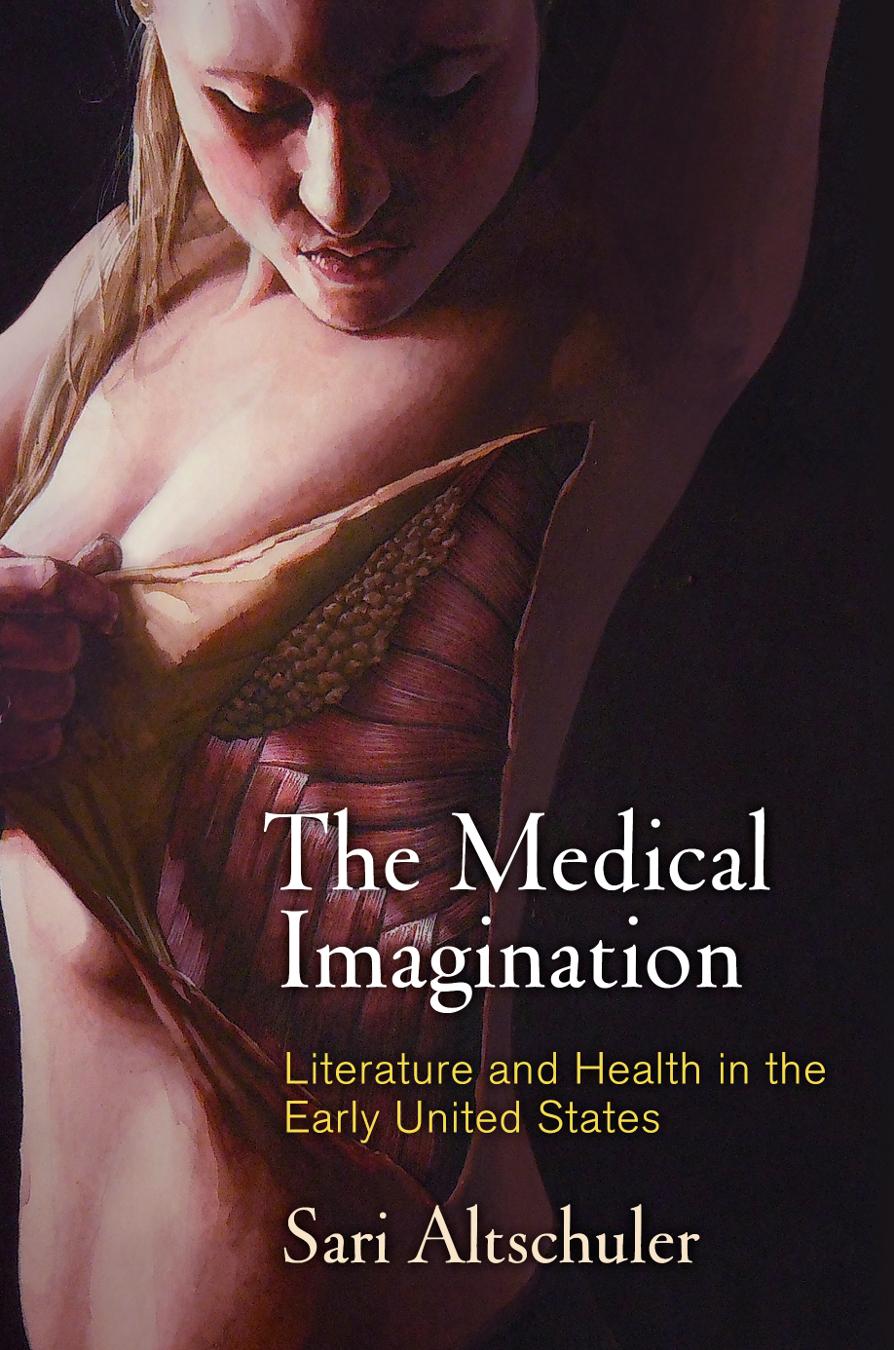
In 1872, Ralph Waldo Emerson wrote, "Science does not know its debt to imagination," words that still ring true in the worlds of health and health care today. The checklists and clinical algorithms of modern medicine leave little space for imagination, and yet we depend on creativity and ingenuity for the advancement of medicine—to diagnose unusual conditions, to innovate treatment, and to make groundbreaking discoveries. We know a great deal about the empirical aspects of medicine, but we know far less about what the medical imagination is, what it does, how it works, or how we might train it.
In The Medical Imagination, Sari Altschuler argues that this was not always so. During the eighteenth and nineteenth centuries, doctors understood the imagination to be directly connected to health, intimately involved in healing, and central to medical discovery. In fact, for physicians and other health writers in the early United States, literature provided important forms for crafting, testing, and implementing theories of health. Reading and writing poetry trained judgment, cultivated inventiveness, sharpened observation, and supplied evidence for medical research, while novels and short stories offered new perspectives and sites for experimenting with original medical theories.
Such imaginative experimentation became most visible at moments of crisis or novelty in American medicine, such as the 1790s yellow fever epidemics, the global cholera pandemics, and the discovery of anesthesia, when conventional wisdom and standard practice failed to produce satisfying answers to pressing questions. Throughout the eighteenth and nineteenth centuries, health research and practice relied on a broader complex of knowing, in which imagination often worked with and alongside observation, experience, and empirical research. In reframing the historical relationship between literature and health, The Medical Imagination provides a usable past for contemporary conversations about the role of the imagination—and the humanities more broadly—in health research and practice today.
Payez facilement par carte, Klarna, Apple Pay ou Google Pay. Pas satisfait ? Vous avez toujours une garantie de remboursement de 14 jours. En savoir plus dans nos conditions. Si vous avez des questions, envoyez-nous un e-mail à hello@memmo.org.
Memmo facilite tes études, où que tu sois dans le monde. On rassemble tes manuels de cours et des outils d'étude intelligents au même endroit : résumés, quiz, podcasts et flashcards. Et il y a Ted, ton compagnon d'étude qui répond à toutes tes questions. Plus de 50 000 étudiants étudient déjà ici – conçu pour t'aider à apprendre plus vite et à moins stresser.