
Taiwan was able to solidly build and sustain a film industry only after locally-produced Mandarin films secured markets in Hong Kong and Southeast Asia during the 1960s and 1970s. Though only a small island with a limited population, in its heyday, Taiwan was among the top-10 film producing countries/areas in the world, turning out hundreds of martial arts kung fu films and romantic melodramas annually that were screened in theaters across Southeast Asia and other areas internationally. However, except for one acclaimed film by director King Hu, Taiwan cinema was nearly invisible on the art cinema map until the 1980s, when the films of Hou Hsiao-hsien, Edward Yang, and other Taiwan New Cinema directors gained recognition at international film festivals, first in Europe, and later, throughout the world. Since then, many other Taiwan directors have also become an important part of cinema history, such as Ang Lee and Tsai Ming-liang.
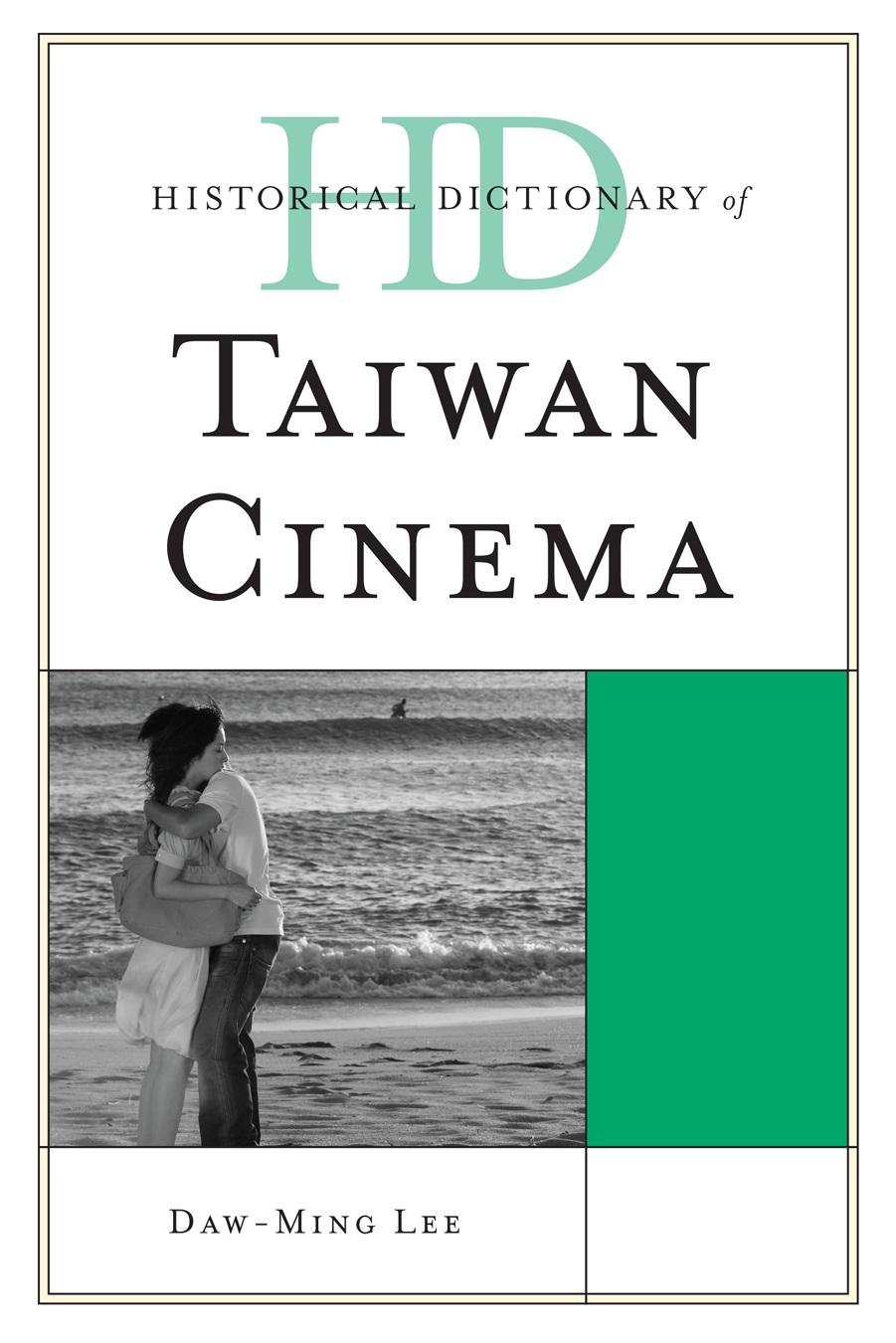
The Historical Dictionary of Taiwan Cinema covers the history of cinema in Taiwan during both the Japanese colonial period (1895-1945) and the Chinese Nationalist period (1945-present). This is accomplished through a chronology highlighting the main events during the long period and an introduction which carefully analyses the progression. The bulk of the information, however, appears in a dictionary section including over a hundred very extensive entries on directors, producers, performers, films, film studios and genres. Photos are also included in the dictionary section. More information can be found through the bibliography. Taiwan cinema is truly unique and this book is a good place to find out more about it, whether you are a student, or teacher, or just a fan.
The Historical Dictionary of Taiwan Cinema covers the history of cinema in Taiwan during both the Japanese colonial period (1895-1945) and the Chinese Nationalist period (1945-present). This is accomplished through a chronology highlighting the main events during the long period and an introduction which carefully analyses the progression. The bulk of the information, however, appears in a dictionary section including over a hundred very extensive entries on directors, producers, performers, films, film studios and genres. Photos are also included in the dictionary section. More information can be found through the bibliography. Taiwan cinema is truly unique and this book is a good place to find out more about it, whether you are a student, or teacher, or just a fan.
Payez facilement par carte, Klarna, Apple Pay ou Google Pay. Pas satisfait ? Vous avez toujours une garantie de remboursement de 14 jours. En savoir plus dans nos conditions. Si vous avez des questions, envoyez-nous un e-mail à hello@memmo.org.
Memmo facilite tes études, où que tu sois dans le monde. On rassemble tes manuels de cours et des outils d'étude intelligents au même endroit : résumés, quiz, podcasts et flashcards. Et il y a Ted, ton compagnon d'étude qui répond à toutes tes questions. Plus de 50 000 étudiants étudient déjà ici – conçu pour t'aider à apprendre plus vite et à moins stresser.