
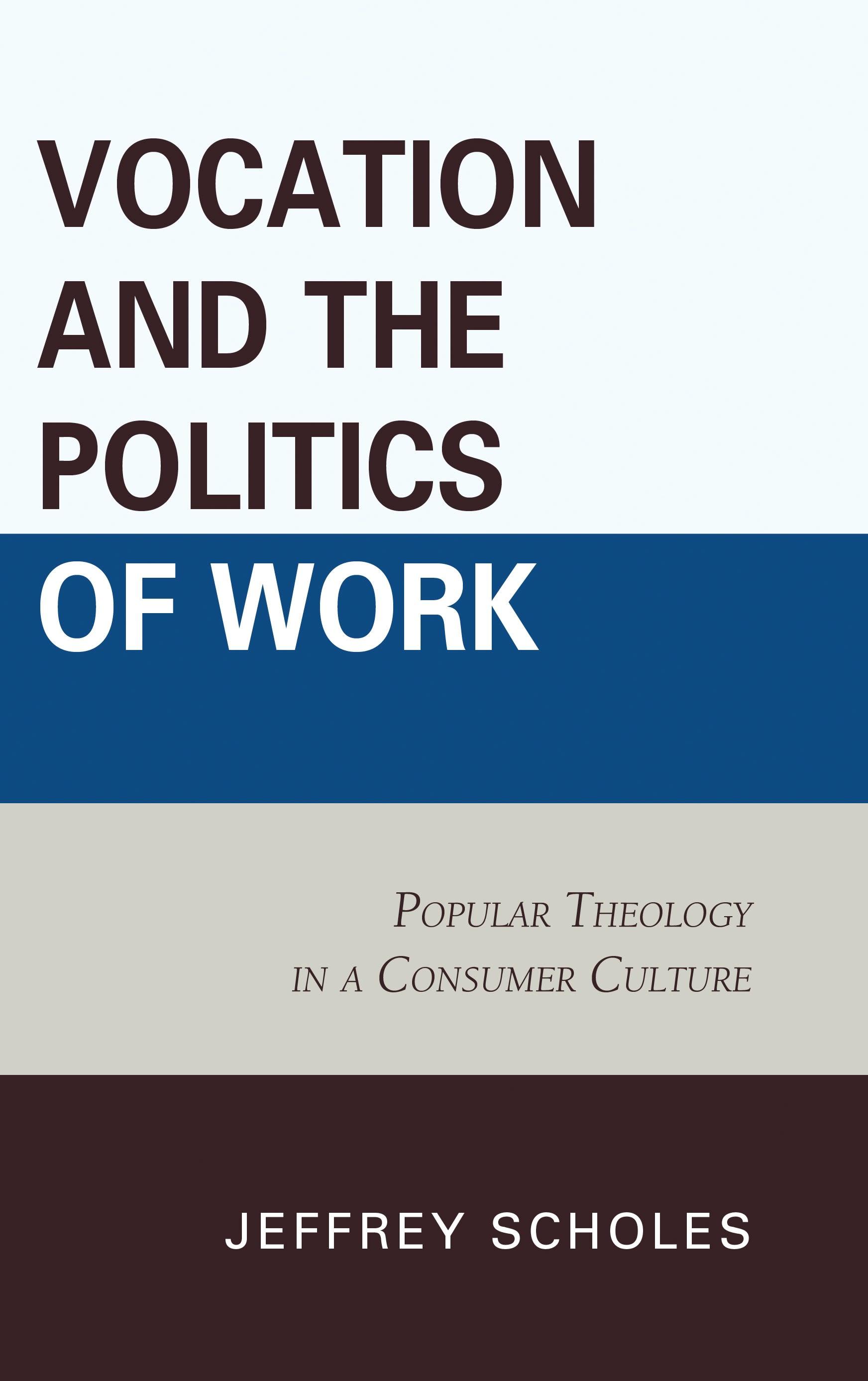
Since Martin Luther, vocations or callings have had a close relationship with daily work. It is a give-and-take relationship in which the meaning of a vocation typically negotiates with the kinds of work available (and vice-versa) at any given time. While “vocation language” still has currency in Western culture, today’s predominant meaning of vocation has little to do with the actual work performed on a job.
Jeffrey Scholes contends that recent theological treatments of the Protestant concept of vocation, both academic and popular, often unwittingly collude with consumer culture to circulate a concept of vocation that is detached from the material conditions of work. The result is a consumer-friendly vocation that is rendered impotent to inform and, if necessary, challenge the political norms of the workplace. For example, he classifies Rick Warren’s concept of “purpose” in his best-selling book, The Purpose-Driven Life, as a functional equivalent of vocation that acts in this way. Other popular uses of vocation along with insights culled from traditional theology and consumer culture studies help Scholes reveal the current state of vocations in the West. Using recent scholarship in the field of political theology, he argues that resisting commodification is a possibility and a prerequisite for a “political vocation,” if it is at all able to engage the norms that regulate and undermine the pursuit of justice in many modern workplaces.
Jeffrey Scholes contends that recent theological treatments of the Protestant concept of vocation, both academic and popular, often unwittingly collude with consumer culture to circulate a concept of vocation that is detached from the material conditions of work. The result is a consumer-friendly vocation that is rendered impotent to inform and, if necessary, challenge the political norms of the workplace. For example, he classifies Rick Warren’s concept of “purpose” in his best-selling book, The Purpose-Driven Life, as a functional equivalent of vocation that acts in this way. Other popular uses of vocation along with insights culled from traditional theology and consumer culture studies help Scholes reveal the current state of vocations in the West. Using recent scholarship in the field of political theology, he argues that resisting commodification is a possibility and a prerequisite for a “political vocation,” if it is at all able to engage the norms that regulate and undermine the pursuit of justice in many modern workplaces.
Payez facilement par carte, Klarna, Apple Pay ou Google Pay. Pas satisfait ? Vous avez toujours une garantie de remboursement de 14 jours. En savoir plus dans nos conditions. Si vous avez des questions, envoyez-nous un e-mail à hello@memmo.org.
Memmo facilite tes études, où que tu sois dans le monde. On rassemble tes manuels de cours et des outils d'étude intelligents au même endroit : résumés, quiz, podcasts et flashcards. Et il y a Ted, ton compagnon d'étude qui répond à toutes tes questions. Plus de 50 000 étudiants étudient déjà ici – conçu pour t'aider à apprendre plus vite et à moins stresser.