
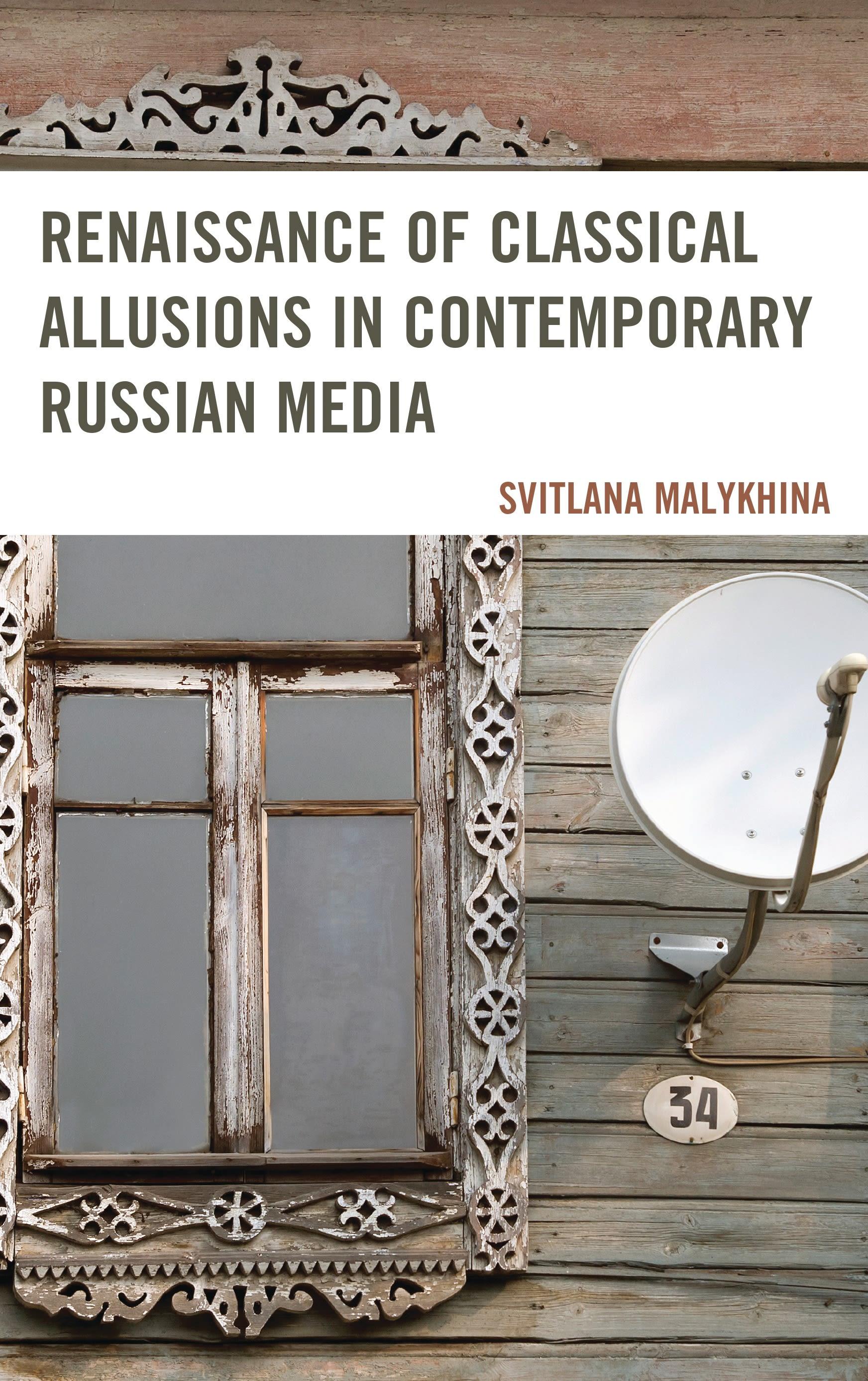
Renaissance of Classical Allusions in Contemporary Russian Media builds on a growing body of work concerning post-Soviet media culture during the last, transformative decade. Making sense of the literary allusions in media discourse, Svitlana Malykhina reminds us that allusions can serve as a primary marker of identity—national and cultural—and may also be a way of negotiating the gap between what has to be reported and what can be banned by censorship. Malykhina presents the changes and continuities between rhetoric strategies of Soviet-style media and postcommunist Russian media, identifying the key literary and historical references in public discourse, which are then picked up by the media. The book analyzes the political, cultural, and social factors at play in the development and expansion of these allusions in both official and alternative discourses. Examining the rise of the Internet, which has remained wholly uncensored in Russia, Malykhina reveals that the Russian Internet media began to function as alternative mass media. Yet, the success of the Internet media has also brought complex and unintended consequences. Malykhina offers an empirically rich examination of conventional classical allusions in media discourse, focusing mainly on the rhetorical techniques by which subversive meanings of these references were generated.
Payez facilement par carte, Klarna, Apple Pay ou Google Pay. Pas satisfait ? Vous avez toujours une garantie de remboursement de 14 jours. En savoir plus dans nos conditions. Si vous avez des questions, envoyez-nous un e-mail à hello@memmo.org.
Memmo facilite tes études, où que tu sois dans le monde. On rassemble tes manuels de cours et des outils d'étude intelligents au même endroit : résumés, quiz, podcasts et flashcards. Et il y a Ted, ton compagnon d'étude qui répond à toutes tes questions. Plus de 50 000 étudiants étudient déjà ici – conçu pour t'aider à apprendre plus vite et à moins stresser.