
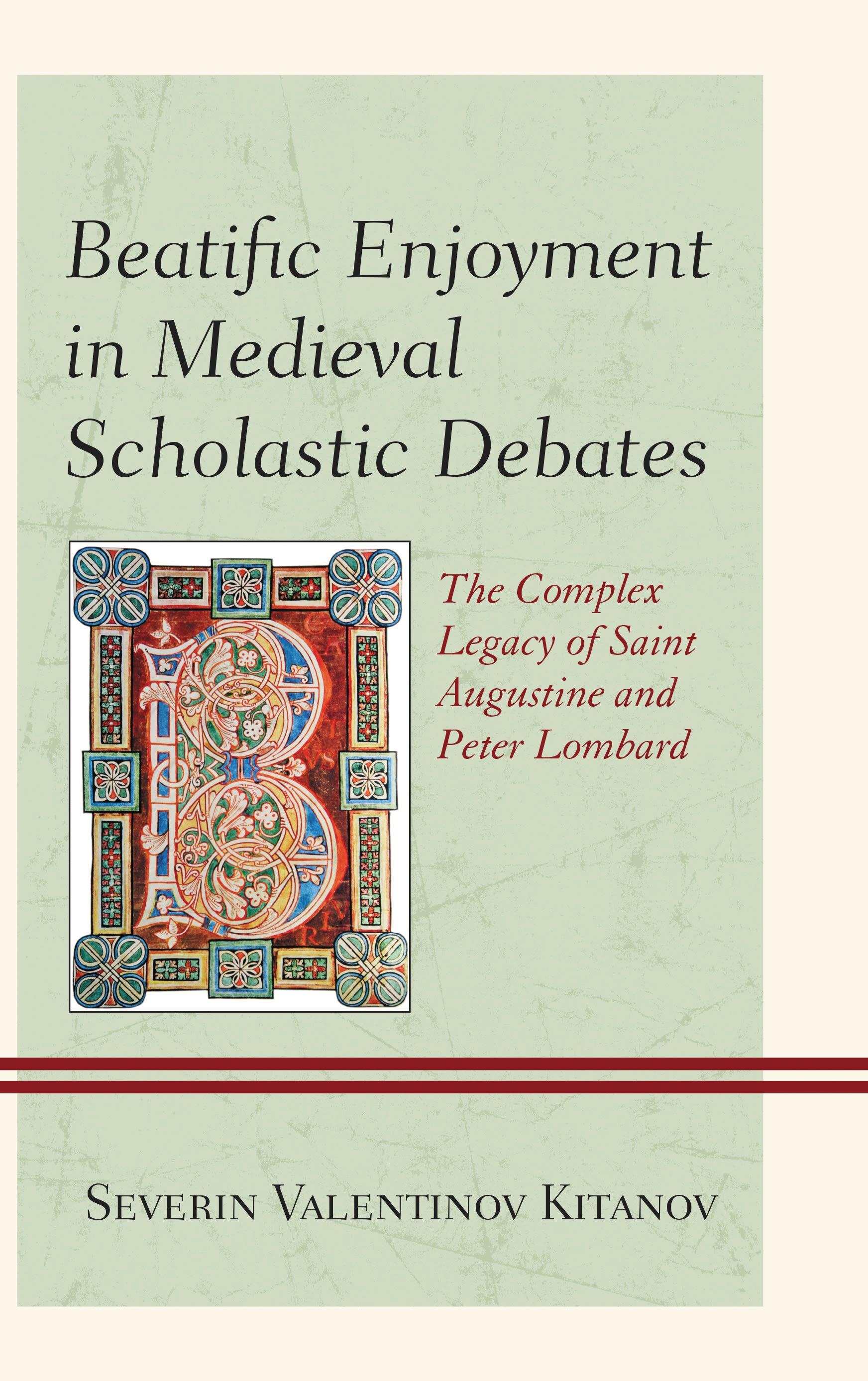
Beatific Enjoyment in Medieval Scholastic Debates examines the religious concept of enjoyment as discussed by scholastic theologians in the Latin Middle Ages. Severin Kitanov argues that central to the concept of beatific enjoyment (fruitio beatifica) is the distinction between the terms enjoyment and use (frui et uti) found in Saint Augustine’s treatise On Christian Learning. Peter Lombard, a twelfth-century Italian theologian, chose the enjoyment of God to serve as an opening topic of his Sentences and thereby set in motion an enduring scholastic discourse. Kitanov examines the nature of volition and the relationship between volition and cognition. He also explores theological debates on the definition of enjoyment: whether there are different kinds and degrees of enjoyment, whether natural reason unassisted by divine revelation can demonstrate that beatific enjoyment is possible, whether beatific enjoyment is the same as pleasure, whether it has an intrinsic cognitive character, and whether the enjoyment of God in heaven is a free or un-free act.
Even though the concept of beatific enjoyment is essentially religious and theological, medieval scholastic authors discussed this concept by means of Aristotle’s logical and scientific apparatus and through the lens of metaphysics, physics, psychology, and virtue ethics. Bringing together Christian theological and Aristotelian scientific and philosophical approaches to enjoyment, Kitanov exposes the intricacy of the discourse and makes it intelligible for both students and scholars.
Even though the concept of beatific enjoyment is essentially religious and theological, medieval scholastic authors discussed this concept by means of Aristotle’s logical and scientific apparatus and through the lens of metaphysics, physics, psychology, and virtue ethics. Bringing together Christian theological and Aristotelian scientific and philosophical approaches to enjoyment, Kitanov exposes the intricacy of the discourse and makes it intelligible for both students and scholars.
Payez facilement par carte, Klarna, Apple Pay ou Google Pay. Pas satisfait ? Vous avez toujours une garantie de remboursement de 14 jours. En savoir plus dans nos conditions. Si vous avez des questions, envoyez-nous un e-mail à hello@memmo.org.
Memmo facilite tes études, où que tu sois dans le monde. On rassemble tes manuels de cours et des outils d'étude intelligents au même endroit : résumés, quiz, podcasts et flashcards. Et il y a Ted, ton compagnon d'étude qui répond à toutes tes questions. Plus de 50 000 étudiants étudient déjà ici – conçu pour t'aider à apprendre plus vite et à moins stresser.