
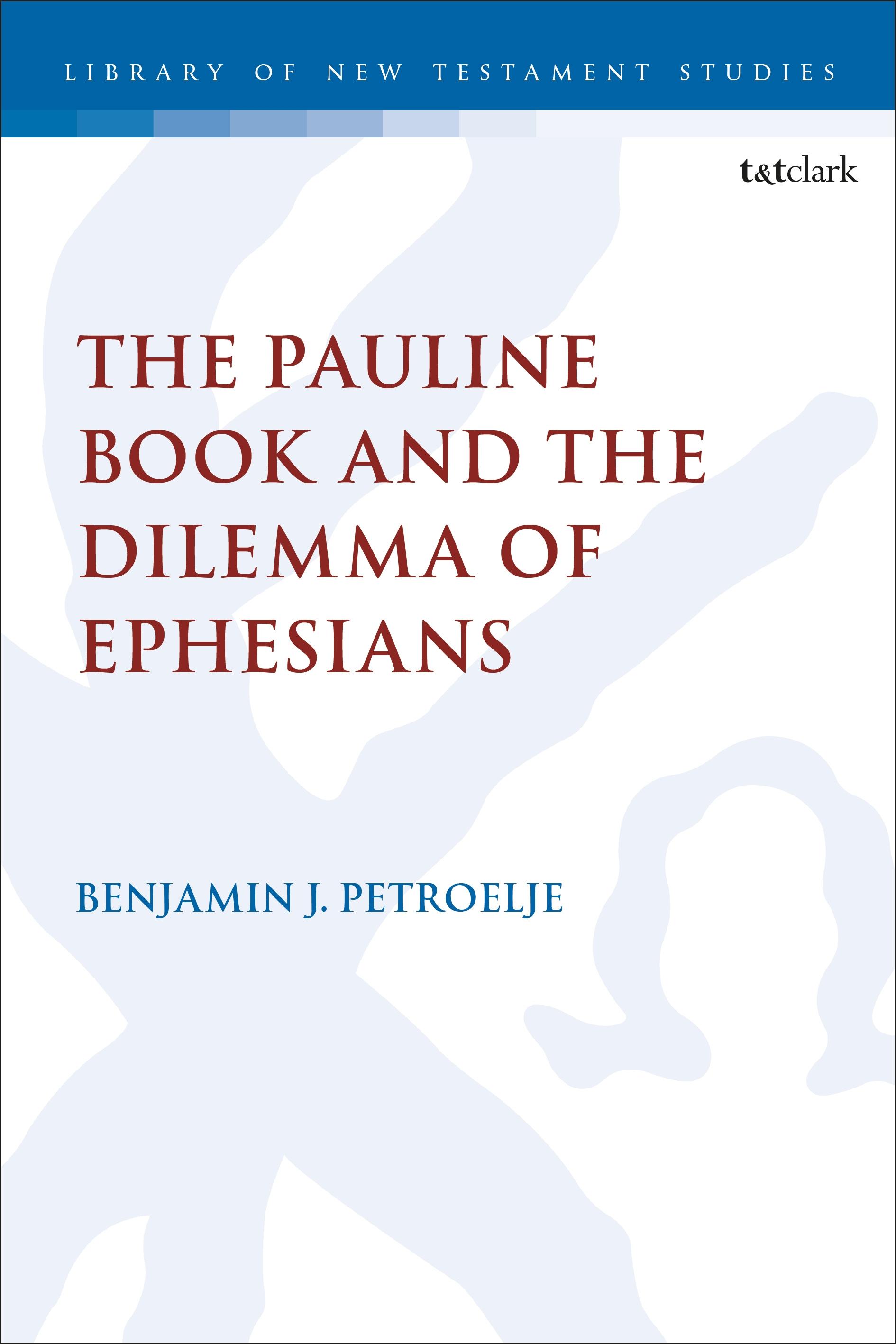
Benjamin J. Petroelje argues that how one reads Ephesians is a function of deeper questions about how to read the Pauline book. Petroelje suggests the contemporary consensus-that Ephesians depicts development of/away from the “real Paul”-is largely a construct of modern criticism, rooted in shifting strategies about how to read a letter collection that developed in the 19th-century.
Using Ephesians 3:1-13 as a point of analysis, Petroelje theorizes that the text's “image of Paul” not only anticipates recent revisionist interpretations of Paul's Jewish identity and gentile gospel, but also holds together tensions in the collection itself surrounding these questions. By analysing ancient letter collections beside their own hermeneutical priorities, and applying this method to the late-antique and modern reception of the corpus Paulinum, Petroelje is able to historicize the origins of the split of Paul's corpus, revealing the constructed nature of the critical consensus on Ephesians and the effect that such modern reading strategies have on interpreting the letter. Urging a return to reading Ephesians alongside Pauline co-texts, Petroelje advocates for Ephesians as a crucial source for the study of Paul, whether Paul wrote it or not.
Using Ephesians 3:1-13 as a point of analysis, Petroelje theorizes that the text's “image of Paul” not only anticipates recent revisionist interpretations of Paul's Jewish identity and gentile gospel, but also holds together tensions in the collection itself surrounding these questions. By analysing ancient letter collections beside their own hermeneutical priorities, and applying this method to the late-antique and modern reception of the corpus Paulinum, Petroelje is able to historicize the origins of the split of Paul's corpus, revealing the constructed nature of the critical consensus on Ephesians and the effect that such modern reading strategies have on interpreting the letter. Urging a return to reading Ephesians alongside Pauline co-texts, Petroelje advocates for Ephesians as a crucial source for the study of Paul, whether Paul wrote it or not.
Payez facilement par carte, Klarna, Apple Pay ou Google Pay. Pas satisfait ? Vous avez toujours une garantie de remboursement de 14 jours. En savoir plus dans nos conditions. Si vous avez des questions, envoyez-nous un e-mail à hello@memmo.org.
Memmo facilite tes études, où que tu sois dans le monde. On rassemble tes manuels de cours et des outils d'étude intelligents au même endroit : résumés, quiz, podcasts et flashcards. Et il y a Ted, ton compagnon d'étude qui répond à toutes tes questions. Plus de 50 000 étudiants étudient déjà ici – conçu pour t'aider à apprendre plus vite et à moins stresser.