
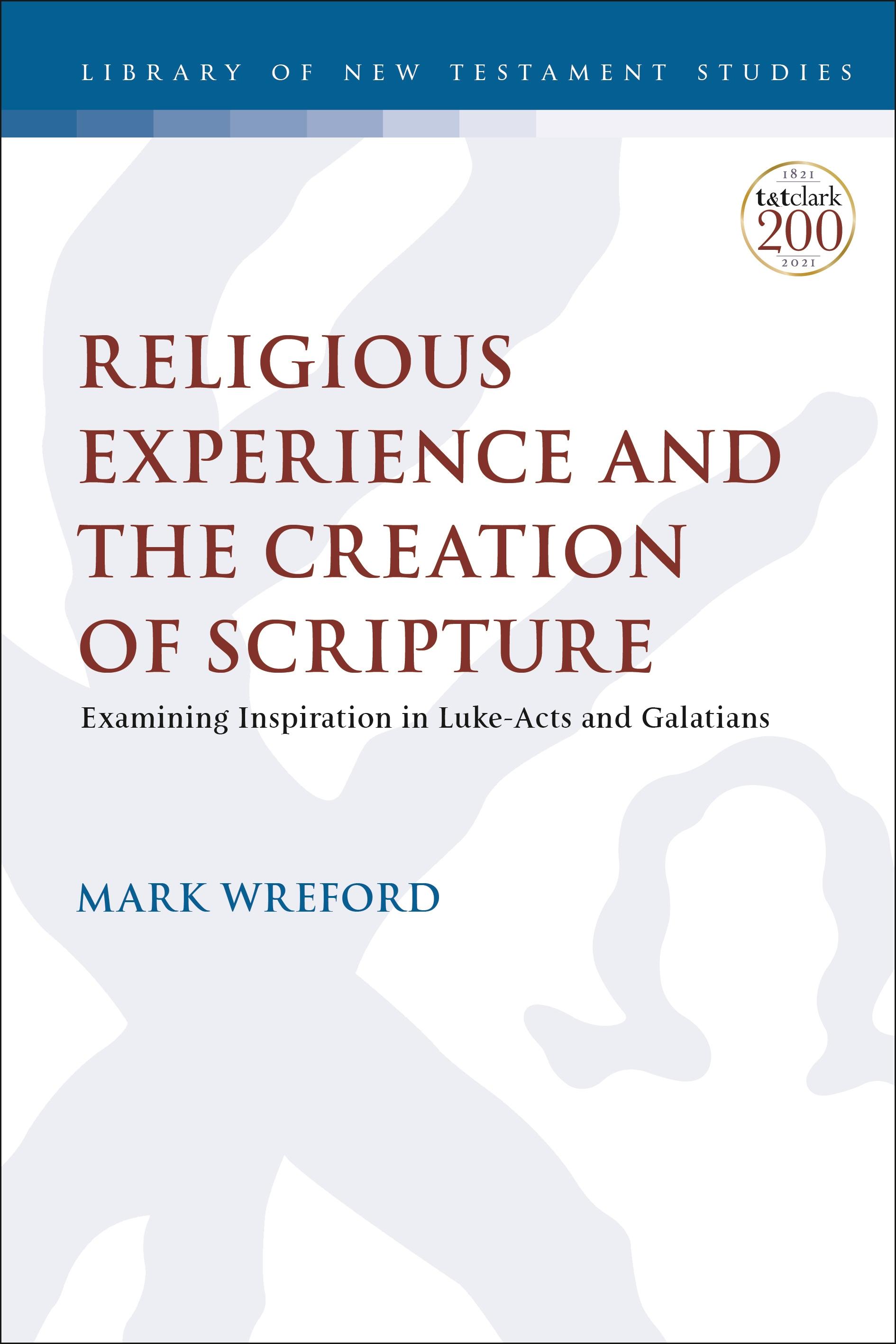
This volume examines the reasons that prompted the New Testament writers to create the texts which would become the formation of the Christian religion, exploring the possibility that certain religious experiences were understood as revelatory, and consequently inspired the writing of texts which were seen as special from their inception. Mark Wreford uses Luke-Acts and Galatians as test-cases within the New Testament, reflecting both on the stated importance of religious experiences – whether the author's own or others' – to the development of these texts, and the status the texts claim for themselves.
Wreford suggests that Luke-Acts offers a helpful example of the relationship between religious experience and the creation of Scripture, as an extensive narrative which reflects on early Christian claims to Spirit-inspired witness and which begins with an explicit authorial statement of purpose. Similarly, in Galatians, Paul's autobiographical account of God's revelation of Christ to him is the foundation of a letter that is intended to play an authoritative role in shaping its addressees' own faith and practice. Wreford argues that religious experiences are presented as the driving force behind the creation of the texts, examining how such religious experience links with notions of scripture and canonicity. He then asserts that both Luke and Paul understood themselves to be creating new scriptural writings on the basis of their relationship to new religious experiences, citing the experience and speech at Pentecost, the inclusion of gentiles in the experience, and Paul's own conversion experience as key elements behind the self-understanding of these New Testament authors.
Wreford suggests that Luke-Acts offers a helpful example of the relationship between religious experience and the creation of Scripture, as an extensive narrative which reflects on early Christian claims to Spirit-inspired witness and which begins with an explicit authorial statement of purpose. Similarly, in Galatians, Paul's autobiographical account of God's revelation of Christ to him is the foundation of a letter that is intended to play an authoritative role in shaping its addressees' own faith and practice. Wreford argues that religious experiences are presented as the driving force behind the creation of the texts, examining how such religious experience links with notions of scripture and canonicity. He then asserts that both Luke and Paul understood themselves to be creating new scriptural writings on the basis of their relationship to new religious experiences, citing the experience and speech at Pentecost, the inclusion of gentiles in the experience, and Paul's own conversion experience as key elements behind the self-understanding of these New Testament authors.
Payez facilement par carte, Klarna, Apple Pay ou Google Pay. Pas satisfait ? Vous avez toujours une garantie de remboursement de 14 jours. En savoir plus dans nos conditions. Si vous avez des questions, envoyez-nous un e-mail à hello@memmo.org.
Memmo facilite tes études, où que tu sois dans le monde. On rassemble tes manuels de cours et des outils d'étude intelligents au même endroit : résumés, quiz, podcasts et flashcards. Et il y a Ted, ton compagnon d'étude qui répond à toutes tes questions. Plus de 50 000 étudiants étudient déjà ici – conçu pour t'aider à apprendre plus vite et à moins stresser.