
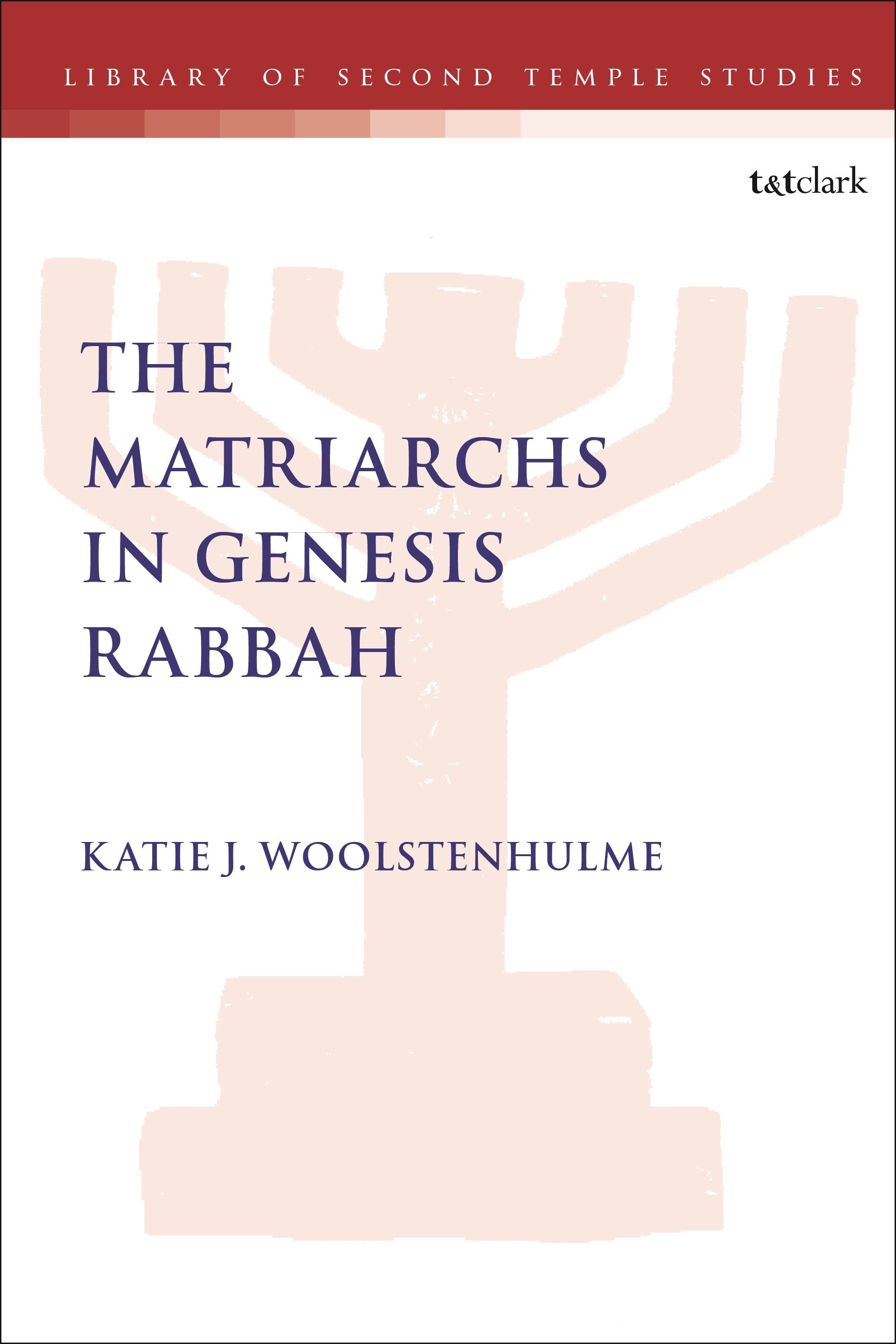
Katie J. Woolstenhulme considers the pertinent questions: Who were 'the matriarchs', and what did the rabbis think about them? Whilst scholarship on the role of women in the Bible and Rabbinic Judaism has increased, the authoritative group of women known as 'the matriarchs' has been neglected. This volume consequently focuses on the role and status of the biblical matriarchs in Genesis Rabbah, the fifth century CE rabbinic commentary on Genesis.
Woolstenhulme begins by discussing the nature of midrash and introducing Genesis Rabbah; before exploring the term 'the matriarchs' and its development through early exegetical literature, culminating in the emergence of two definitions of the term in Genesis Rabbah – 'the matriarchs' as the legitimate wives of Israel's patriarchs, and 'the matriarchs' as a reference to Jacob's four wives, who bore Israel's tribal ancestors. She then moves to discuss 'the matriarchal cycle' in Genesis Rabbah with its three stages of barrenness; motherhood; and succession. Finally, Woolstenhulme considers Genesis Rabbah's portrayal of the matriarchs as representatives of the female sex, exploring positive and negative rabbinic attitudes towards women with a focus on piety, prayer, praise, beauty and sexuality, and the matriarchs' exemplification of stereotypical, negative female traits. This volume concludes that for the ancient rabbis, the matriarchs were the historical mothers of Israel, bearing covenant sons, but also the present mothers of Israel, continuing to influence Jewish identity.
Woolstenhulme begins by discussing the nature of midrash and introducing Genesis Rabbah; before exploring the term 'the matriarchs' and its development through early exegetical literature, culminating in the emergence of two definitions of the term in Genesis Rabbah – 'the matriarchs' as the legitimate wives of Israel's patriarchs, and 'the matriarchs' as a reference to Jacob's four wives, who bore Israel's tribal ancestors. She then moves to discuss 'the matriarchal cycle' in Genesis Rabbah with its three stages of barrenness; motherhood; and succession. Finally, Woolstenhulme considers Genesis Rabbah's portrayal of the matriarchs as representatives of the female sex, exploring positive and negative rabbinic attitudes towards women with a focus on piety, prayer, praise, beauty and sexuality, and the matriarchs' exemplification of stereotypical, negative female traits. This volume concludes that for the ancient rabbis, the matriarchs were the historical mothers of Israel, bearing covenant sons, but also the present mothers of Israel, continuing to influence Jewish identity.
Pages: 240
Catégorie: Religion & Teologi
e-ISBN: 9780567695765
Poids d'expédition: 1.2 kg
Expédié sous: 1-2 jours
Payez facilement par carte, Klarna, Apple Pay ou Google Pay. Pas satisfait ? Vous avez toujours une garantie de remboursement de 14 jours. En savoir plus dans nos conditions. Si vous avez des questions, envoyez-nous un e-mail à hello@memmo.org.
Memmo facilite tes études, où que tu sois dans le monde. On rassemble tes manuels de cours et des outils d'étude intelligents au même endroit : résumés, quiz, podcasts et flashcards. Et il y a Ted, ton compagnon d'étude qui répond à toutes tes questions. Plus de 50 000 étudiants étudient déjà ici – conçu pour t'aider à apprendre plus vite et à moins stresser.