
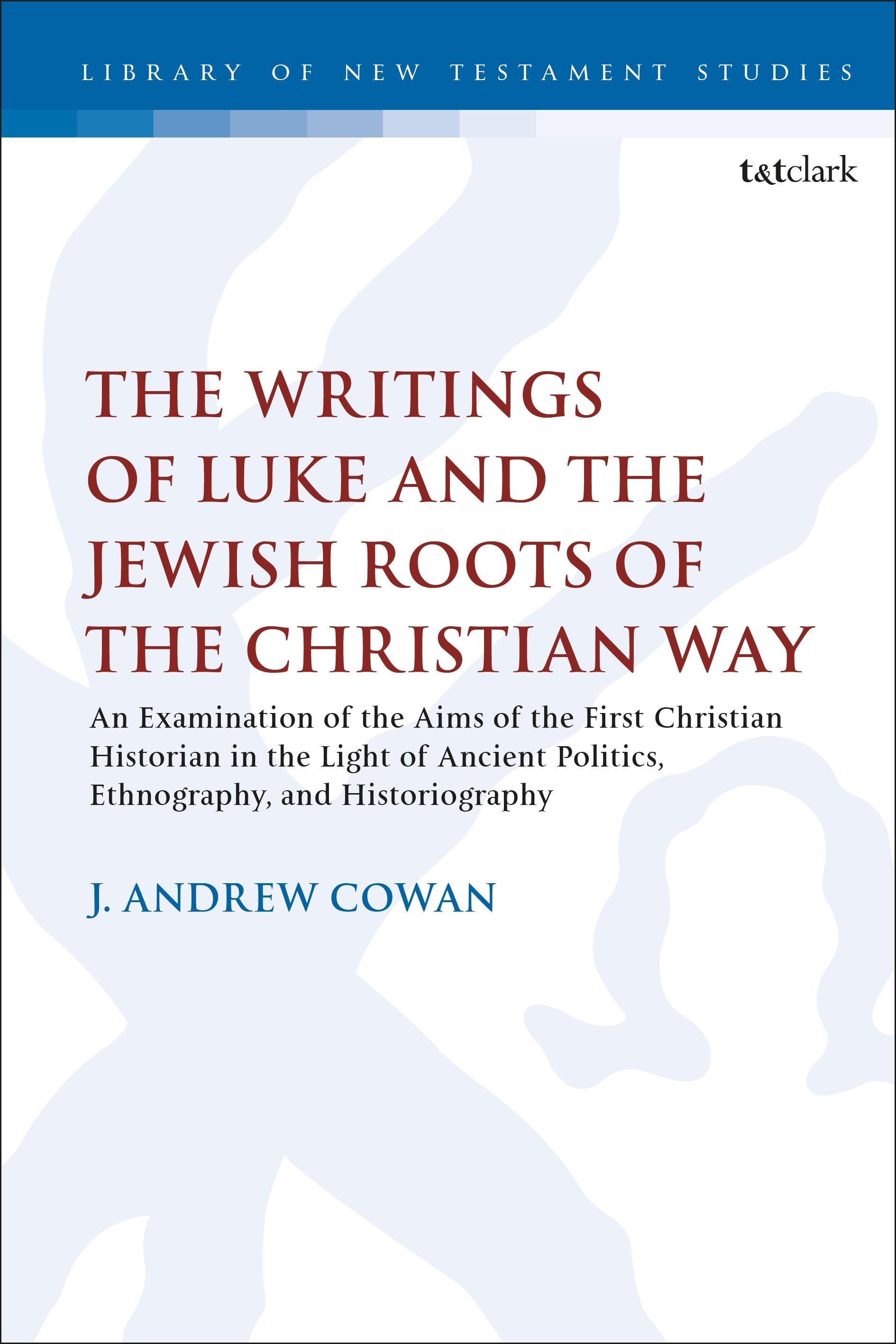
J. Andrew Cowan challenges the popular theory that Luke sought to boost the cultural status of the early Christian movement by emphasising its Jewish roots – associating the new church with an ancient and therefore respected heritage. Cowan instead argues that Luke draws upon the traditions of the Old Testament and its supporting texts as a reassurance to Christians, promising that Jesus' life, his works and the church that follow legitimately provide fulfilment of God's salvific plan.
Cowan's argument compares Luke's writings to two near-contemporaries, Dionysius of Halicarnassus and T. Flavius Josephus, both of whom emphasized the ancient heritage of a people with cultural or political aims in view, exploring how the writings of Luke do not reflect the same cultural values or pursue the same ends. Challenging assumptions on Luke's supposed attempts to assuage political concerns, capitalize on antiquity, and present Christianity as an inner-Jewish sect, Cowan counters with arguments for Luke being critical of over-valuing tradition and defining the Jewish people as resistant to God and His messages. Cowan concludes with the argument that the apostle does not strive for legitimisation of the new church by previous cultural standards, but instead provides theological reassurance to Christians that God's plan has been fulfilled, with implications for broader debate.
Cowan's argument compares Luke's writings to two near-contemporaries, Dionysius of Halicarnassus and T. Flavius Josephus, both of whom emphasized the ancient heritage of a people with cultural or political aims in view, exploring how the writings of Luke do not reflect the same cultural values or pursue the same ends. Challenging assumptions on Luke's supposed attempts to assuage political concerns, capitalize on antiquity, and present Christianity as an inner-Jewish sect, Cowan counters with arguments for Luke being critical of over-valuing tradition and defining the Jewish people as resistant to God and His messages. Cowan concludes with the argument that the apostle does not strive for legitimisation of the new church by previous cultural standards, but instead provides theological reassurance to Christians that God's plan has been fulfilled, with implications for broader debate.
Pages: 232
Catégorie: Religion & Teologi
e-ISBN: 9780567684011
Poids d'expédition: 1.2 kg
Expédié sous: 1-2 jours
Payez facilement par carte, Klarna, Apple Pay ou Google Pay. Pas satisfait ? Vous avez toujours une garantie de remboursement de 14 jours. En savoir plus dans nos conditions. Si vous avez des questions, envoyez-nous un e-mail à hello@memmo.org.
Memmo facilite tes études, où que tu sois dans le monde. On rassemble tes manuels de cours et des outils d'étude intelligents au même endroit : résumés, quiz, podcasts et flashcards. Et il y a Ted, ton compagnon d'étude qui répond à toutes tes questions. Plus de 50 000 étudiants étudient déjà ici – conçu pour t'aider à apprendre plus vite et à moins stresser.