
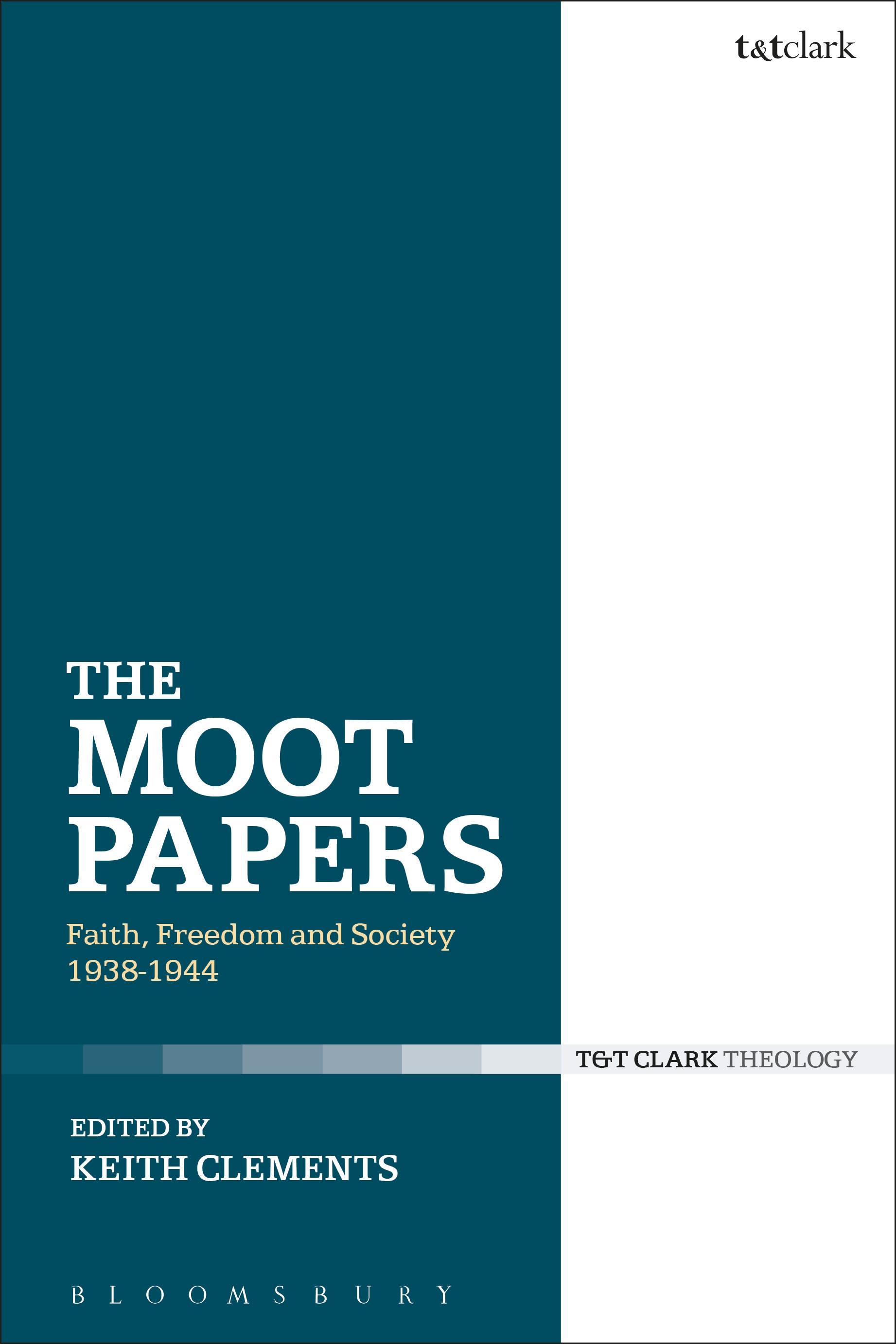
The Moot was the study and discussion group set by J.H. Oldham (1874-1969) following the 1937 Oxford conference on "Church, Community and State". Its purpose was to continue, in an informal but serious way, exploration of the relation between church and society and the realization of Christian ethics in the public sphere.
The Moot met twice or three times a year from 1938 to 1947 (21 times in all) and was convened by Oldham with the conscious intention of responding to the grave crisis that was felt to be facing western society in Britain no less than on the continent of Europe. Overall some 35 people attended the Moot at one time or another, but its core comprised a small number of regular members who were representative of the highest levels in theology, social science and public affairs. In addition to Oldham himself they included T.S. Elliot, H. A. Hodges, Eleonora Iredale, Adolf Löwe, Karl Mannheim, Walter Moberly, John Middleton Murry and Alec Vidler. Other participants included Kathleen Bliss, Fred Clarke, Christopher Dawson, H. H. Farmer, Hector Hetherington, Walter Oakshott and Gilbert Shaw, while notables such as Reinhold Niebuhr, Melville Chaning-Pearce, Donald McKinnon, Philip Mairet, Leslie Newbiggin, William Paton, Frank Pakenham (later Lord Longford), Michael Polanyi and Oliver Tomkins made occasional "guest appearances". Against the background of impending and then actual war, the discussions in the Moot repeatedly focused on the "planned" nature of modern society and therewith the roles (if any) within it of moral choice and the Christian community.
The Moot met twice or three times a year from 1938 to 1947 (21 times in all) and was convened by Oldham with the conscious intention of responding to the grave crisis that was felt to be facing western society in Britain no less than on the continent of Europe. Overall some 35 people attended the Moot at one time or another, but its core comprised a small number of regular members who were representative of the highest levels in theology, social science and public affairs. In addition to Oldham himself they included T.S. Elliot, H. A. Hodges, Eleonora Iredale, Adolf Löwe, Karl Mannheim, Walter Moberly, John Middleton Murry and Alec Vidler. Other participants included Kathleen Bliss, Fred Clarke, Christopher Dawson, H. H. Farmer, Hector Hetherington, Walter Oakshott and Gilbert Shaw, while notables such as Reinhold Niebuhr, Melville Chaning-Pearce, Donald McKinnon, Philip Mairet, Leslie Newbiggin, William Paton, Frank Pakenham (later Lord Longford), Michael Polanyi and Oliver Tomkins made occasional "guest appearances". Against the background of impending and then actual war, the discussions in the Moot repeatedly focused on the "planned" nature of modern society and therewith the roles (if any) within it of moral choice and the Christian community.
Pages: 752
Catégorie: Religion & Teologi
e-ISBN: 9780567663313
Poids d'expédition: 1.2 kg
Expédié sous: 1-2 jours
Payez facilement par carte, Klarna, Apple Pay ou Google Pay. Pas satisfait ? Vous avez toujours une garantie de remboursement de 14 jours. En savoir plus dans nos conditions. Si vous avez des questions, envoyez-nous un e-mail à hello@memmo.org.
Memmo facilite tes études, où que tu sois dans le monde. On rassemble tes manuels de cours et des outils d'étude intelligents au même endroit : résumés, quiz, podcasts et flashcards. Et il y a Ted, ton compagnon d'étude qui répond à toutes tes questions. Plus de 50 000 étudiants étudient déjà ici – conçu pour t'aider à apprendre plus vite et à moins stresser.