
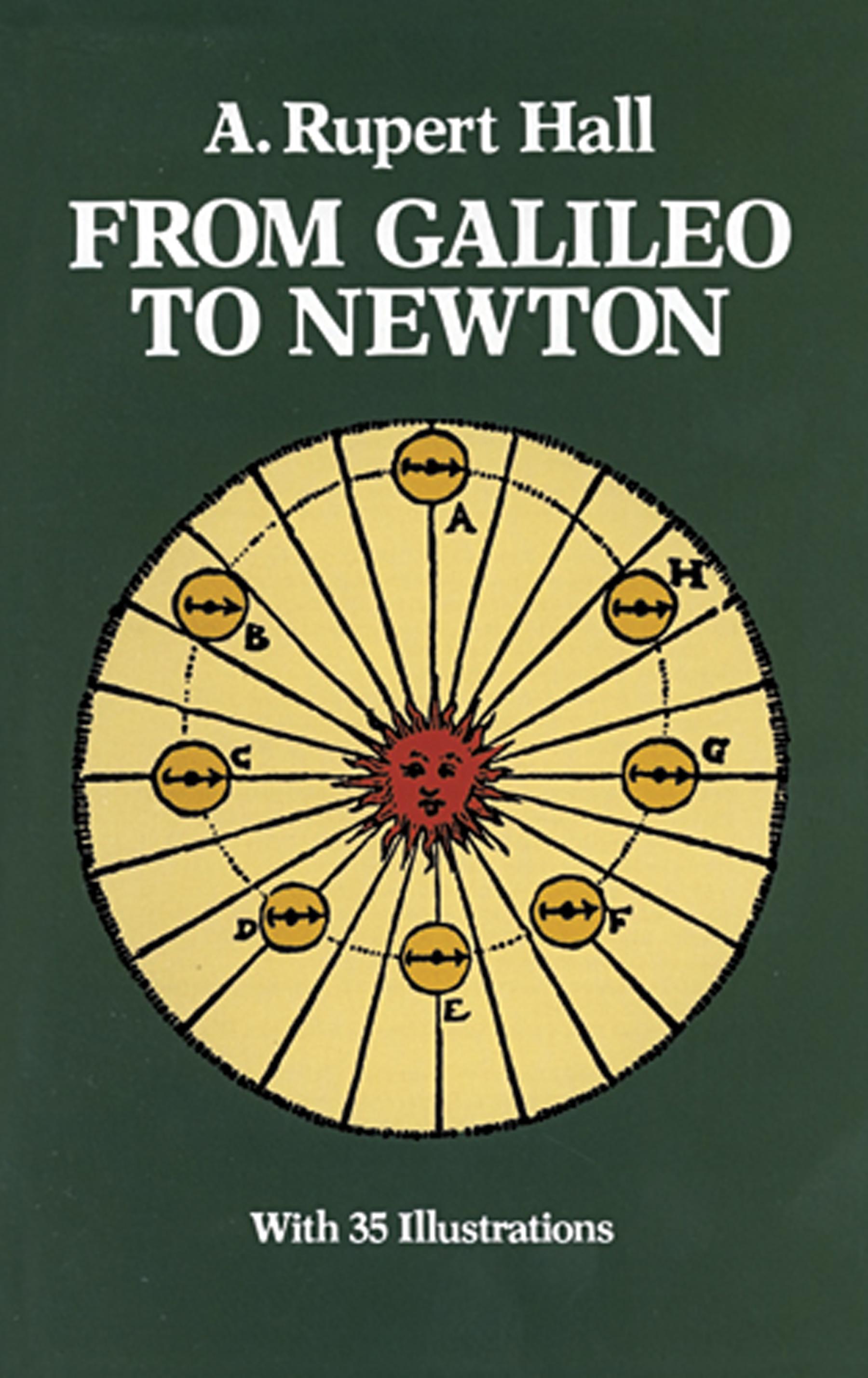
The near century (1630-1720) that separates the important astronomical findings of Galileo Galilei (1564-1642) and the vastly influential mathematical work of Sir Isaac Newton (1642-1727) represents a pivotal stage of transition in the history of science. As a result of the raging intellectual battle between tradition and innovation that began in the fifteenth century, science was penetrated by a new outlook that placed emphasis on experiment and observation. Galileo showed the promise of its new methods of discovery; Newton brought out their full force and effect. Galileo suffered from an attempt to censure scientific inquiry; Newton showed how science could discover the universal laws of nature. The triumph of this new outlook marked the birth of modern science.
From Galileo to Newton describes those new patterns of thought that emerged during this time of great excitement and widespread controversy. It discusses the discoveries revealed by telescope and microscope in the work of Huygens and Leeuwenhoek, and the new speculations to which these gave rise; Boyle's attempts to include chemical experiments within a rational theory of matter, and those begun by Descartes to explain the workings of the body on the basis of chemical and physical principles; and the revolutionary ideas in astronomy that generated the transition from the Ptolemaic concept of the universe to the Copernican and the subsequent acceptance of the heliostatic system.
Since the dawn of civilization man has tried to find logic in the mysterious and order in the chaotic. From Galileo to Newton will appeal to anyone who wants to know what modern science is all about and how it came into being. One of the foremost authorities on the history of science, Professor Hall is not only a scholar of great learning and originality, he also writes with clarity, liveliness, and a keen biographical sense.
From Galileo to Newton describes those new patterns of thought that emerged during this time of great excitement and widespread controversy. It discusses the discoveries revealed by telescope and microscope in the work of Huygens and Leeuwenhoek, and the new speculations to which these gave rise; Boyle's attempts to include chemical experiments within a rational theory of matter, and those begun by Descartes to explain the workings of the body on the basis of chemical and physical principles; and the revolutionary ideas in astronomy that generated the transition from the Ptolemaic concept of the universe to the Copernican and the subsequent acceptance of the heliostatic system.
Since the dawn of civilization man has tried to find logic in the mysterious and order in the chaotic. From Galileo to Newton will appeal to anyone who wants to know what modern science is all about and how it came into being. One of the foremost authorities on the history of science, Professor Hall is not only a scholar of great learning and originality, he also writes with clarity, liveliness, and a keen biographical sense.
Payez facilement par carte, Klarna, Apple Pay ou Google Pay. Pas satisfait ? Vous avez toujours une garantie de remboursement de 14 jours. En savoir plus dans nos conditions. Si vous avez des questions, envoyez-nous un e-mail à hello@memmo.org.
Memmo facilite tes études, où que tu sois dans le monde. On rassemble tes manuels de cours et des outils d'étude intelligents au même endroit : résumés, quiz, podcasts et flashcards. Et il y a Ted, ton compagnon d'étude qui répond à toutes tes questions. Plus de 50 000 étudiants étudient déjà ici – conçu pour t'aider à apprendre plus vite et à moins stresser.
Tu pourrais aussi aimer
Acheter le livre0