
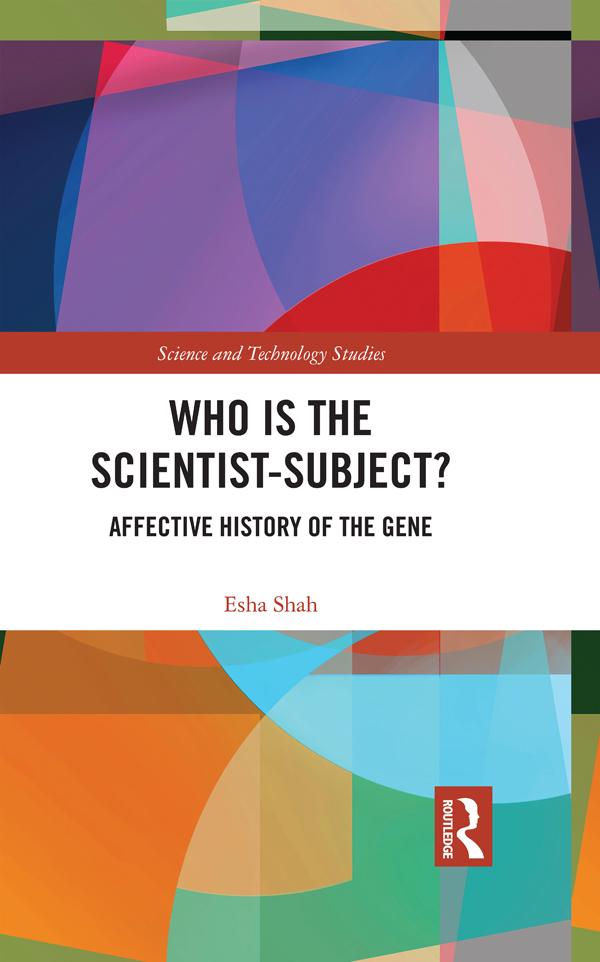
This book explores two disparate sets of debates in the history and philosophy of the life sciences: the history of subjectivity in shaping objective science and the history of dominance of reductionism in molecular biology. It questions the dominant conception of the scientist-subject as a neo-Kantian ideal self – that is, the scientist as a unified and wilful, self-determined, self-regulated, active and autonomous, rational subject wilfully driven by social and scientific ethos – in favour of a narrative that shows how the microcosm of reductionism is sustained, adopted, questioned, or challenged in the creative struggles of the scientist-subject.
The author covers a century-long history of the concept of the gene as a series of "pioneering moments" through an engagement with life-writings of eminent scientists to show how their ways of being and belonging relate with the making of the science. The scientist-self is theorized as fundamentally a feeling, experiencing, and suffering subject split between the conscious and unconscious and constitutive of personality aspects that are emotional/psychological, "situated" (cultural and ideological), metaphysical, intersubjective, and existential at the same time.
An engaging interdisciplinary interpretation of the dominance of reductionism in genetic science, this book will be of major interest to scholars and researchers of science, history, and philosophy alike.
Payez facilement par carte, Klarna, Apple Pay ou Google Pay. Pas satisfait ? Vous avez toujours une garantie de remboursement de 14 jours. En savoir plus dans nos conditions. Si vous avez des questions, envoyez-nous un e-mail à hello@memmo.org.
Memmo facilite tes études, où que tu sois dans le monde. On rassemble tes manuels de cours et des outils d'étude intelligents au même endroit : résumés, quiz, podcasts et flashcards. Et il y a Ted, ton compagnon d'étude qui répond à toutes tes questions. Plus de 50 000 étudiants étudient déjà ici – conçu pour t'aider à apprendre plus vite et à moins stresser.