
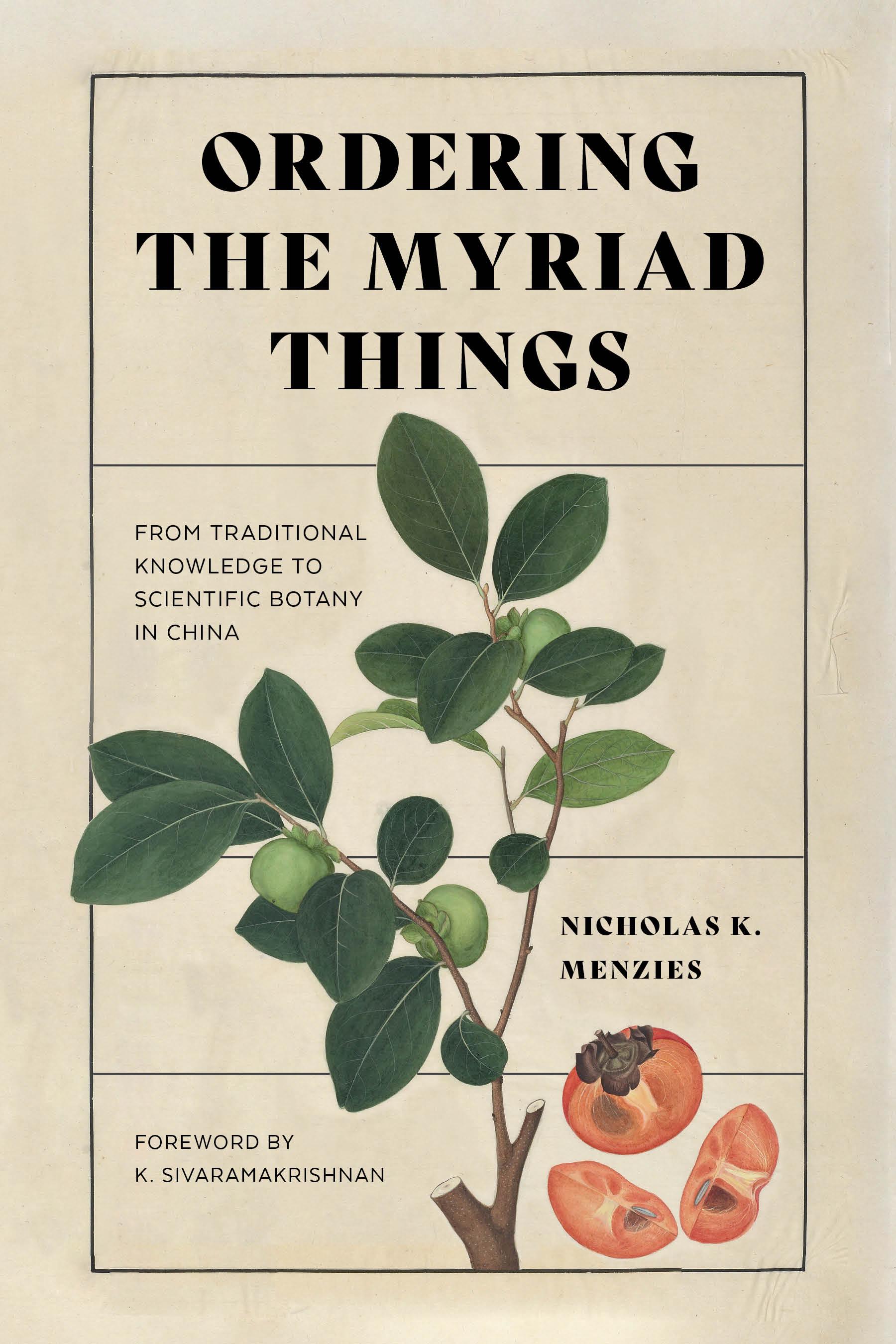
China’s vast and ancient body of documented knowledge about plants includes horticultural manuals and monographs, comprehensive encyclopedias, geographies, and specialized anthologies of verse and prose written by keen observers of nature. Until the late nineteenth century, however, standard practice did not include deploying a set of diagnostic tools using a common terminology and methodology to identify and describe new and unknown species or properties.
Ordering the Myriad Things relates how traditional knowledge of plants in China gave way to scientific botany between the mid-nineteenth and mid-twentieth centuries, when plants came to be understood in a hierarchy of taxonomic relationships to other plants and within a broader ecological context. This shift not only expanded the universe of plants beyond the familiar to encompass unknown species and geographies but fueled a new knowledge of China itself. Nicholas K. Menzies highlights the importance of botanical illustration as a tool for recording nature—contrasting how images of plants were used in the past to the conventions of scientific drawing and investigating the transition of “traditional” systems of organization, classification, observation, and description to “modern” ones.
Payez facilement par carte, Klarna, Apple Pay ou Google Pay. Pas satisfait ? Vous avez toujours une garantie de remboursement de 14 jours. En savoir plus dans nos conditions. Si vous avez des questions, envoyez-nous un e-mail à hello@memmo.org.
Memmo facilite tes études, où que tu sois dans le monde. On rassemble tes manuels de cours et des outils d'étude intelligents au même endroit : résumés, quiz, podcasts et flashcards. Et il y a Ted, ton compagnon d'étude qui répond à toutes tes questions. Plus de 50 000 étudiants étudient déjà ici – conçu pour t'aider à apprendre plus vite et à moins stresser.