
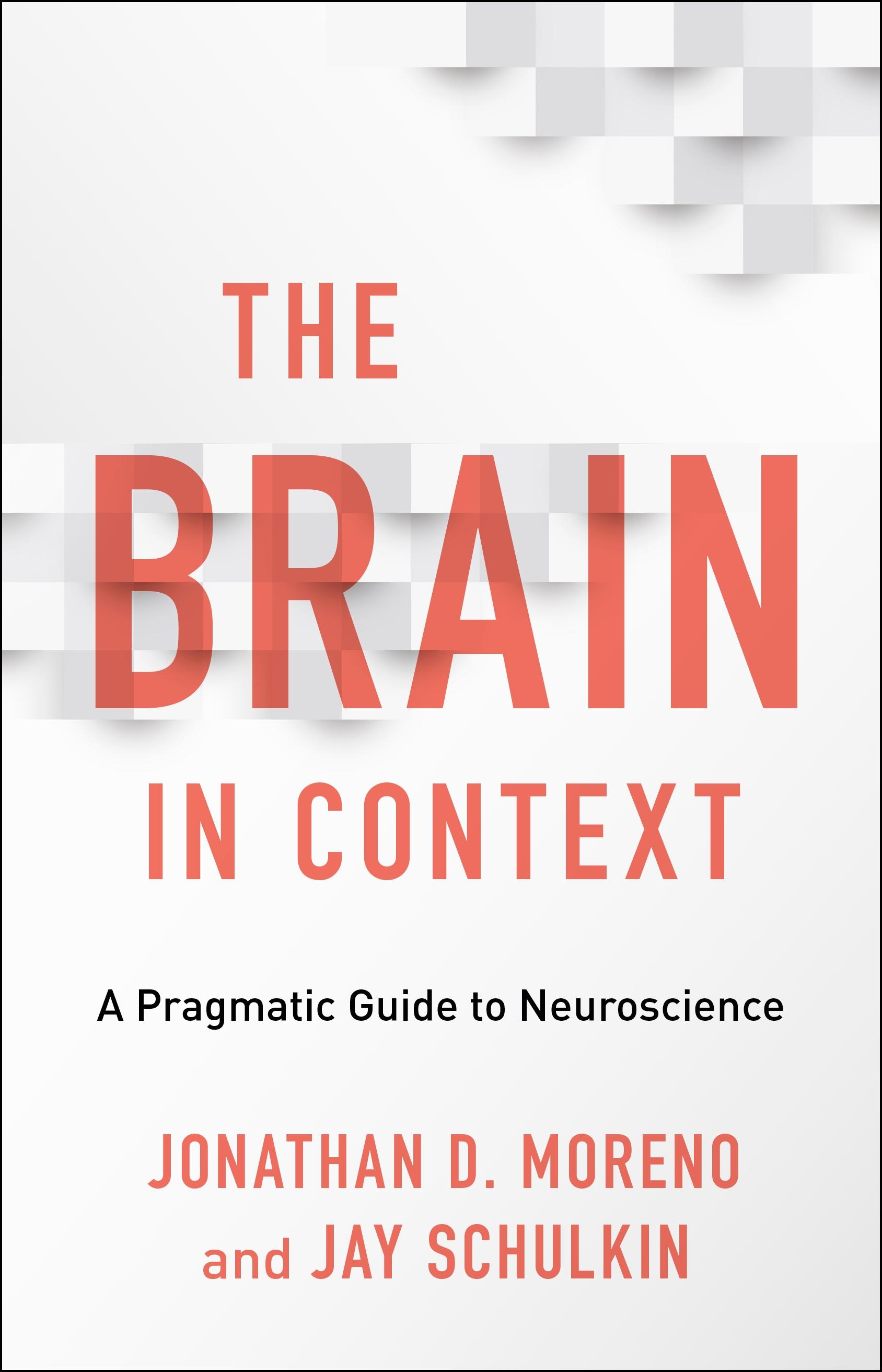
The human brain is the most complex object in the known universe. The field of neuroscience has made remarkable strides in recent years in understanding aspects of the brain, yet we still struggle with seemingly fundamental questions about how the brain works. What lessons can we learn from neuroscience’s successes and failures? What kinds of questions can neuroscience answer, and what will remain out of reach?
In The Brain in Context, the bioethicist Jonathan D. Moreno and the neuroscientist Jay Schulkin provide an accessible and thought-provoking account of the evolution of neuroscience and the neuroscience of evolution. They emphasize that the brain is not an isolated organ—it extends into every part of the body and every aspect of human life. Understanding the brain requires studying the environmental, biological, chemical, genetic, and social factors that continue to shape it. Moreno and Schulkin describe today’s transformative devices, theories, and methods, including technologies like fMRI and optogenetics as well as massive whole-brain activity maps and the attempt to create a digital simulation of the brain. They show how theorizing about the brain and experimenting with it often go hand in hand, and they raise cautions about unintended consequences of technological interventions. The Brain in Context is a stimulating and even-handed assessment of the scope and limits of what we know about how we think.
Payez facilement par carte, Klarna, Apple Pay ou Google Pay. Pas satisfait ? Vous avez toujours une garantie de remboursement de 14 jours. En savoir plus dans nos conditions. Si vous avez des questions, envoyez-nous un e-mail à hello@memmo.org.
Memmo facilite tes études, où que tu sois dans le monde. On rassemble tes manuels de cours et des outils d'étude intelligents au même endroit : résumés, quiz, podcasts et flashcards. Et il y a Ted, ton compagnon d'étude qui répond à toutes tes questions. Plus de 50 000 étudiants étudient déjà ici – conçu pour t'aider à apprendre plus vite et à moins stresser.