
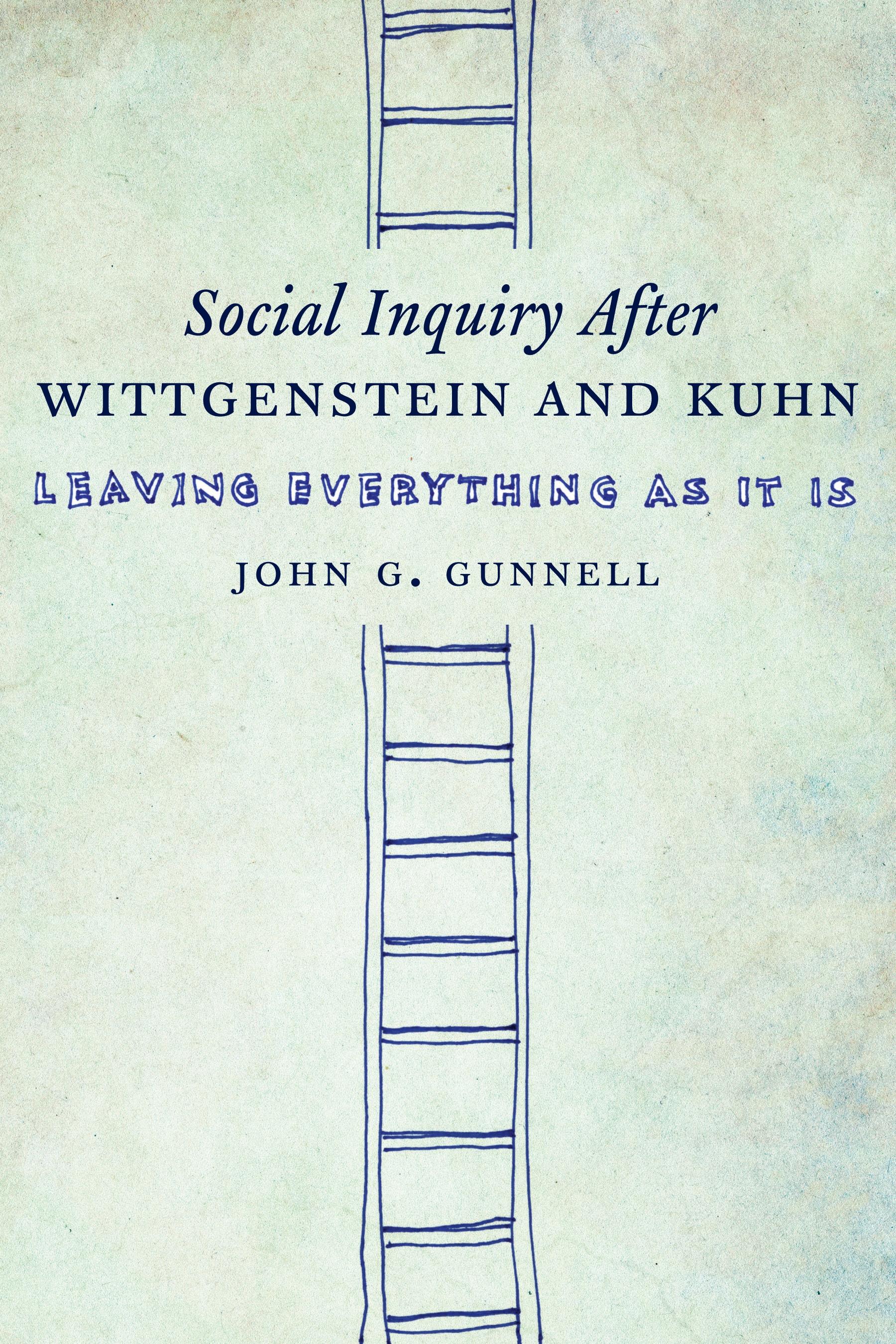
A distinctive feature of Ludwig Wittgenstein's work after 1930 was his turn to a conception of philosophy as a form of social inquiry, John G. Gunnell argues, and Thomas Kuhn's approach to the philosophy of science exemplified this conception. In this book, Gunnell shows how these philosophers address foundational issues in the social and human sciences, particularly the vision of social inquiry as an interpretive endeavor and the distinctive cognitive and practical relationship between social inquiry and its subject matter.
Gunnell speaks directly to philosophers and practitioners of the social and human sciences. He tackles the demarcation between natural and social science; the nature of social phenomena; the concept and method of interpretation; the relationship between language and thought; the problem of knowledge of other minds; and the character of descriptive and normative judgments about practices that are the object of inquiry. Though Wittgenstein and Kuhn are often criticized as initiating a modern descent into relativism, this book shows that the true effect of their work was to undermine the basic assumptions of contemporary social and human science practice. It also problematized the authority of philosophy and other forms of social inquiry to specify the criteria for judging such matters as truth and justice. When Wittgenstein stated that "philosophy leaves everything as it is," he did not mean that philosophy would be left as it was or that philosophy would have no impact on what it studied, but rather that the activity of inquiry did not, simply by virtue of its performance, transform the object of inquiry.
Payez facilement par carte, Klarna, Apple Pay ou Google Pay. Pas satisfait ? Vous avez toujours une garantie de remboursement de 14 jours. En savoir plus dans nos conditions. Si vous avez des questions, envoyez-nous un e-mail à hello@memmo.org.
Memmo facilite tes études, où que tu sois dans le monde. On rassemble tes manuels de cours et des outils d'étude intelligents au même endroit : résumés, quiz, podcasts et flashcards. Et il y a Ted, ton compagnon d'étude qui répond à toutes tes questions. Plus de 50 000 étudiants étudient déjà ici – conçu pour t'aider à apprendre plus vite et à moins stresser.