
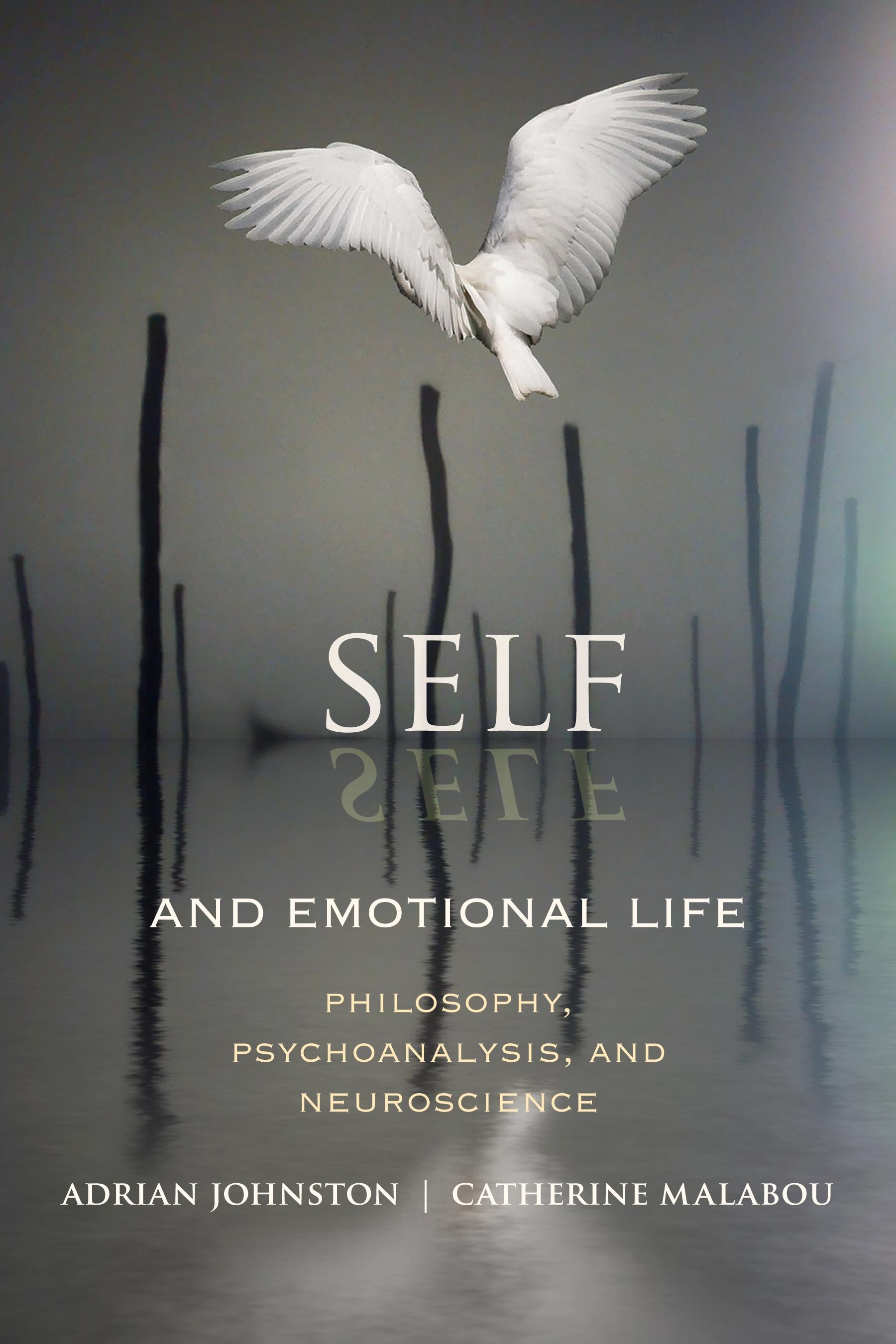
Adrian Johnston and Catherine Malabou defy theoretical humanities' deeply-entrenched resistance to engagements with the life sciences. Rather than treat biology and its branches as hopelessly reductive and politically suspect, they view recent advances in neurobiology and its adjacent scientific fields as providing crucial catalysts to a radical rethinking of subjectivity.
Merging three distinct disciplines—European philosophy from Descartes to the present, Freudian-Lacanian psychoanalysis, and affective neuroscience—Johnston and Malabou triangulate the emotional life of affective subjects as conceptualized in philosophy and psychoanalysis with neuroscience. Their experiments yield different outcomes. Johnston finds psychoanalysis and neurobiology have the potential to enrich each other, though affective neuroscience demands a reconsideration of whether affects can be unconscious. Investigating this vexed issue has profound implications for theoretical and practical analysis, as well as philosophical understandings of the emotions.
Malabou believes scientific explorations of the brain seriously problematize established notions of affective subjectivity in Continental philosophy and Freudian-Lacanian analysis. She confronts philosophy and psychoanalysis with something neither field has seriously considered: the concept of wonder and the cold, disturbing visage of those who have been affected by disease or injury, such that they are no longer affected emotionally. At stake in this exchange are some of philosophy's most important claims concerning the relationship between the subjective mind and the objective body, the structures and dynamics of the unconscious dimensions of mental life, the role emotion plays in making us human, and the functional differences between philosophy and science.
Payez facilement par carte, Klarna, Apple Pay ou Google Pay. Pas satisfait ? Vous avez toujours une garantie de remboursement de 14 jours. En savoir plus dans nos conditions. Si vous avez des questions, envoyez-nous un e-mail à hello@memmo.org.
Memmo facilite tes études, où que tu sois dans le monde. On rassemble tes manuels de cours et des outils d'étude intelligents au même endroit : résumés, quiz, podcasts et flashcards. Et il y a Ted, ton compagnon d'étude qui répond à toutes tes questions. Plus de 50 000 étudiants étudient déjà ici – conçu pour t'aider à apprendre plus vite et à moins stresser.