
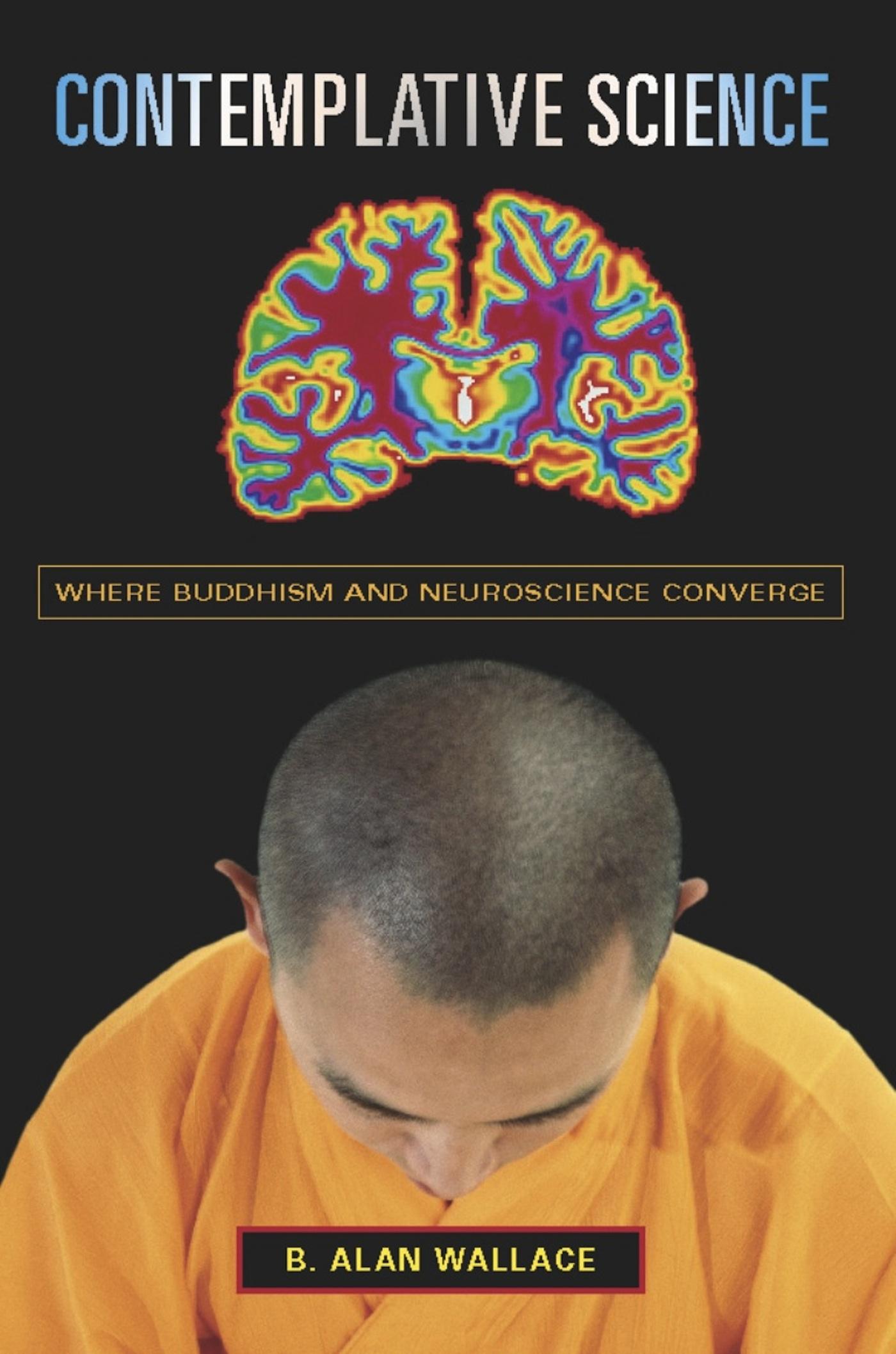
Science has long treated religion as a set of personal beliefs that have little to do with a rational understanding of the mind and the universe. However, B. Alan Wallace, a respected Buddhist scholar, proposes that the contemplative methodologies of Buddhism and of Western science are capable of being integrated into a single discipline: contemplative science.
The science of consciousness introduces first-person methods of investigating the mind through Buddhist contemplative techniques, such as samatha, an organized, detailed system of training the attention. Just as scientists make observations and conduct experiments with the aid of technology, contemplatives have long tested their own theories with the help of highly developed meditative skills of observation and experimentation. Contemplative science allows for a deeper knowledge of mental phenomena, including a wide range of states of consciousness, and its emphasis on strict mental discipline counteracts the effects of conative (intention and desire), attentional, cognitive, and affective imbalances.
Just as behaviorism, psychology, and neuroscience have all shed light on the cognitive processes that enable us to survive and flourish, contemplative science offers a groundbreaking perspective for expanding our capacity to realize genuine well-being. It also forges a link between the material world and the realm of the subconscious that transcends the traditional science-based understanding of the self.
Payez facilement par carte, Klarna, Apple Pay ou Google Pay. Pas satisfait ? Vous avez toujours une garantie de remboursement de 14 jours. En savoir plus dans nos conditions. Si vous avez des questions, envoyez-nous un e-mail à hello@memmo.org.
Memmo facilite tes études, où que tu sois dans le monde. On rassemble tes manuels de cours et des outils d'étude intelligents au même endroit : résumés, quiz, podcasts et flashcards. Et il y a Ted, ton compagnon d'étude qui répond à toutes tes questions. Plus de 50 000 étudiants étudient déjà ici – conçu pour t'aider à apprendre plus vite et à moins stresser.